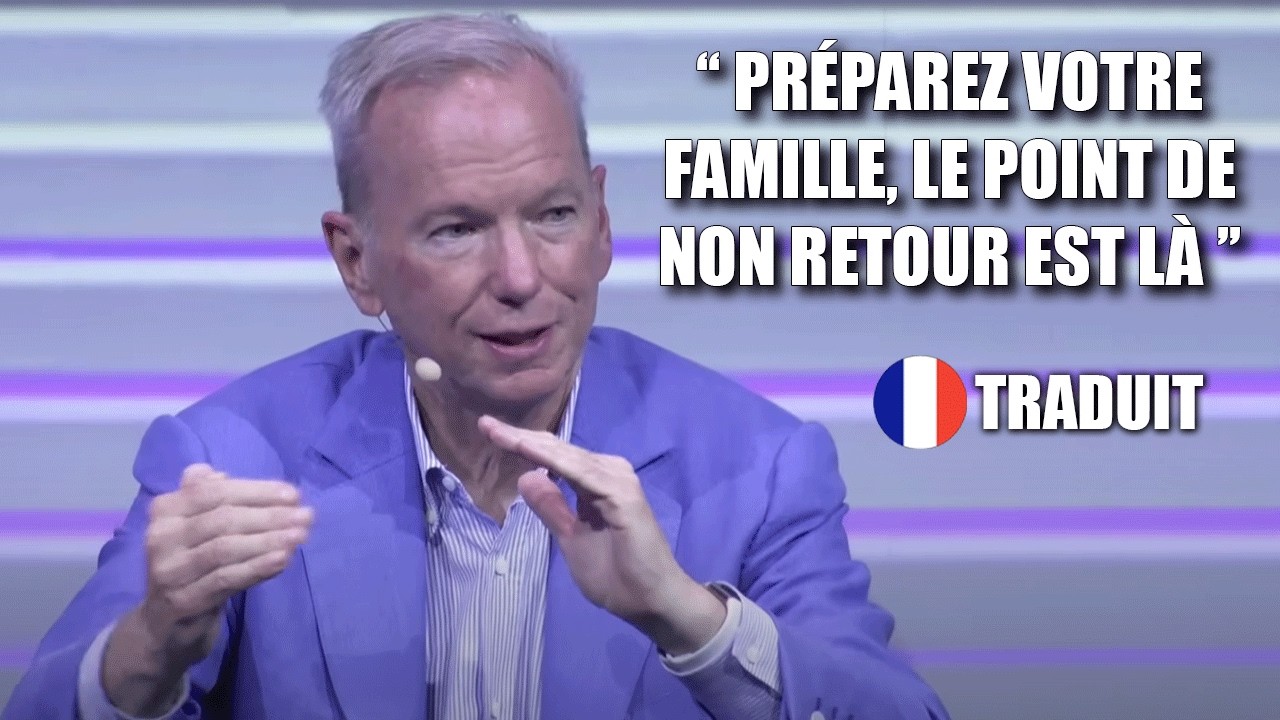
Ex-PDG Google : "L'IA va TOUT changer en 3 ans"
Keywords
Summary
151 words
Critical Evaluation
Value of the Information & Strength of the Argument
The video provides valuable insights from a highly influential figure in the tech industry. Schmidt’s arguments are well-structured, moving from the current state of AI to future implications. He uses concrete examples, such as the agentic workflow for building a house, to illustrate abstract concepts. The discussion of the ‘San Francisco consensus’ and the distinction between AGI and ASI are particularly informative. However, the arguments are largely speculative and rely on the authority of the speaker rather than empirical evidence. The reasoning is coherent but not critically examined, and potential counterarguments are not addressed. The video serves as a compelling presentation of a particular viewpoint rather than a balanced analysis.
Scientific Rigor, Source Quality, Title Accuracy
The video is based on an interview with Eric Schmidt, a credible source given his background. However, the claims are forward-looking predictions and not supported by verifiable data within the video. The description provides links to the original video and promotional materials, but no direct references to scientific studies or reports. The title accurately reflects the content, which focuses on Schmidt’s predictions. The video is a translation, and the quality of the translation appears good, but it may introduce slight inaccuracies. The comments show a mix of reactions, with some viewers expressing skepticism and others engaging with the content, but no clear consensus on the video’s reliability.
232 words
Title / Content Match
The title accurately reflects the core message of the video, which is Schmidt's prediction of transformative AI changes within three years.
Quality & Reliability
7/10
The video presents an interview with Eric Schmidt, a prominent tech leader, offering expert opinions on AI's future. The claims are speculative and not empirically verified, but the speaker's credibility and the reasoned argumentation lend some weight. The content is a translation of an original interview, which may introduce minor inaccuracies.
Chapters
Cited Sources
- Original video — The original interview with Eric Schmidt, which this video is a translation of.
- Vision IA newsletter — Promotional link for the channel's newsletter.
- Vision IA training — Promotional link for the channel's AI training course.
Concurring Sources
- OpenAI — Mentioned as a leader in AI development, consistent with the video's claims.
- Anthropic — Mentioned as a technical leader in AI, supporting the video's narrative.
Dissenting Sources
- AI bubble concerns — Some experts argue that the massive investments in AI infrastructure may lead to a bubble, contrary to Schmidt's view. This is not directly cited in the video but is a common counterargument.
Contribution & Novelties
The video offers a condensed presentation of Eric Schmidt’s views on AI’s near-term impact, popularizing the ‘San Francisco consensus’ and the concept of ‘scale-free’ domains. It synthesizes several key ideas: the agentic revolution, recursive self-improvement, and the geopolitical implications of open-source AI. While the content is not entirely novel, it provides a coherent narrative that may be new to a general audience. The video’s value lies in making these concepts accessible and sparking discussion.
Pour aller plus loin :
- Artificial general intelligence — Provides background on the concept of AGI.
- Recursive self-improvement — Explains the idea of AI improving itself.
- Open-source AI — Discusses the open-source movement in AI, relevant to the geopolitical discussion.
114 words
Radar Profile
The radar profile shows high scores in information quantity and quality, reflecting the video's rich content and expert source. The technical level is moderate, making it accessible to a broad audience. The reliability score is lower due to the speculative nature of the predictions. Overall, the video is informative but should be viewed as opinion rather than established fact.
💬 The comments are predominantly negative, with many viewers expressing skepticism and concern about the implications of AI. Some comments are humorous or sarcastic, while others raise ethical and societal questions. The overall tone is critical of the tech industry's optimism.