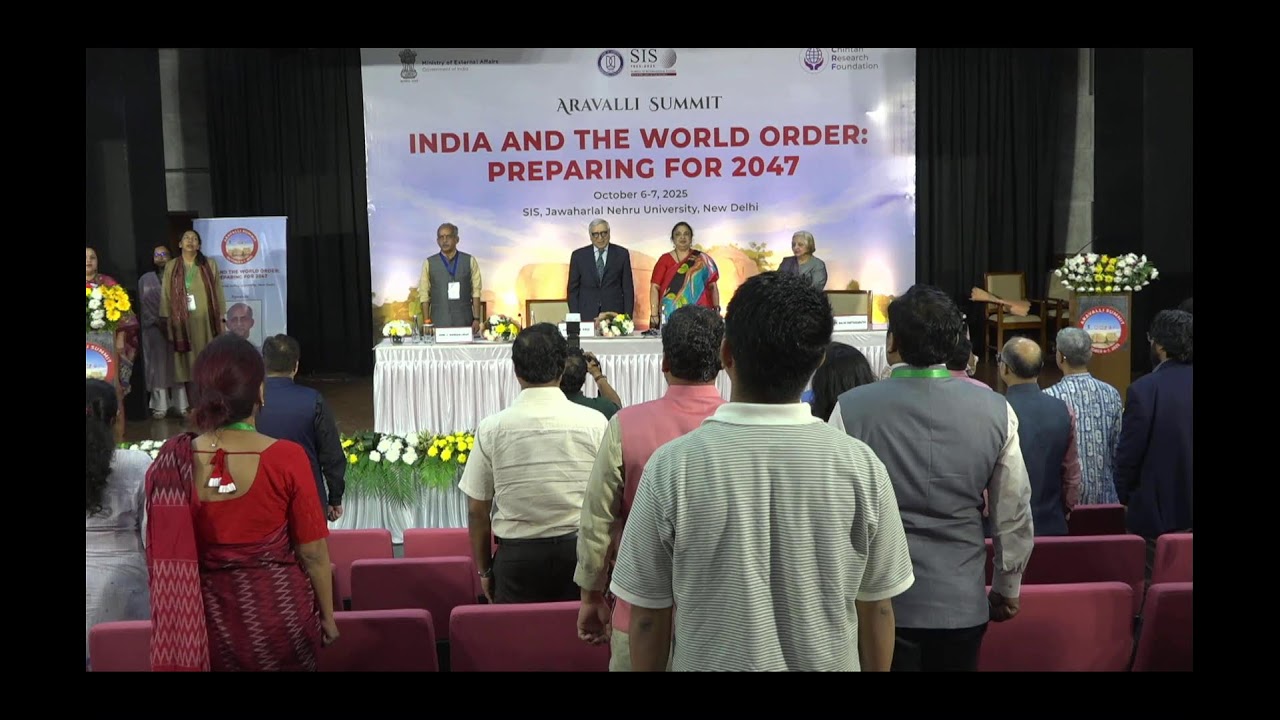
ARAVALLI SUMMIT 2025
Keywords
Summary
184 words
Critical Evaluation
Value of the Information & Strength of the Argument
The value of the information is high, as the panelists are recognized experts with deep experience in climate diplomacy, economics, and policy. They provide nuanced perspectives on the complexities of climate justice, energy transition, and international negotiations. The argumentation is solid, grounded in real-world examples and data, though it is primarily opinion-driven. The panelists effectively highlight the tensions between developed and developing countries, the inadequacy of current climate finance, and the potential impacts of trade mechanisms like CBAM. However, the discussion lacks rigorous citation of specific studies or reports, relying more on anecdotal evidence and general knowledge.
Scientific Rigor, Source Quality, Title Accuracy
The scientific rigor is moderate. The panelists reference international agreements (UNFCCC, Paris Agreement) and institutions (IPCC, WRI) but do not provide specific citations. The quality of sources is generally high, given the panelists’ affiliations, but the lack of direct references limits verifiability. The title ‘ARAVALLI SUMMIT 2025’ is broad and does not specifically indicate the focus on climate justice and energy transition, but it accurately reflects the event’s context. The discussion is well-structured and stays on topic, but the title could be more descriptive.
196 words
Title / Content Match
The title 'ARAVALLI SUMMIT 2025' is broad and does not specifically indicate the focus on climate justice and energy transition, but it accurately reflects the event's context.
Quality & Reliability
7/10
The video is a panel discussion featuring experts in climate policy, diplomacy, and economics. The arguments are grounded in established international frameworks (UNFCCC, Paris Agreement) and data, but the discussion is largely opinion-based and lacks rigorous citation of specific sources. The panelists are credible, but the content is not peer-reviewed.
Key Moments
Markers derived by PSI from the transcript: the creator did not define chapters.
- Introduction of panelists and chair by the moderator.
- Dr. Palit frames the discussion with India's civilizational ethos of sustainability.
- Ambassador Puri begins his remarks on climate governance and the need for policy space.
- Ambassador Puri discusses the US stance on climate change and the importance of multilateralism.
- Dr. Kelkar presents data on India's emissions trajectory and the need for social policies.
- Professor Sawhney discusses the intersection of climate and trade, focusing on CBAM.
- Panelists engage in Q&A with the audience on climate finance and equity.
Cited Sources
- UNFCCC — Referenced as the international framework for climate negotiations.
- Paris Agreement — Mentioned as a key international accord that the US withdrew from.
- IPCC — Referenced as the scientific body on climate change.
- World Resources Institute (WRI) — Dr. Kelkar's affiliation, mentioned in her introduction.
- The Energy and Resources Institute (TERI) — Ambassador Puri's affiliation, mentioned in his introduction.
Concurring Sources
- IPCC Sixth Assessment Report — Supports the scientific basis of climate change impacts mentioned.
- UNEP Emissions Gap Report — Relevant to the discussion on emission reduction commitments.
Dissenting Sources
- US Withdrawal from Paris Agreement — Ambassador Puri's critique of US climate policy is countered by the fact that the US has rejoined the agreement under the Biden administration, though the panel's concerns remain valid.
Contribution & Novelties
The video provides a valuable platform for experts to discuss climate justice and energy transition from the perspective of the global south. It highlights the tensions between developed and developing countries, the inadequacy of climate finance, and the potential impacts of trade mechanisms like CBAM. The discussion offers insights into India’s stance on climate negotiations and the need for equitable solutions.
Pour aller plus loin :
- Common but Differentiated Responsibilities (CBDR) — This principle is central to the climate justice arguments presented.
- Carbon Border Adjustment Mechanism (CBAM) — Discussed as a trade-climate linkage issue.
- Climate Finance — The panel highlights the gap between commitments and actual flows.
107 words
Radar Profile
The radar profile shows high scores in quantity of information and fiabilité, reflecting the depth of expertise and the credibility of the panelists. The lower score in technical level indicates that the discussion is accessible to a general audience, while the quality of information is strong but not overly technical.
💬 Sur les 0 commentaires analysés, aucune tendance n'est disponible.