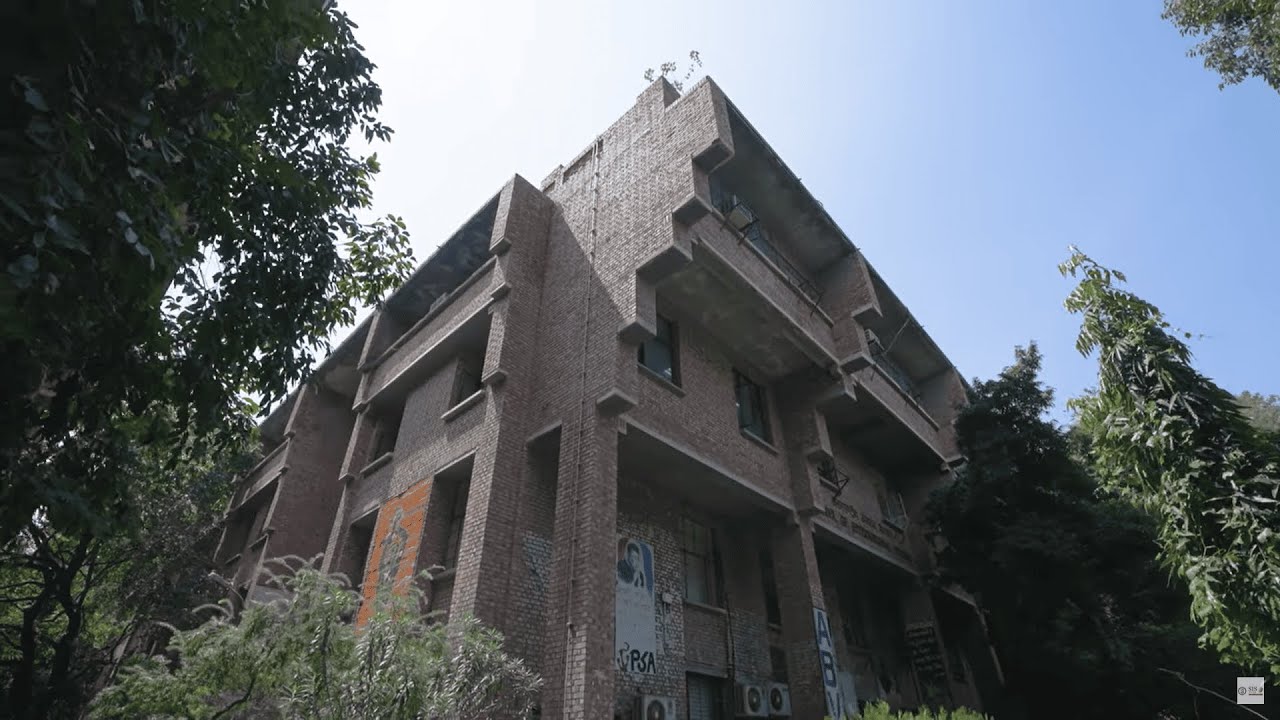
SIS@70 - Celebrating Seven Decades of Excellence
Keywords
Summary
145 words
Critical Evaluation
Value of the Information & Strength of the Argument
The documentary provides valuable historical insights into the development of international studies in India, highlighting the school’s unique role in indigenizing IR theory. It argues that SIS has been instrumental in producing knowledge rooted in Indian realities, challenging Eurocentric paradigms. The argumentation is supported by testimonies from notable alumni, which lend credibility to the narrative. However, the film is more celebratory than critical, and it does not engage with potential controversies or challenges the school has faced. The value lies in its archival footage and personal recollections, which offer a human perspective on institutional history.
Scientific Rigor, Source Quality, Title Accuracy
The documentary does not cite specific sources or provide references for its claims, relying instead on institutional memory and personal anecdotes. While this is common for commemorative films, it limits the scientific rigor. The title accurately reflects the content, and the film is well-produced with a clear narrative structure. The absence of external citations means that viewers cannot verify specific historical details, but the overall account aligns with known facts about SIS’s history. The documentary would benefit from including references to archival materials or scholarly works to enhance its credibility.
200 words
Title / Content Match
The title accurately reflects the content, which celebrates the 70th anniversary of the School of International Studies.
Quality & Reliability
7/10
The documentary provides a historical account of SIS with testimonies from alumni and faculty, but lacks detailed citations or verifiable sources for specific claims. It is an institutional narrative rather than a peer-reviewed analysis.
Key Moments
Markers derived by PSI from the transcript: the creator did not define chapters.
- Introduction to the founding of SIS in 1955 at Sapru House.
- Visionaries and the multidisciplinary structure of SIS.
- Testimony from an alumnus about his experience at Sapru House.
- Merger with JNU in 1970 and expansion of teaching programs.
- Establishment of regional studies centers and notable scholars.
- Impact of inclusive entrance exams on diversity.
- 1990s changes: end of Cold War, globalization, and new theories.
- Role in shaping India's nuclear doctrine and WTO negotiations.
- 21st-century expansion into new frontiers like environmental governance.
- Alumni achievements and tributes to the school's influence.
Contribution & Novelties
The documentary offers a unique retrospective on the evolution of international studies in India, emphasizing the indigenization of IR theory. It provides personal narratives that humanize the institutional history, which is not typically found in academic literature. The film’s contribution lies in its archival value and the articulation of SIS’s role in shaping India’s foreign policy discourse.
Pour aller plus loin :
- School of International Studies, JNU — Official page for further details on programs and history.
- International Studies journal — The journal launched by SIS in 1959, now published by Sage.
- Jawaharlal Nehru University — University’s official website for context on its founding and mission.
106 words
Radar Profile
The radar profile shows moderate scores across all dimensions, with a slightly higher emphasis on information quantity and quality relative to technical level. This reflects a documentary that is informative and well-structured but not highly technical, suitable for a general audience interested in institutional history.