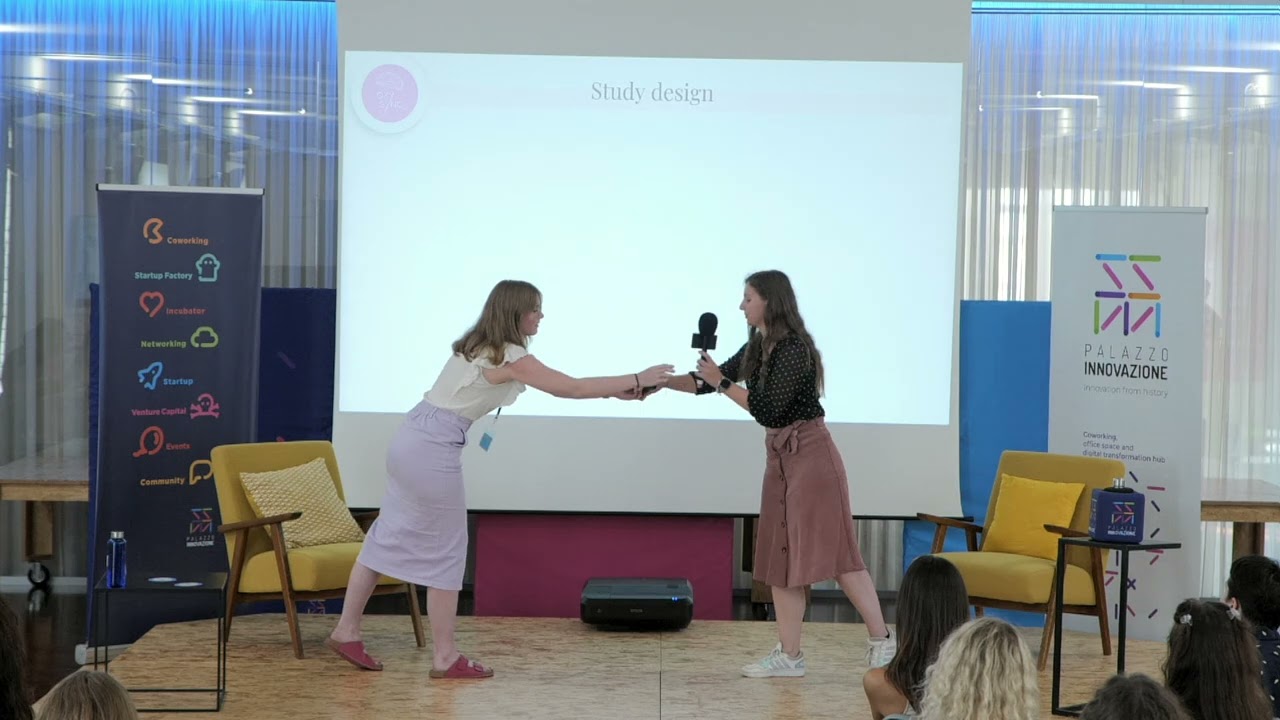
Body-Brain Waves - 28th September '24 - Talk by Laura Tibermont & Ruth Op de Beeck
Keywords
Summary
163 words
Critical Evaluation
Value of the Information & Strength of the Argument
The talk provides valuable insights into a novel research area combining biobehavioral synchrony, oxytocin, and autism. The argumentation is logically structured, starting with the theoretical background on biobehavioral synchrony and oxytocin, then presenting the study design and hypotheses. The rationale for combining oxytocin with a social context is well-justified based on recent research. However, as an ongoing study, no results are presented, limiting the empirical value. The argumentation is clear and coherent, but the lack of preliminary data or pilot results weakens the strength of the claims.
Scientific Rigor, Source Quality, Title Accuracy
The talk demonstrates scientific rigor in its methodology, with a randomized placebo-controlled design and careful inclusion criteria. The sources cited are not explicitly mentioned in the talk, but the description provides a link to the conference website (waves-conference.com) which may contain further references. The title accurately reflects the content, focusing on body-brain interactions and the specific study. The talk is part of a scientific series, suggesting a peer-reviewed context. However, the lack of explicit citations within the talk limits the ability to verify the sources.
187 words
Title / Content Match
The title accurately reflects the content, which is a talk on body-brain interactions, specifically focusing on biobehavioral synchrony in autism.
Quality & Reliability
7/10
The talk presents a well-structured research protocol (OxySync study) with clear hypotheses and methodology, but it is an ongoing study with no results yet, and the presentation is concise, limiting in-depth critical evaluation.
Key Moments
Markers derived by PSI from the transcript: the creator did not define chapters.
- Introduction to biobehavioral synchrony and its role in social development.
- Discussion on autism and reduced biobehavioral synchrony.
- Explanation of oxytocin's role and the social salience theory.
- Presentation of the OxySync study design and inclusion criteria.
- Description of the two-way video feed setup and measurement techniques.
- Hypotheses and expected outcomes of the study.
- Q&A session addressing IQ matching and subjective effects of oxytocin.
Cited Sources
- Body-Brain Waves Conference — Mentioned in the video description as the official website for the conference series.
Concurring Sources
- Biobehavioral synchrony — Provides background on the concept central to the talk.
- Oxytocin — Relevant to the intervention discussed.
Contribution & Novelties
The talk presents an original research protocol (OxySync) that uniquely combines intranasal oxytocin with a social mirror game to target biobehavioral synchrony in autistic children. This approach addresses a gap in the literature by integrating multiple physiological and behavioral measures in a dyadic context. The study’s innovative two-way video feed setup allows for naturalistic interactions while measuring synchrony. The potential to therapeutically enhance social interaction through oxytocin and synchrony is a novel contribution.
Pour aller plus loin :
- Biobehavioral synchrony — Overview of the concept and its relevance.
- Oxytocin — General information on the neuropeptide.
- Autism spectrum disorder — Background on the condition.
103 words
Radar Profile
The radar profile shows balanced scores across all dimensions, with slightly lower technical level and higher information quality. This indicates a well-rounded presentation with strong scientific content but moderate technical depth, suitable for a general scientific audience.
💬 No comments were provided for analysis.