Keywords
Summary
175 words
Critical Evaluation
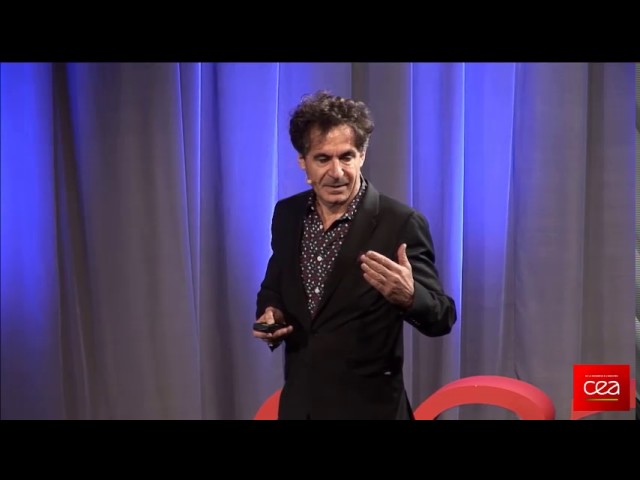
The video presents two high-quality popular science lectures by respected physicists. Etienne Klein’s talk is particularly strong in its philosophical and historical analysis of the concept of matter. He effectively deconstructs the naive atomism inherited from the Greeks and shows how modern physics has transformed our understanding. His use of the bubble chamber example is illuminating, demonstrating how visual representations can be misleading and require theoretical interpretation. He also touches on the creation and annihilation of matter, which is a profound concept. Roland Lehoucq’s talk is more observational, focusing on the cosmic origin of elements. He provides a clear and engaging narrative of nucleosynthesis, from the Big Bang to stellar processes. The scientific content is accurate and up-to-date, though some simplifications are made for a general audience. The talks are well-structured and delivered with clarity and enthusiasm. The Q&A session adds value by addressing audience questions. However, the video is a recording of a live event, so the production quality is not perfect, and there are some technical issues. The sources cited are not explicitly listed, but the speakers are credible authorities. Overall, the video is an excellent resource for anyone interested in the nature and origin of matter, offering both philosophical depth and scientific rigor.
206 words
Title / Content Match
The title accurately reflects the content, which is a discussion on the origin of matter by two physicists.
Quality & Reliability
8/10
The video features two renowned physicists (Etienne Klein and Roland Lehoucq) discussing the origin and nature of matter. The content is scientifically accurate, well-structured, and based on established physics. However, it is a popular science talk, not a peer-reviewed source, and some simplifications are made for a general audience.
Key Moments
Markers derived by PSI from the transcript: the creator did not define chapters.
- Introduction by the host, presenting the two speakers and the topic.
- Etienne Klein begins his talk on 'De quoi la matière est-elle le nom ?'.
- Klein discusses the historical concept of the atom and its evolution.
- Klein uses the bubble chamber example to illustrate the misleading nature of scientific images.
- Klein challenges common-sense properties of matter, such as conservation.
- Roland Lehoucq begins his talk on the genealogy of matter.
- Lehoucq explains stellar nucleosynthesis and the origin of elements.
- End of the talks and beginning of Q&A session.
Contribution & Novelties
The video provides a unique combination of philosophical and scientific perspectives on the origin of matter. Etienne Klein’s talk offers a critical analysis of the concept of matter, challenging common assumptions and highlighting the role of theory in interpreting experimental results. Roland Lehoucq’s talk provides a comprehensive overview of the cosmic origin of elements, connecting the microscopic world of particles to the macroscopic universe. The video is valuable for its interdisciplinary approach and its ability to make complex ideas accessible to a general audience.
Pour aller plus loin :
- Big Bang nucleosynthesis — Relevant to Lehoucq’s discussion of the origin of light elements.
- Stellar nucleosynthesis — Relevant to Lehoucq’s explanation of element formation in stars.
- Bubble chamber — Relevant to Klein’s example of scientific imagery.
- Atomism — Relevant to Klein’s historical analysis.
132 words
Radar Profile
The radar profile shows high scores in information quantity and quality, reflecting the depth and accuracy of the content. The technical level is moderate, indicating that the talks are accessible but still scientifically rigorous. The overall reliability is high, consistent with the credibility of the speakers.