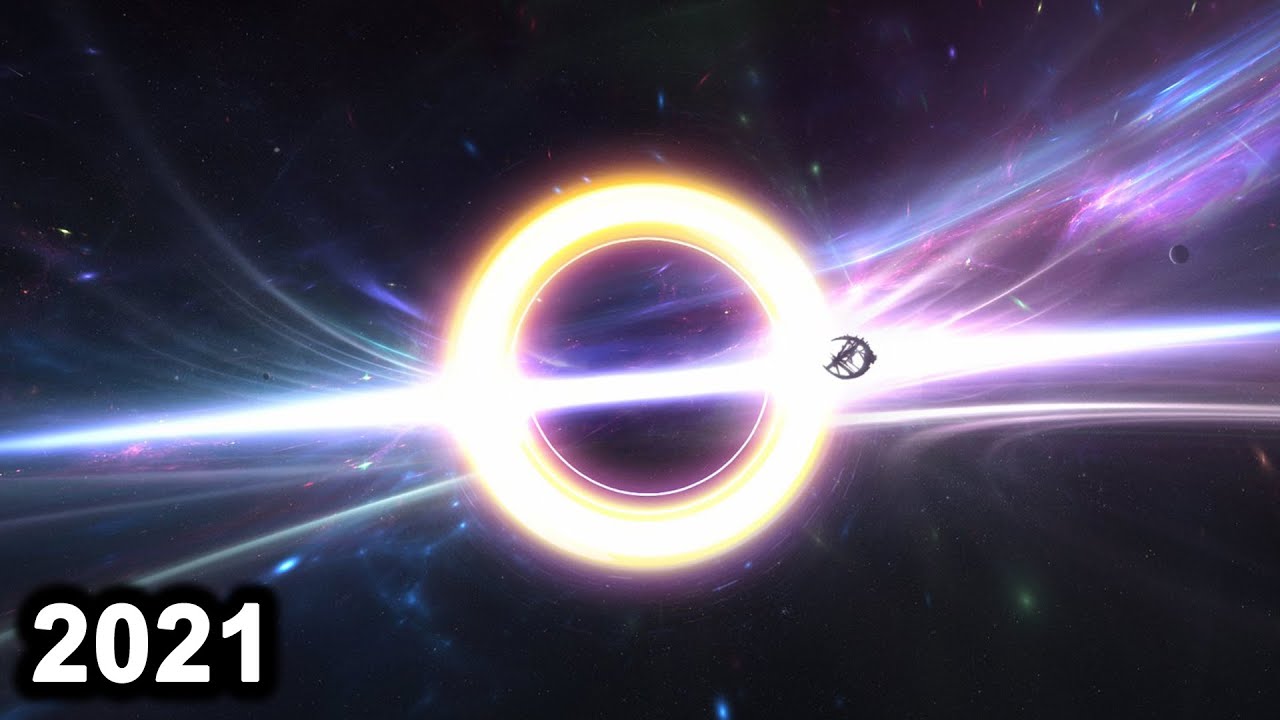
Les Trous Noirs les plus Lumineux de l'Univers !
Keywords
Summary
173 words
Critical Evaluation
The conference is an excellent scientific presentation by a leading expert in the field. Françoise Combes demonstrates deep knowledge and clarity in explaining complex concepts. The content is accurate and up-to-date, incorporating recent discoveries such as the EHT image of M87*. The argumentation is solid, building from basic principles of gravity to the role of black holes in galaxy evolution. The use of visuals, including simulations and observational images, enhances understanding. The sources cited are primarily the speaker’s own expertise and the EHT collaboration, which are highly reliable. The title accurately reflects the content, as the talk focuses on the most luminous black holes (quasars). The presentation is suitable for a general audience with some scientific background, but it does not oversimplify the material. Overall, this is a high-quality, informative, and engaging lecture.
133 words
Title / Content Match
The title accurately reflects the content, which focuses on the most luminous black holes (quasars) and their role in galaxy evolution.
Quality & Reliability
9/10
The speaker is a renowned astrophysicist (CNRS Gold Medal 2020, professor at Collège de France), and the content is based on established scientific knowledge, including recent observations (Event Horizon Telescope). The presentation is rigorous and well-structured.
Key Moments
Markers derived by PSI from the transcript: the creator did not define chapters.
- Introduction to the talk and the paradox of luminous black holes.
- Presentation of the first image of the shadow of the black hole in M87.
- Explanation of the event horizon and the Schwarzschild radius.
- Discussion of stellar-mass black holes and their formation.
- Introduction to supermassive black holes and their ubiquity in galaxies.
- Explanation of the Eddington limit and the maximum accretion rate.
- Description of quasars and their energy output.
- Discussion of the role of black holes in regulating star formation.
- Observations of the Galactic center and Sgr A*.
- Conclusion and future prospects with the Event Horizon Telescope.
Cited Sources
- Event Horizon Telescope (EHT) - related video — Referenced in the description as a related video, likely about the EHT results.
Concurring Sources
- Event Horizon Telescope (EHT) - related video — Likely contains similar content on black hole imaging.
Contribution & Novelties
The conference provides a comprehensive overview of the physics of black holes and their role as the most luminous objects in the universe. It synthesizes recent observational breakthroughs, such as the EHT image of M87*, and explains the theoretical framework of accretion and feedback. The talk is original in its emphasis on the connection between black holes and galaxy evolution, making it accessible to a broad audience.
Pour aller plus loin :
- Event Horizon Telescope official site — For more details on the EHT observations.
- Quasar - Wikipedia — General information on quasars.
- Eddington luminosity - Wikipedia — Explanation of the Eddington limit.
103 words
Radar Profile
The profile shows high scores across all dimensions, indicating a well-balanced and reliable scientific presentation. The quantity and quality of information are excellent, with a high technical level appropriate for an expert speaker. The global reliability is strong, reflecting the speaker's authority and the use of recent observational data.