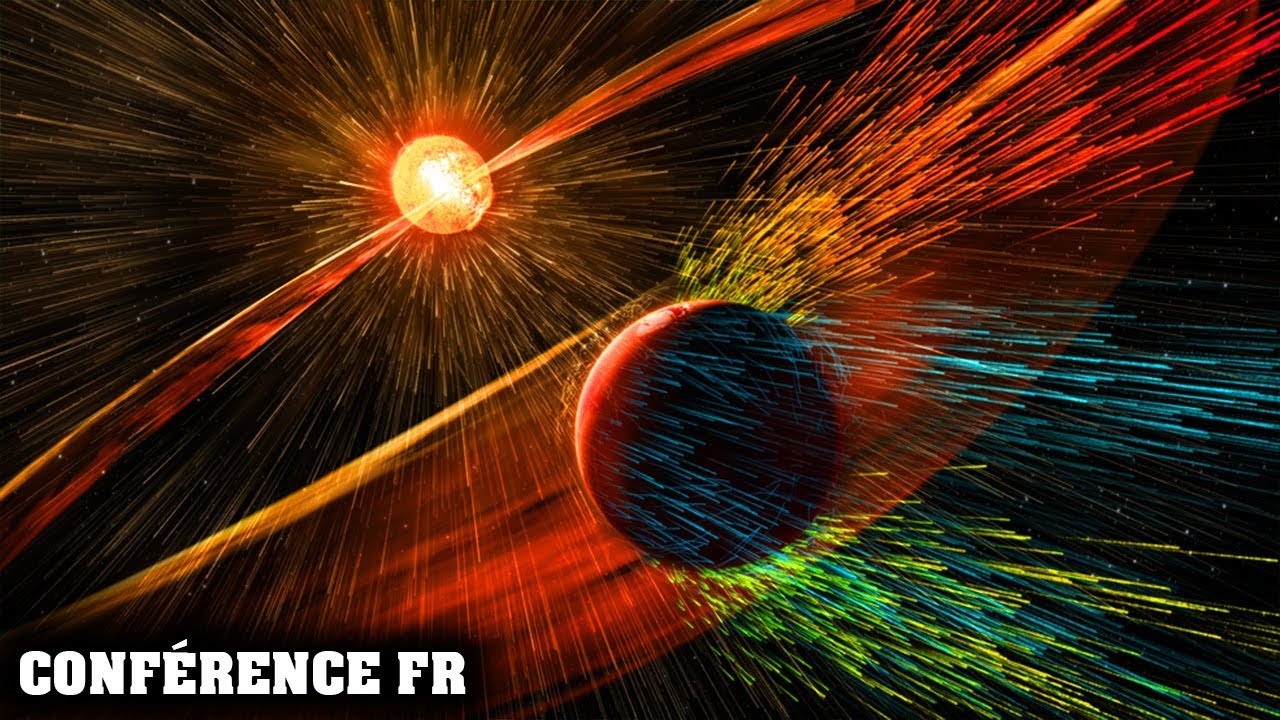
Les rayons cosmiques d'ultra-haute énergie
Keywords
Summary
167 words
Critical Evaluation
The presentation offers a comprehensive and accessible overview of ultra-high-energy cosmic rays, suitable for a general scientific audience. The speaker, Kumiko Kotera, is a recognized expert in the field, which lends credibility to the content. The talk is well-structured, starting with historical context and progressively building to current research challenges. The scientific accuracy is high, with correct explanations of the energy spectrum, detection techniques, and the role of magnetic fields. However, the presentation lacks specific citations to scientific papers, which would enhance its rigor. The argumentation is logical, but some concepts, such as the mechanisms of particle acceleration, are simplified. The title accurately reflects the content, and the talk does not include any promotional material. Overall, this is a valuable educational resource that effectively communicates complex astrophysical concepts to a non-specialist audience.
132 words
Title / Content Match
The title accurately reflects the content, which focuses on ultra-high-energy cosmic rays.
Quality & Reliability
8/10
The presentation is given by a recognized astrophysicist (Kumiko Kotera) and provides a thorough overview of ultra-high-energy cosmic rays, covering historical context, detection methods, and current research challenges. The content is scientifically accurate and well-structured, though it lacks detailed citations to specific studies.
Key Moments
Markers derived by PSI from the transcript: the creator did not define chapters.
- Introduction to cosmic rays and their energy spectrum.
- Historical discovery by Victor Hess and the origin of cosmic rays.
- Explanation of the extreme energies of UHECRs compared to LHC.
- Challenges in identifying sources due to magnetic field deflection.
- Potential sources: pulsars, gamma-ray bursts, active galactic nuclei.
- Detection methods: Pierre Auger Observatory and air showers.
- Statistical limitations and the need for larger detectors.
- Future prospects and ongoing research.
Cited Sources
- Pierre Auger Observatory — Mentioned as the leading observatory for UHECR detection.
Concurring Sources
- Pierre Auger Observatory — The observatory's official website provides data and publications consistent with the talk.
Contribution & Novelties
The presentation provides a clear and engaging synthesis of the current state of research on ultra-high-energy cosmic rays, highlighting the mystery of their origin and the technological efforts to detect them. It effectively communicates the scientific challenges and the importance of these particles as unique cosmic messengers.
Pour aller plus loin :
- Ultra-high-energy cosmic ray - Wikipedia — Provides a comprehensive overview of UHECRs, including detection and theories.
- Pierre Auger Observatory - Wikipedia — Details the largest UHECR detector and its scientific results.
- Cosmic ray - Wikipedia — General information on cosmic rays, their origins, and properties.
97 words
Radar Profile
The radar profile shows high scores in information quantity, quality, and technical level, with a slightly lower score in global reliability due to the lack of explicit citations. This indicates a well-informed and technically sound presentation that could benefit from more rigorous referencing.