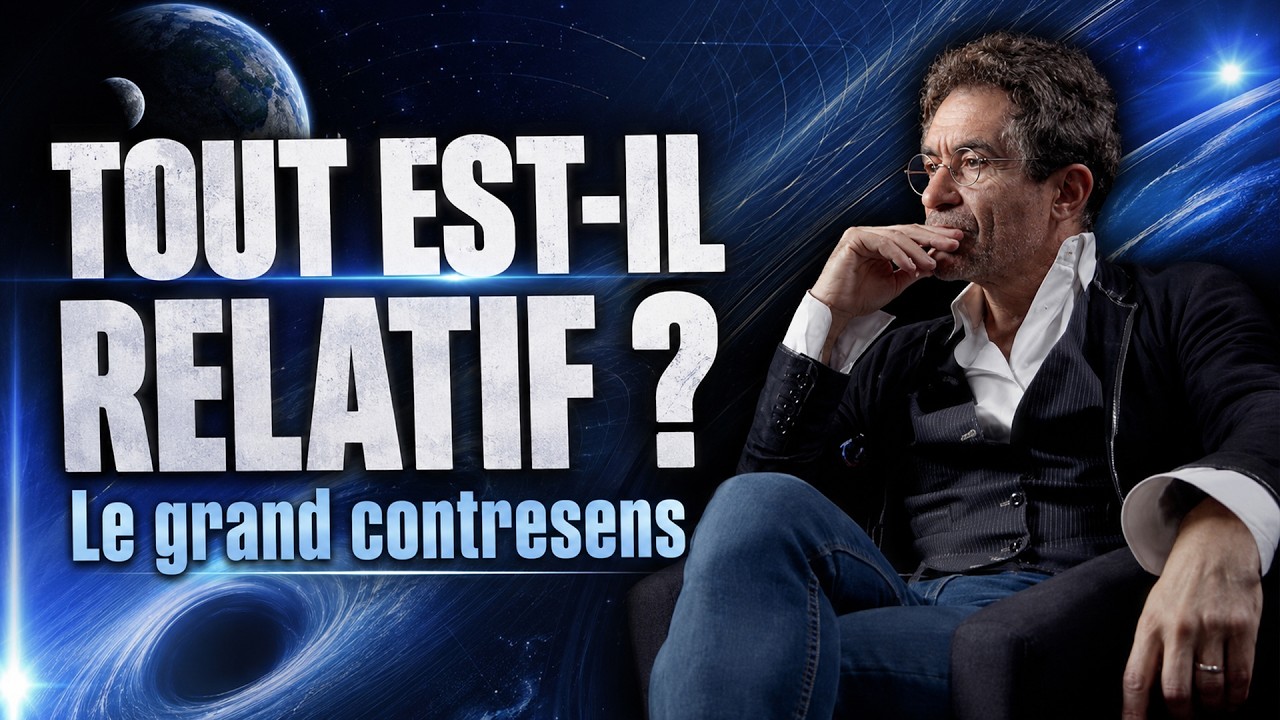
Pourquoi la Physique contredit notre Bon Sens — Étienne Klein
Keywords
Summary
164 words
Critical Evaluation
The conference is intellectually stimulating and well-articulated, offering a robust defense of scientific rationality against relativism. Klein’s argumentation is solid, drawing on historical examples and philosophical insights. He effectively demonstrates that physics often contradicts intuitive beliefs, using the example of Galileo’s law of falling bodies. His critique of ‘scientific populism’ is timely and relevant. However, the talk is more philosophical than technical, and some claims could benefit from more precise references. The anecdote about the student is powerful but may be an isolated case. Klein’s discussion of the Higgs boson and scientific humility is insightful, but he does not delve into the technical details. The conference is accessible to a general audience, but it does not provide a deep technical analysis. Overall, it is a valuable contribution to the public understanding of science, though it may not satisfy those seeking rigorous scientific detail.
143 words
Title / Content Match
The title accurately reflects the core theme: physics contradicts common sense, as illustrated through historical and philosophical examples.
Quality & Reliability
8/10
The speaker is a renowned physicist and philosopher, and the content is a well-structured conference addressing epistemological issues. The arguments are supported by historical examples and philosophical references, though some claims are presented without detailed citations.
Chapters
- Introduction : Entre Scientisme radical et Relativisme absolu
- Bertrand Russell et la leçon d'humilité de la vérité
- L'anecdote de l'étudiant : "Je ne suis pas d'accord avec Einstein"
- Le populisme scientifique et la démagogie cognitive
- Galilée : Pourquoi la physique contredit toujours notre "bon sens"
- Le secret des génies : Les expériences de pensée
- "Tout est relatif" : Le pire contresens sur la théorie de la Relativité
- L'arrogance et l'humilité du chercheur (La quête du Boson de Higgs)
- La science est-elle une simple construction sociale ?
- Les erreurs scientifiques et l'inconscient du chercheur (Les rayons N, la Super-Eau)
Cited Sources
- Bertrand Russell - Wikipedia — Klein quotes Russell on the concept of truth and humility.
- Galileo Galilei - Wikipedia — Klein discusses Galileo's thought experiments and the law of falling bodies.
- Albert Einstein - Wikipedia — Klein references Einstein's theory of relativity and thought experiments.
- Gerald Bronner - Wikipedia — Klein mentions Bronner's concept of 'cognitive demagogy'.
- Gaston Bachelard - Wikipedia — Klein cites Bachelard on the scientific mind and thinking against the brain.
- Alexandre Koyré - Wikipedia — Klein references Koyré on the idea that physics explains the real by the impossible.
Concurring Sources
- The Structure of Scientific Revolutions - Thomas Kuhn — Kuhn's work on paradigm shifts aligns with Klein's discussion of scientific change.
- Against Method - Paul Feyerabend — Feyerabend's critique of scientific method contrasts with Klein's defense of scientific rationality.
Dissenting Sources
Contribution & Novelties
The conference provides a clear and engaging explanation of why physics often contradicts common sense, using historical examples and philosophical arguments. It offers a nuanced position between scientism and relativism, defending the value of scientific truth without falling into dogmatism.
Pour aller plus loin :
- Épistémologie de la physique — Pertinent pour approfondir la réflexion sur la nature des lois physiques.
- Expérience de pensée — Klein insiste sur l’importance des expériences de pensée en physique.
- Relativité restreinte — Pour comprendre la théorie d’Einstein et ses implications.
86 words
Radar Profile
The radar profile shows high scores in information quantity and quality, with a moderate technical level. The reliability is high, reflecting the speaker's expertise. The overall balance indicates a well-rounded presentation suitable for a general audience interested in philosophy of science.
💬 Très positif. Les commentaires expriment une grande admiration pour Étienne Klein et la qualité de la conférence, avec des remerciements et des réflexions personnelles.