Keywords
Summary
171 words
Critical Evaluation
The conference by Étienne Klein is a masterful exposition of the counterintuitive nature of physics, aimed at a general audience but without sacrificing scientific rigor. Klein’s argumentation is solid, built on historical examples and thought experiments that clearly illustrate how our intuitions are often wrong. He effectively uses the example of Galileo’s discovery of the law of falling bodies to demonstrate that true physical laws are often hidden by everyday phenomena, such as air resistance. The discussion of the vacuum cleaner is particularly effective in showing how language can mislead us about physical processes. Klein’s explanations of relativity and quantum mechanics are concise but accurate, and he does not oversimplify to the point of distortion. The talk is well-structured, progressing from classical physics to modern physics, and consistently emphasizes the theme that our senses and cognitive biases are unreliable guides to the nature of reality. The sources cited are not explicitly mentioned, but the content aligns with established scientific knowledge. The title accurately reflects the content, and the talk delivers on its promise to explain why physics is illogical from a common-sense perspective. The only minor weakness is that some concepts, such as the expansion of the universe, are introduced briefly and might benefit from more elaboration. Overall, this is an excellent popular science lecture that is both informative and thought-provoking.
221 words
Title / Content Match
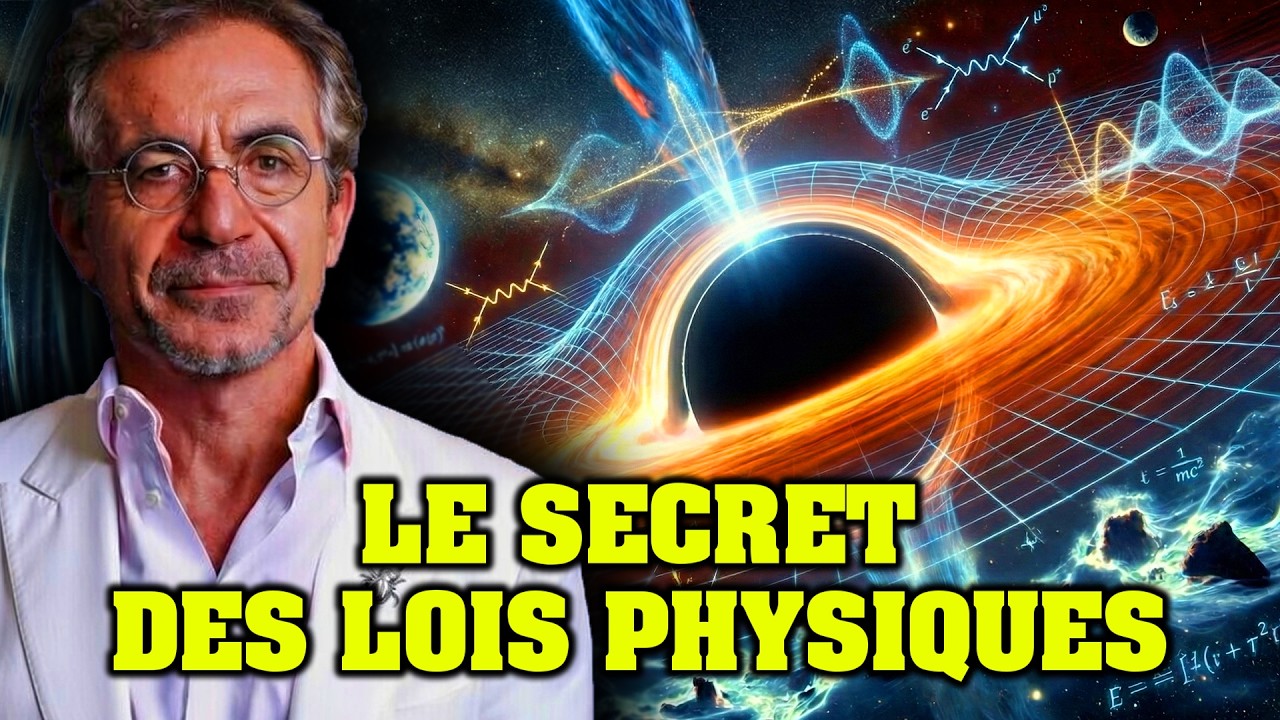
The title accurately reflects the content: the talk explains how physics often contradicts common sense and everyday perception.
Quality & Reliability
8/10
The speaker is a well-known physicist and philosopher of science, and the content is consistent with established physics. The talk is a popular science lecture, not peer-reviewed, but the scientific explanations are accurate and well-illustrated with examples.
Key Moments
Markers derived by PSI from the transcript: the creator did not define chapters.
- Introduction: the world masks the true laws of physics.
- Anecdote about Maurice Ravel and internal perception.
- Galileo's thought experiment on falling bodies.
- The role of language in misleading us (vacuum cleaner example).
- Discussion of absolute time and relativity.
- Quantum mechanics and its paradoxes.
- The Big Bang and the origin of the universe.
- Philosophy of science and the perception of time.
- Conclusion: the need to go beyond sensory experience.
Cited Sources
- No explicit sources cited in the video description. — The video description does not include any links to sources.
Concurring Sources
- No specific sources provided. — No external sources were mentioned in the video.
Dissenting Sources
- No discordant sources found. — The content aligns with established physics.
Contribution & Novelties
The talk provides a clear and engaging synthesis of why physics is counterintuitive, using historical examples and thought experiments. It emphasizes the importance of conceptual leaps in scientific progress.
Pour aller plus loin :
- Galileo’s thought experiment — Relevant to the discussion of falling bodies.
- Special relativity — Explains the relativity of time.
- Quantum mechanics — Discusses the paradoxes of quantum physics.
62 words
Radar Profile
The radar profile shows high scores in information quantity, quality, and reliability, with a moderate technical level. This indicates a well-balanced and trustworthy popular science talk.
💬 Positive: The comments are overwhelmingly positive, with viewers expressing appreciation for the clarity and depth of the talk. Some engage with specific scientific points, showing active interest.