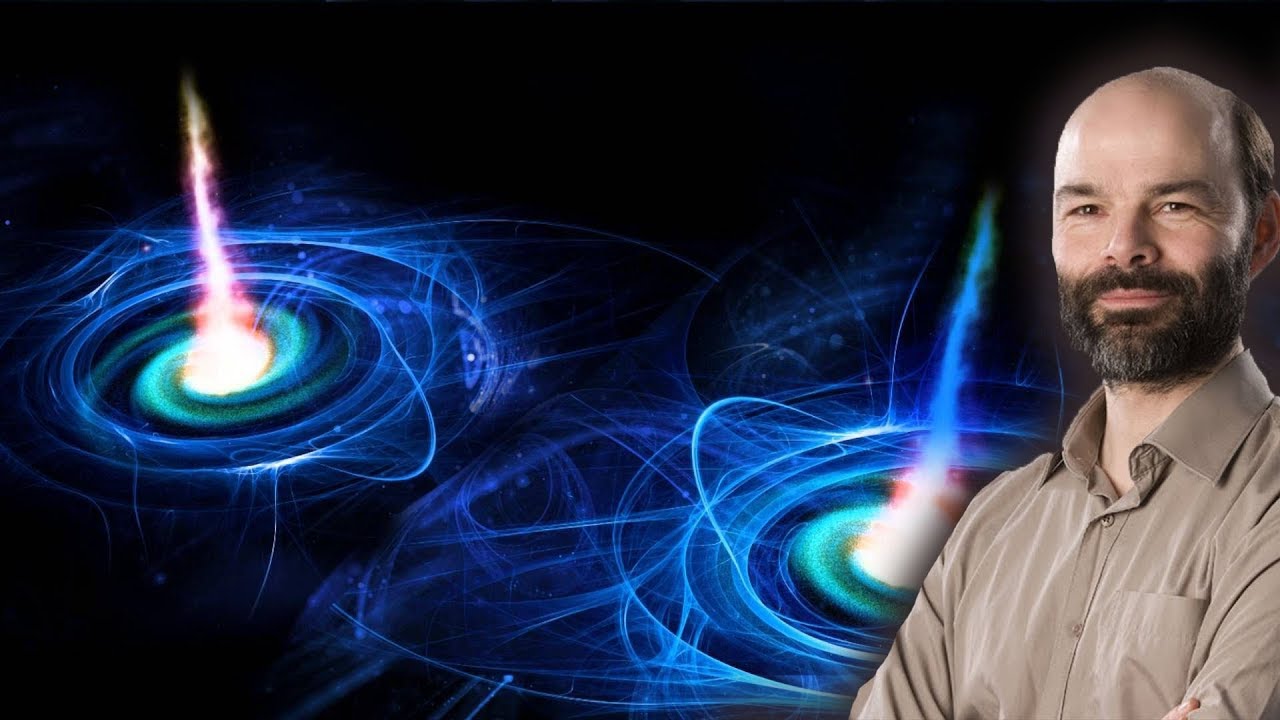
Découverte récente grâce aux Onde Gravitationnelles !
Keywords
Summary
122 words
Critical Evaluation
The video is a high-quality scientific conference that successfully explains the recent breakthroughs in gravitational wave astronomy. The speakers are experts in their fields, and the content is accurate and up-to-date as of 2018. The presentation is well-structured, starting with an introduction to gravitational waves, then detailing the multi-messenger observation of GW170817, and finally discussing future prospects. The argumentation is solid, with clear explanations of complex concepts. The sources are not explicitly cited in the video, but the speakers reference their own work and the LIGO/Virgo collaboration. The title is slightly misleading due to grammar, but the content matches the topic. The video is aimed at a general audience, but it does not oversimplify the science. The main strength is the authoritative presentation by leading researchers. The main weakness is the lack of visual aids and the amateurish production quality. Overall, this is an excellent resource for understanding the significance of gravitational wave astronomy.
154 words
Title / Content Match
The title is somewhat generic and slightly misleading (grammar), but the content indeed covers recent discoveries in gravitational waves, so it is broadly adequate.
Quality & Reliability
8/10
The video features a panel of experts (Roland Lehoucq, Philippe Laurent, Diego Götz, Fabian Schussler, Stéphane Schanne) discussing the recent detection of gravitational waves and the multi-messenger observation of a neutron star merger. The content is scientifically accurate, well-structured, and based on established physics. The speakers are credible researchers. Minor limitations: the video is a recording of a conference, so some details may be simplified, and the production quality is amateurish.
Key Moments
Markers derived by PSI from the transcript: the creator did not define chapters.
- Introduction by the host, presenting the conference and the speakers.
- Roland Lehoucq begins his talk on gravitational waves, explaining the difference between Newtonian gravity and general relativity.
- Lehoucq discusses the first detection of gravitational waves and the merger of two black holes.
- Lehoucq explains the multi-messenger detection of GW170817, the neutron star merger.
- Philippe Laurent talks about the gamma-ray observations of the merger.
- Diego Götz discusses the visible light observations with the VLT.
- Fabian Schussler presents the neutrino searches with H.E.S.S.
- Stéphane Schanne introduces the SVOM satellite mission for future gamma-ray bursts.
- Q&A session with the audience.
Cited Sources
- LIGO Scientific Collaboration — Mentioned as the collaboration that detected gravitational waves.
- Virgo Collaboration — Mentioned as the European gravitational wave detector.
- H.E.S.S. Collaboration — Mentioned in the context of neutrino searches.
- SVOM Mission — Mentioned as a future satellite for gamma-ray burst detection.
Concurring Sources
- LIGO Scientific Collaboration — The detection of GW170817 was announced by LIGO/Virgo, and this source confirms the event.
- Virgo Collaboration — Virgo participated in the detection of GW170817, as mentioned in the video.
Contribution & Novelties
The video provides a comprehensive overview of the first multi-messenger observation of a neutron star merger, highlighting the synergy between gravitational wave and electromagnetic observations. It explains the scientific significance and future prospects.
Pour aller plus loin :
- LIGO Scientific Collaboration — Official website with detailed information on gravitational wave detections.
- Virgo Collaboration — European gravitational wave detector, complementary to LIGO.
- H.E.S.S. Collaboration — High Energy Stereoscopic System, used for gamma-ray and neutrino searches.
- SVOM Mission — French-Chinese satellite mission for gamma-ray burst studies.
84 words
Radar Profile
The radar profile shows high scores in information quantity and quality, indicating a dense and reliable content. The technical level is moderate, suitable for a general audience. The overall reliability is high, reflecting the expertise of the speakers.