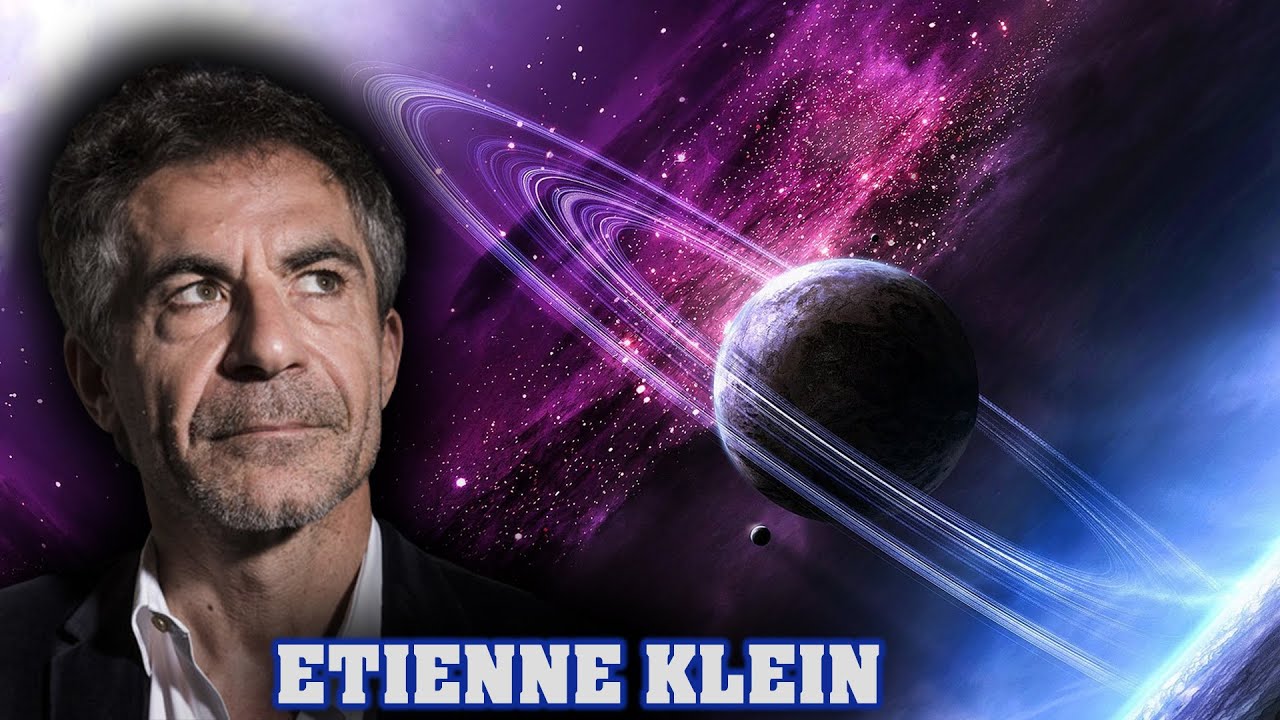
Etienne Klein - Connaitre la vérité en Science
Keywords
Summary
171 words
Critical Evaluation
Etienne Klein’s talk is a thoughtful and engaging exploration of the epistemological challenges in science communication. He draws on his extensive experience as a physicist and popularizer to illustrate how cognitive biases can distort public understanding of science. The argument is well-structured: he starts with a concrete example (the COVID-19 poll) to highlight the problem, then systematically identifies four cognitive biases that contribute to it, and finally reflects on the nature of scientific truth and the importance of method. Klein’s credibility is high, as he is a research director at CEA and a well-known figure in French science communication. However, the talk is more of an opinion piece than a rigorous scientific analysis; he does not provide formal references or data to support his claims about the biases, though they are well-established in psychology. The examples he gives, such as the radioactivity of the human body, are accurate and effectively illustrate the gap between scientific reality and common perception. The discussion of the ‘goût du vrai’ (taste for truth) is philosophical and invites reflection rather than providing definitive answers. The title is appropriate, as the talk indeed addresses the question of how we can know truth in science. Overall, the content is valuable for a general audience interested in the philosophy of science, but it lacks the depth and rigor of a formal academic lecture. The absence of a Q&A session or interaction with the audience is a minor drawback, but the talk stands on its own as a coherent and thought-provoking monologue.
253 words
Title / Content Match
The title accurately reflects the content, which is a discussion about the nature of truth in science, presented by Etienne Klein.
Quality & Reliability
8/10
The speaker is a well-known physicist and philosopher of science, with a strong background in physics and science communication. The content is based on his expertise and personal reflections, but it is an opinion piece rather than a peer-reviewed study. The arguments are coherent and well-illustrated with examples, but the lack of formal citations and the subjective nature of the talk slightly reduce the score.
Key Moments
Markers derived by PSI from the transcript: the creator did not define chapters.
- Introduction and presentation of Etienne Klein
- Klein explains his motivation for writing 'Le goût du vrai'
- Discussion of the COVID-19 poll and the problem of overconfidence
- Identification of cognitive biases: confirmation bias, ultracrepidarianism, ipse dixitism, and intuition
- Example of radioactivity in the human body to illustrate that science contradicts common sense
- Reflection on the nature of scientific truth and the importance of method
- Conclusion and call for intellectual humility
Cited Sources
- Le goût du vrai — Klein mentions his book 'Le goût du vrai' as the origin of his reflections.
Concurring Sources
- Le goût du vrai — Klein's book expands on the themes discussed in the talk.
Contribution & Novelties
The talk offers a personal and accessible perspective on the challenges of science communication, emphasizing the role of cognitive biases. It is not a novel scientific contribution but rather a synthesis of existing ideas applied to the context of public understanding of science.
Pour aller plus loin :
- Confirmation bias — Relevant to the first bias discussed.
- Ultracrepidarianism — Directly related to the second bias.
- Dunning-Kruger effect — Related to overconfidence in one’s knowledge.
74 words
Radar Profile
The radar profile shows high scores in quality of information and reliability, reflecting Klein's expertise and coherent argumentation. The quantity of information is moderate, and the technical level is relatively low, making it accessible to a general audience.