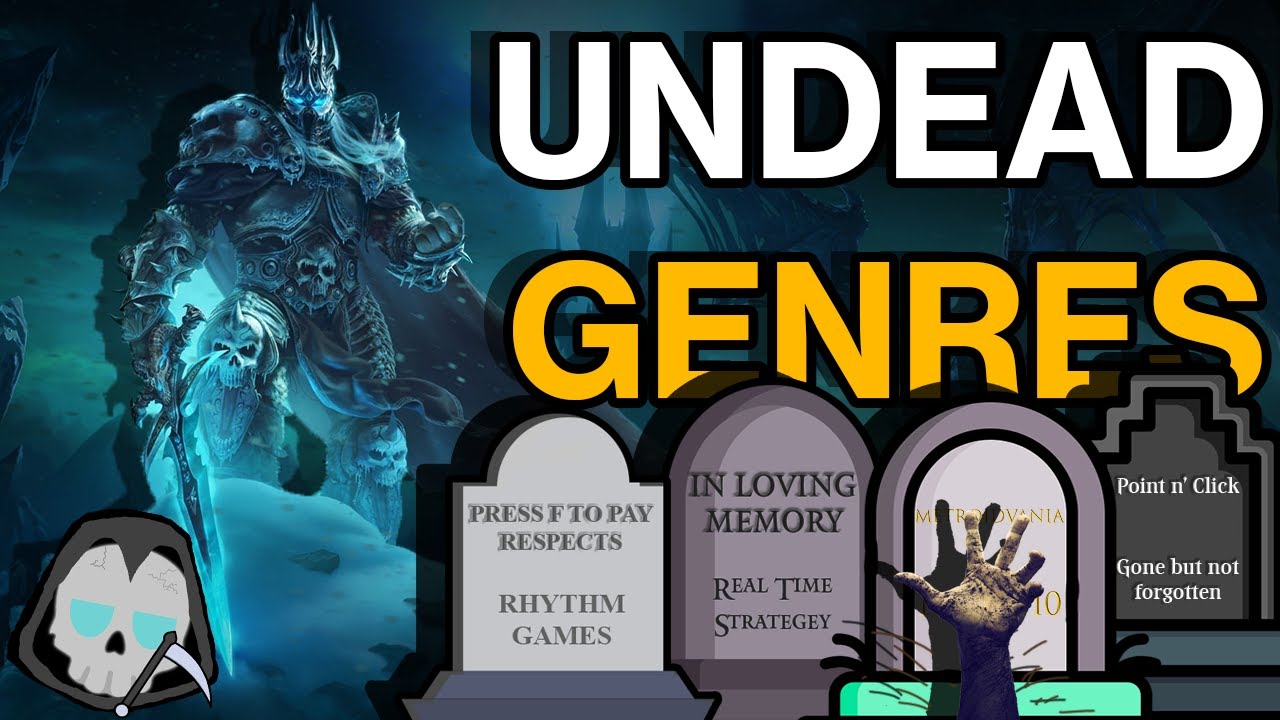
What Happens After A Game Dies?
Keywords
Summary
158 words
Critical Evaluation
Value of the Information & Strength of the Argument
The video offers a valuable framework for understanding genre evolution, providing a clear and logical structure. The argumentation is solid, supported by numerous examples from gaming history. The three-stage model (pioneers, exemplars, twists) is well-illustrated and helps explain why some genres thrive while others fade. The video also addresses the role of cultural and economic factors, such as the impact of arcade business models and streaming platforms. However, some claims are debatable, particularly the assertion that rhythm games are dead, which is contested by commenters who point to their continued popularity in Asia and on PC. Overall, the argumentation is persuasive and thought-provoking, though not without its biases.
Scientific Rigor, Source Quality, Title Accuracy
The video demonstrates a high level of scientific rigor in its research, referencing numerous games and historical developments. The sources cited in the description are primarily social media profiles and a Patreon page, which are not academic but serve as community references. The title accurately reflects the content, and the video’s structure is coherent. The video does not explicitly cite academic sources, but its analysis is grounded in observable trends and historical data. The adequacy between title and content is strong, as the video directly addresses the question of what happens after a game genre dies. The video’s rigor is commendable, though it could benefit from more explicit citations to external research.
235 words
Title / Content Match
The title accurately reflects the video's content, which explores the lifecycle of video game genres, including their death and potential revival.
Quality & Reliability
8/10
The video provides a well-structured and insightful analysis of video game genre lifecycles, supported by numerous examples and historical references. The argumentation is coherent and demonstrates a deep understanding of game design history. However, some claims, particularly regarding rhythm games, are contested by commenters and may reflect a Western-centric perspective.
Key Moments
Markers derived by PSI from the transcript: the creator did not define chapters.
- Introduction of the three-stage lifecycle model: pioneers, exemplars, and twists.
- Discussion of pioneers, using Metal Gear and Minecraft mods as examples.
- Explanation of exemplars, citing Street Fighter II and Civilization.
- Analysis of twists, using Abiotic Factor and Hollow Knight as examples.
- Discussion of genre revival, focusing on CRPGs and Metroidvanias.
- Conclusion emphasizing the importance of change for genre survival.
Cited Sources
- Dominic's Bluesky post — Referenced as a curator recommendation.
- Casey's Bluesky post — Referenced as a curator recommendation.
- Colin's Bluesky post — Referenced as a curator recommendation.
- Architect of Games on Bluesky — Channel's official Bluesky profile.
Concurring Sources
- The Architect of Games Patreon — Support page, not a source of information.
Contribution & Novelties
The video provides a novel framework for understanding video game genre evolution, synthesizing concepts from evolutionary biology and art history. It offers a clear and memorable model (pioneers, exemplars, twists) that can be applied to analyze any genre. The video also challenges common assumptions about genre death, arguing that genres are never truly dead but rather evolve or hibernate. This perspective is valuable for game designers and enthusiasts alike.
Pour aller plus loin :
- Evolutionary biology — The video draws parallels between biological evolution and genre evolution.
- Meme theory — The concept of cultural evolution is relevant to understanding how genres spread and mutate.
- Game design patterns — This concept relates to the idea of exemplars and genre conventions.
119 words
Radar Profile
The radar profile shows high scores in quantity of information and global reliability, indicating a well-researched and informative video. The technical level is moderate, making it accessible to a broad audience. The quality of information is high, but the video's Western-centric perspective on rhythm games may slightly reduce its overall accuracy.
💬 The comments are predominantly positive, with many viewers praising the video's depth and insight. However, there is a notable contingent of rhythm game enthusiasts who contest the claim that rhythm games are dead, pointing to their thriving communities in Asia and on PC. Overall, the sentiment is balanced, with constructive criticism and appreciation for the video's analytical approach.