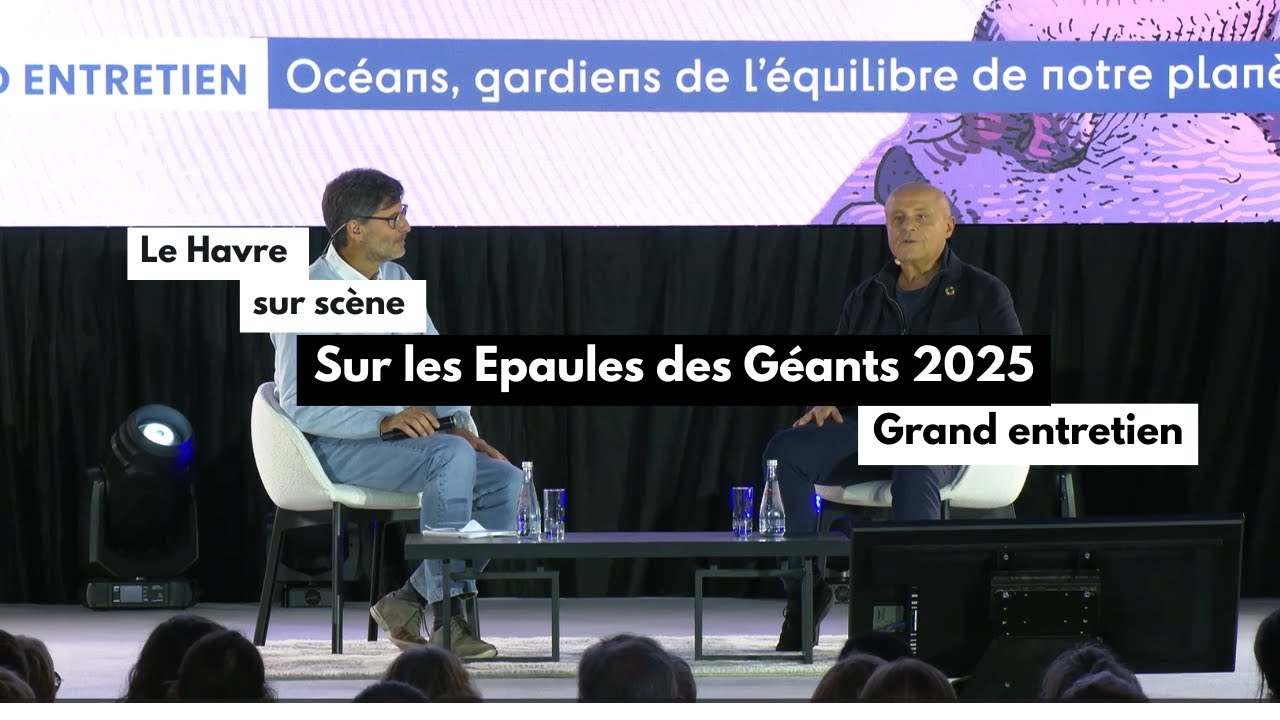
Olivier Poivre d'Arvor : Océans, gardiens de l'équilibre de notre planète – SLEDG 2025
Keywords
Summary
181 words
Critical Evaluation
Value of the Information & Strength of the Argument
The value of the information lies in the unique perspective of a diplomat directly involved in international ocean negotiations. He provides insider knowledge on the High Seas Treaty, the dynamics of coalition-building, and the current geopolitical landscape. His arguments are persuasive, grounded in his experience, and he effectively communicates the urgency of ocean protection. However, the discussion is more political and advocacy-oriented than scientific, with limited technical detail. He makes claims about climate change impacts, such as sea-level rise, but does not provide specific data or references. The argumentation is coherent and compelling, but relies heavily on his authority and anecdotal evidence rather than rigorous scientific exposition.
Scientific Rigor, Source Quality, Title Accuracy
The speaker is a credible authority on the subject, but the talk is not a scientific presentation. He does not cite specific studies or sources, instead relying on general knowledge and his diplomatic experience. The title accurately reflects the content, which is a discussion on the importance of oceans for planetary balance. The talk is well-structured, moving from the role of oceans to the High Seas Treaty, deep-sea mining, overfishing, and future prospects. However, the lack of formal citations and the reliance on personal anecdotes and opinions reduce its scientific rigor. The audience’s comments, if any, are not provided, so no analysis of public reception is possible.
229 words
Title / Content Match
The title accurately reflects the content: a discussion on the role of oceans in planetary balance, led by Olivier Poivre d'Arvor.
Quality & Reliability
7/10
The speaker is a high-level diplomat with direct involvement in ocean governance, providing authoritative insights into international negotiations. However, the content is primarily opinion and advocacy, with limited scientific depth and no formal citations.
Key Moments
Markers derived by PSI from the transcript: the creator did not define chapters.
- Introduction of Olivier Poivre d'Arvor and the topic of oceans.
- Explanation of the role of ambassador for oceans and poles.
- Discussion on the importance of oceans and the High Seas Treaty.
- Details on the ratification of the High Seas Treaty and France's leadership.
- Advocacy against deep-sea mining and the need for a moratorium.
- Discussion on overfishing and the role of industrial fishing.
- Geopolitical tensions with the US and China regarding ocean governance.
- Upcoming first Ocean COP and the future of ocean protection.
- Start of Q&A session with the audience.
Cited Sources
- High Seas Treaty (BBNJ Agreement) — Mentioned as the treaty recently ratified by 60 countries, entering into force in January 2026.
Concurring Sources
- IPCC Special Report on the Ocean and Cryosphere — Provides scientific evidence on ocean warming, sea-level rise, and impacts on marine ecosystems, consistent with the speaker's statements.
Dissenting Sources
- Claims of climate change being a 'scam' — The speaker mentions that some leaders, including Trump, dismiss climate change as a hoax, which contradicts the scientific consensus.
Contribution & Novelties
The talk provides a unique insider perspective on the diplomatic efforts behind the High Seas Treaty and the current state of ocean governance. It highlights France’s leadership and the challenges posed by climate skepticism and geopolitical rivalries. The discussion on deep-sea mining and the need for a moratorium is particularly timely, as is the call for a dedicated Ocean COP.
Pour aller plus loin :
- High Seas Treaty (BBNJ) — Official UN page on the agreement, providing details on its provisions and status.
- International Seabed Authority — The body regulating deep-sea mining, relevant to the discussion on moratorium.
- IPCC Special Report on the Ocean and Cryosphere — Scientific basis for ocean and climate change impacts, supporting the speaker’s claims on sea-level rise.
- Convention on Biological Diversity — Relevant to marine biodiversity and protected areas.
134 words
Radar Profile
The radar profile shows high scores in information quantity and quality, reflecting the speaker's expertise and the richness of the discussion. The technical level is lower, indicating that the talk is accessible to a general audience. The overall reliability is moderate, due to the lack of formal citations and the opinion-based nature of the content.