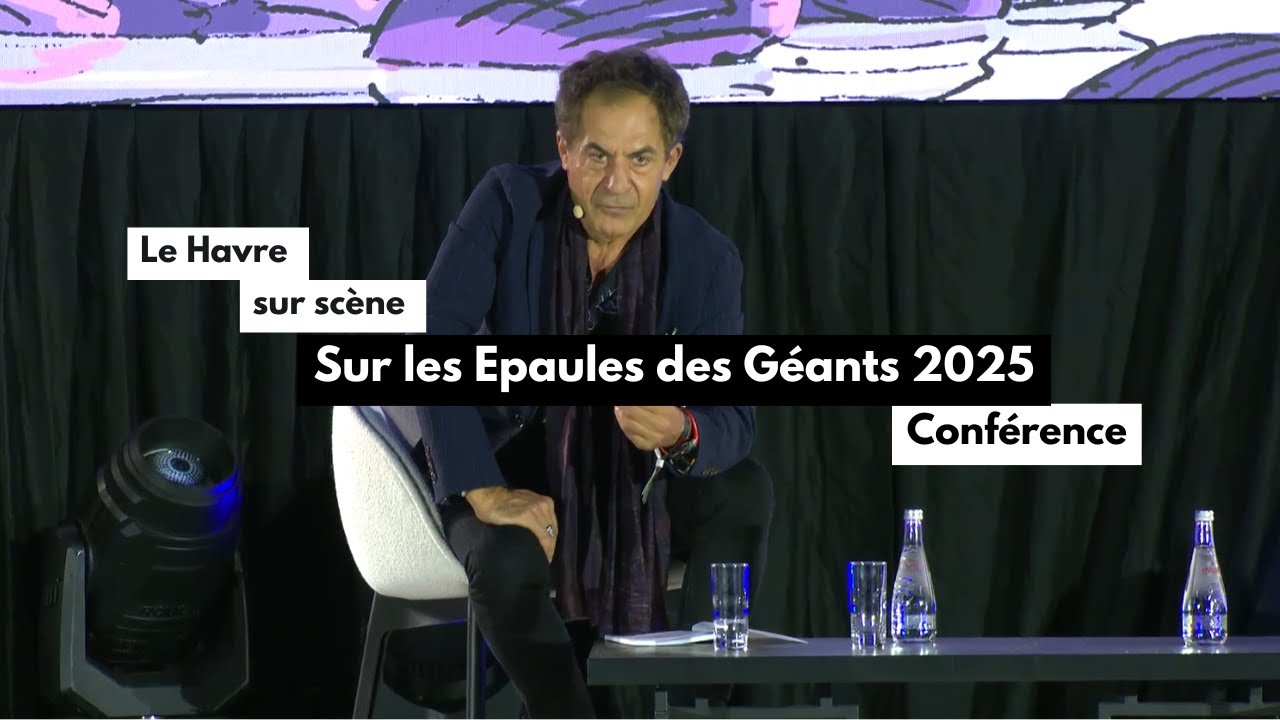
Etienne Klein - Conférence et grand entretien : La force du faux – SLEDG 2025
Keywords
Summary
203 words
Critical Evaluation
Value of the Information & Strength of the Argument
The value of the information is high, as Klein presents well-established physics concepts in an accessible and engaging manner. He uses clear examples and thought experiments to illustrate abstract ideas, making them tangible. The argumentation is solid, building from everyday observations to counterintuitive scientific principles. He effectively demonstrates how our senses and language can mislead us, and how physics requires a departure from common sense. The lecture is logically structured, moving from specific examples to broader philosophical implications.
87 words
Title / Content Match
The title accurately reflects the content: a conference and interview on how our senses and context mislead us about the true laws of physics.
Quality & Reliability
8/10
Etienne Klein, a renowned physicist and philosopher of science, delivers a well-structured lecture with clear examples and logical reasoning. The content is scientifically accurate, though it is a popularization rather than a peer-reviewed presentation.
Key Moments
Markers derived by PSI from the transcript: the creator did not define chapters.
- Introduction and presentation of the speaker
- Start of the conference: the anecdote about Maurice Ravel
- Discussion on how our context masks true laws of physics
- Example of the aspirator: it pushes, not pulls
- Senses can mislead: wood vs marble temperature experiment
- Counterintuitive result: adding 1 meter to Earth's circumference raises it by 16 cm
- Principle of relativity and inertia explained
- Discussion on language and how it shapes our understanding of time
- Conclusion of the conference and start of the interview
- Interview with Mathilde Fontez begins
Cited Sources
- No explicit sources cited in the video — The speaker does not cite specific sources during the lecture.
Concurring Sources
- No concordant sources provided — No external sources were mentioned in the video.
Dissenting Sources
- No discordant sources provided — No conflicting sources were mentioned.
Contribution & Novelties
The lecture offers a fresh perspective on how our everyday experience can obscure fundamental physical laws. Klein’s use of thought experiments and historical anecdotes makes complex ideas accessible. He emphasizes the importance of questioning our intuitions and the role of language in shaping our understanding of reality.
Pour aller plus loin :
- Galileo’s thought experiment on falling bodies — Relevant to the discussion of how intuition can be misleading.
- Special relativity — Directly related to the discussion of time dilation and the relativity of simultaneity.
- Philosophy of science — Explores the nature of scientific knowledge and the role of thought experiments.
101 words
Radar Profile
The radar profile shows high scores in information quality and reliability, with moderate technical level. This indicates a well-balanced presentation that is both informative and accessible, suitable for a general audience interested in physics and philosophy.