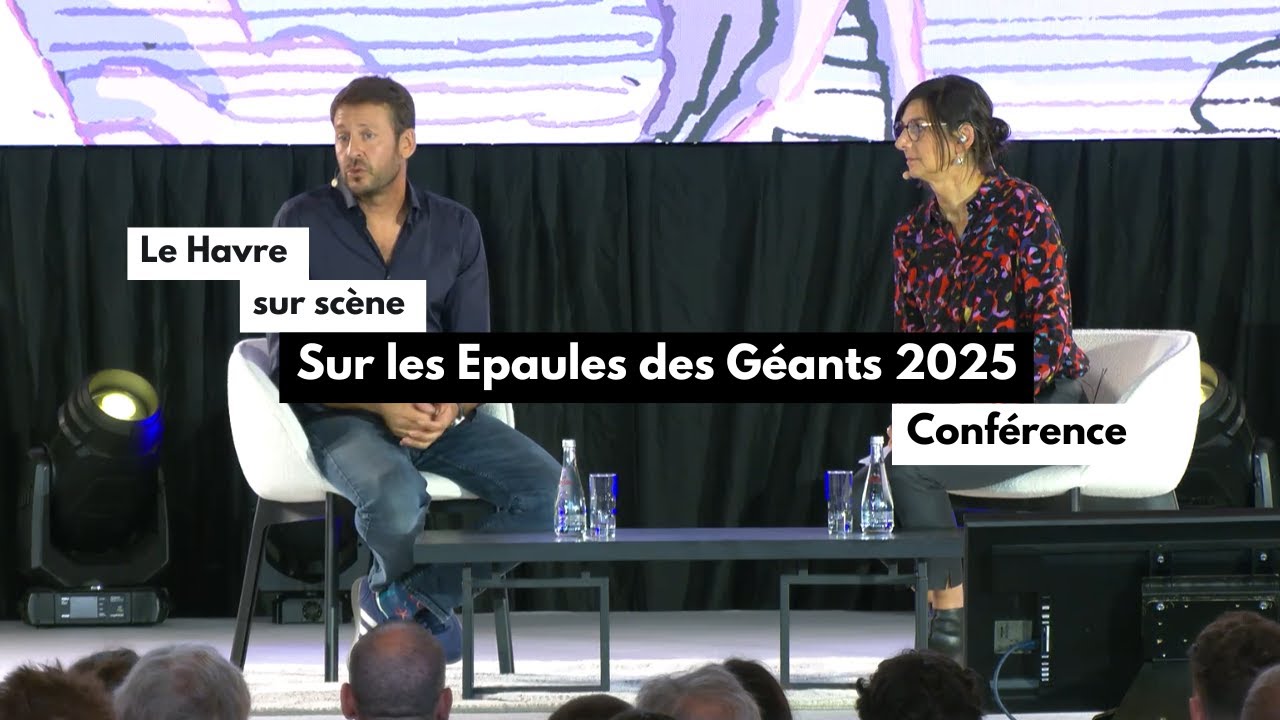
Laurent Ballesta - Conférence : Plongées dans le Grand Bleu – SLEDG 2025
Keywords
Summary
178 words
Critical Evaluation
Value of the Information & Strength of the Argument
The value of the information is high, as it provides firsthand accounts and observations from deep-sea expeditions that are rarely documented. Ballesta’s arguments are supported by his extensive experience and the scientific publications that resulted from his work. He effectively communicates the importance of understanding marine ecosystems and the need for conservation. The argumentation is solid, though it relies more on narrative and visual evidence than on detailed scientific data during the talk.
Scientific Rigor, Source Quality, Title Accuracy
The scientific rigor is evident in the careful observations and the collaboration with researchers from the National Museum of Natural History. The sources are primarily his own expeditions and the resulting publications, which are credible. The title accurately reflects the content, and the talk is part of a reputable scientific event. The presentation is well-structured and informative, though it lacks explicit citations of specific studies during the talk.
156 words
Title / Content Match
The title accurately reflects the content: a conference by Laurent Ballesta about his deep-sea diving expeditions and marine life observations.
Quality & Reliability
8/10
The conference is delivered by a renowned marine biologist and photographer, Laurent Ballesta, with extensive field experience. The content is based on his own expeditions and scientific publications, and the talk is part of a reputable scientific event. However, the presentation is primarily narrative and visual, with limited detailed methodological explanations, and no direct citations of specific studies during the talk.
Key Moments
Markers derived by PSI from the transcript: the creator did not define chapters.
- Introduction and presentation of the speaker by Sophie Becherel.
- Start of the conference: Laurent Ballesta talks about his origins in the Gulf of Lion.
- Description of the 24-hour dive in Fakarava to observe grouper spawning.
- Observations of shark hunting behavior and the efficiency of collective hunting.
- Introduction to the coelacanth and the expedition to South Africa.
- Details of deep diving challenges, decompression, and the mesophotic zone.
- Questions from the audience.
Cited Sources
- Gombessa expeditions — Mentioned as the name of his expeditions, with details on the official website.
- Coelacanth research — Collaboration with researchers from the National Museum of Natural History.
Concurring Sources
- Scientific publications on grouper spawning — Research on groupers in Fakarava, consistent with Ballesta's observations.
Dissenting Sources
- Debate on coelacanth population status — The IUCN lists coelacanth as Critically Endangered, while Ballesta's presentation focuses on its biology and behavior without discussing conservation status in detail.
Contribution & Novelties
The talk provides unique insights into deep-sea ecosystems and the behavior of elusive species like the coelacanth and groupers. Ballesta’s work combines advanced diving technology with scientific observation, leading to new discoveries about collective hunting in sharks and the reproductive behavior of groupers. The presentation emphasizes the importance of the mesophotic zone as a biodiversity hotspot.
Pour aller plus loin :
- Coelacanth — Overview of the coelacanth, its history, and significance.
- Mesophotic coral ecosystems — Information on the twilight zone and its biodiversity.
- Grouper spawning aggregations — Explanation of spawning aggregations and their importance.
94 words
Radar Profile
The radar profile shows high scores in quantity and quality of information, reflecting the rich content and expertise. The technical level is moderate, suitable for a general audience, while reliability is high due to the speaker's credentials and the scientific context.
💬 Sur les 0 commentaires analysés, aucune tendance n'est disponible.