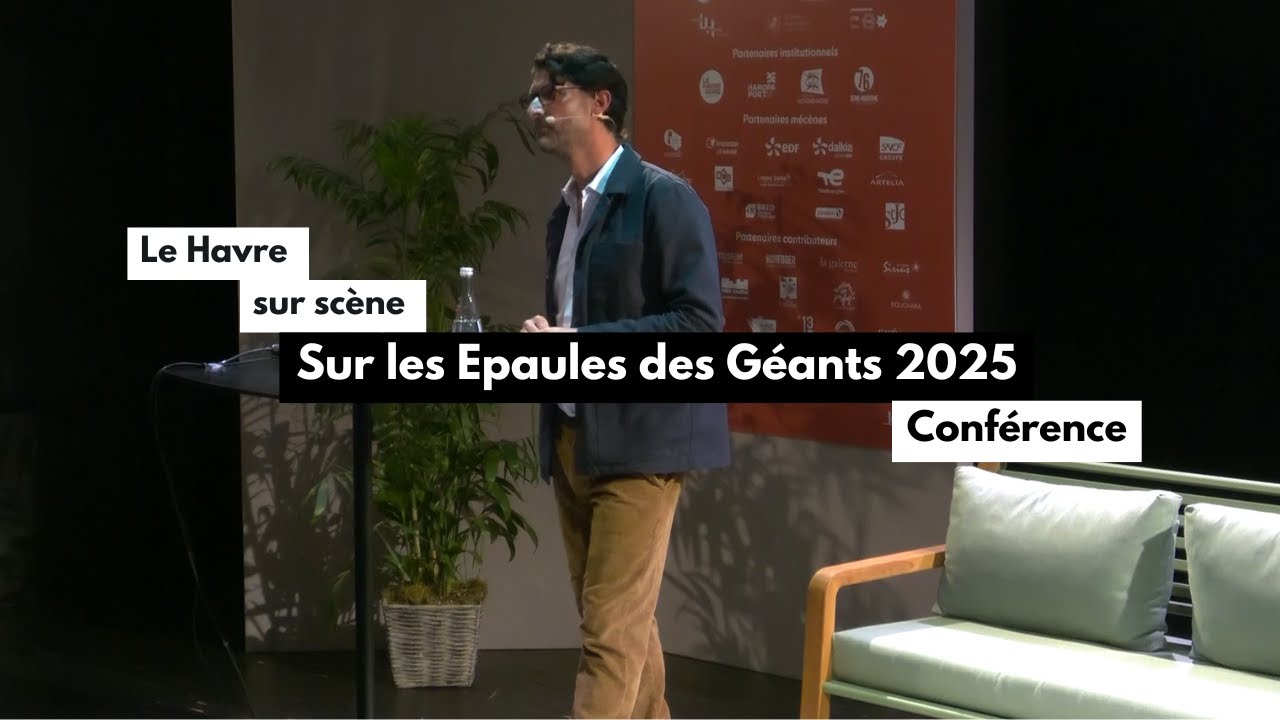
Avatars et Métavers : Faut-il se méfier de nos doubles numériques ? – SLEDG 2025
Keywords
Summary
119 words
Critical Evaluation
Value of the Information & Strength of the Argument
The talk provides valuable insights into the current state and history of immersive technologies, demystifying the metaverse concept and situating it within a broader research context. Lecuyer’s argumentation is balanced, acknowledging both the potential benefits and the risks. He supports his points with concrete examples, such as the CAVE system for medical training and the augmented reality visualization of a mummy, which illustrate practical applications. He also addresses ethical and societal concerns, emphasizing the need for interdisciplinary collaboration. The argumentation is solid, though it relies more on expert opinion and anecdotal evidence than on systematic data or citations.
Scientific Rigor, Source Quality, Title Accuracy
The talk demonstrates scientific rigor through its historical accuracy and clear explanations of technical concepts. Lecuyer references key figures and systems, such as Morton Heilig’s Sensorama and Ivan Sutherland’s ‘Sword of Damocles’, which are well-documented in the field. However, he does not provide specific citations or references to academic papers, which limits the verifiability of some claims. The title accurately reflects the content, and the talk is well-structured, covering definitions, history, applications, and risks. The inclusion of a Q&A session adds value, allowing for audience engagement and clarification of points.
203 words
Title / Content Match
The title accurately reflects the content: the talk explores the concept of avatars and metaverses, addressing whether we should be wary of our digital doubles, with a balanced view of benefits and risks.
Quality & Reliability
8/10
The speaker is a recognized researcher in immersive technologies (INRIA), and the talk is part of a scientific festival with institutional partners. The content is well-structured, historically grounded, and balanced, addressing both benefits and risks. However, it is an opinion/expert talk rather than a peer-reviewed study, and some claims lack specific citations.
Key Moments
Markers derived by PSI from the transcript: the creator did not define chapters.
- Introduction and start of the conference
- Definition of virtual reality and presence
- Examples of VR systems: CAVE and augmented reality
- Historical overview: Sensorama, Sword of Damocles, and early VR
- Discussion on the metaverse and its marketing origins
- Applications in training, education, and cultural heritage
- Risks and ethical considerations: cybersickness, privacy, psychological effects
- Future outlook and challenges for immersive technologies
- Q&A session with the audience
Cited Sources
- INRIA — The speaker is a research director at INRIA, and the talk is part of a scientific event.
- Sur les épaules des géants — The conference is part of this scientific festival, organized with CNRS, CNES, CEA, etc.
Concurring Sources
- Sur les épaules des géants — The event is a scientific festival with institutional partners, supporting the credibility of the talk.
Contribution & Novelties
The talk offers a comprehensive and accessible overview of immersive technologies, tracing their history and clarifying terminology. It provides a balanced perspective on the potential benefits and risks of avatars and metaverses, drawing on the speaker’s extensive research experience. The discussion of the Proteus effect and the psychological impact of embodying avatars is particularly insightful. The talk also highlights the gap between technological advancement and societal/ethical considerations, emphasizing the need for interdisciplinary research.
Pour aller plus loin :
- Proteus effect — The phenomenon where users’ behavior changes according to their avatar’s appearance.
- Virtual reality — Overview of VR technology and its applications.
- Metaverse — Definition and history of the metaverse concept.
- Cybersickness — The discomfort experienced during VR use, a key challenge discussed in the talk.
- INRIA — The research institute where the speaker works, conducting cutting-edge research in immersive technologies.
141 words
Radar Profile
The radar profile shows high scores in quantity and quality of information, reflecting the comprehensive and well-structured content. The technical level is moderate, making it accessible to a broad audience. The global reliability is high due to the speaker's expertise and the institutional context. The overall score is strong, with minor limitations in source citation.
💬 Sur les 0 commentaires analysés, aucune tendance n'a pu être dégagée.