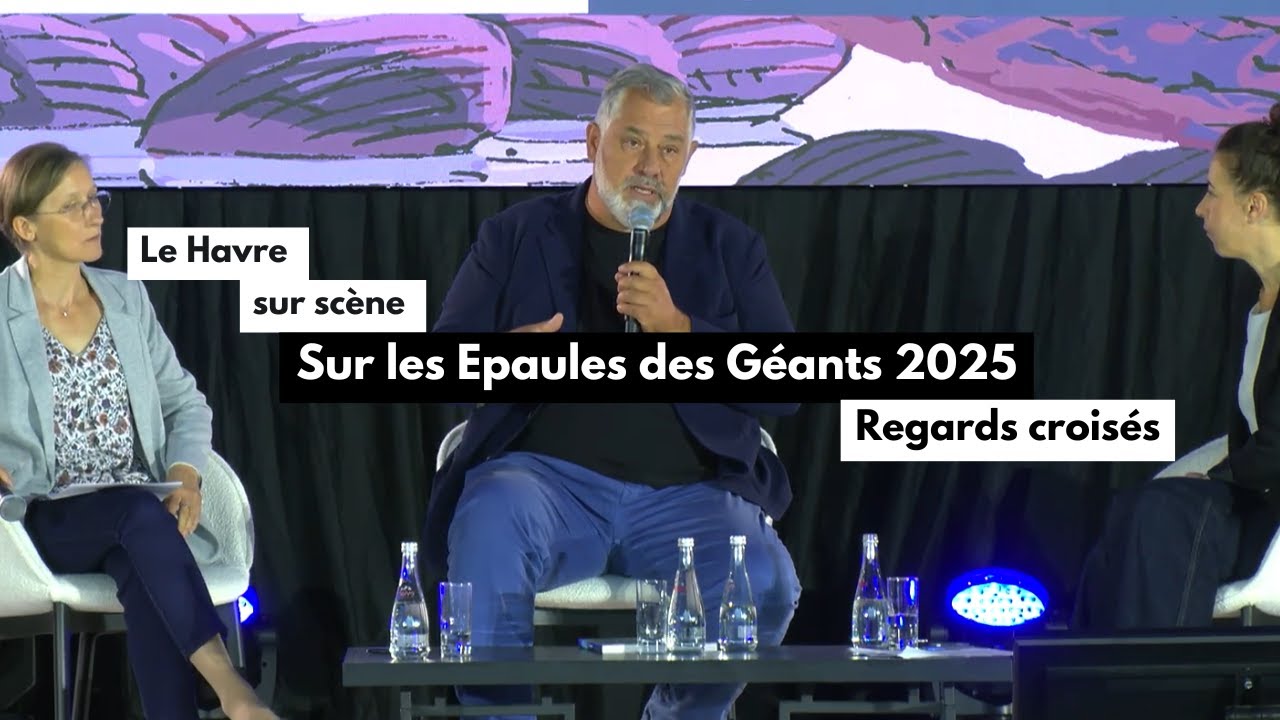
Isabelle Chuine et Luc Jacquet - Regards croisés : L'équilibre des forêts – SLEDG 2025
Keywords
Summary
175 words
Critical Evaluation
Value of the Information & Strength of the Argument
The value of the information is high, as it combines scientific data with experiential insights. Chuine provides concrete statistics and references to scientific studies, such as the halving of the carbon sink and the increase in tree mortality by 55%. She explains complex ecological concepts like phenological mismatches and the role of forests as carbon sinks. Jacquet offers a complementary perspective, emphasizing the cultural and emotional dimensions of forest loss, which adds depth to the scientific narrative. The argumentation is solid, with both speakers supporting their points with examples and personal experiences. However, some claims are presented without specific citations, and the discussion is more of a conversation than a rigorous scientific presentation.
Scientific Rigor, Source Quality, Title Accuracy
The scientific rigor is generally high, with Chuine referencing her own research and the 2023 French Academy of Sciences report. She mentions specific data on forest composition and carbon balance. Jacquet, while not a scientist, brings credibility through his documentary work and collaboration with botanist Francis Hallé. The title accurately reflects the content, which is a cross-perspective discussion on forest equilibrium. The sources cited are not explicitly listed, but the discussion references scientific reports and personal research. The adequacy between title and content is good, as the video indeed explores the balance of forests from both scientific and cultural angles.
228 words
Title / Content Match
The title accurately reflects the content: a cross-perspective discussion on forest equilibrium between an ecologist and a filmmaker.
Quality & Reliability
8/10
High-quality discussion featuring a CNRS researcher and member of the French Academy of Sciences, and an award-winning documentary filmmaker. Scientific claims are grounded in research and data, though some statements are general and not fully referenced.
Key Moments
Markers derived by PSI from the transcript: the creator did not define chapters.
- Introduction of guests and topic by Mathilde Fontez.
- Isabelle Chuine presents the state of French forests: declining growth, increased mortality, and halved carbon sink.
- Luc Jacquet discusses the cultural and emotional impact of forest loss in the Jura, introducing the concept of solastalgia.
- Chuine explains the low diversity of French forests and the importance of diversity for resilience.
- Jacquet describes the complexity of tropical forests and his experience filming 'Il était une forêt'.
- Chuine gives an example of phenological mismatch: oak, winter moth, and tit, leading to chick mortality.
- Discussion on adaptation: rainfall exclusion experiment in a Mediterranean oak forest.
- Questions from the audience begin.
Cited Sources
- Rapport de l'Académie des Sciences sur les forêts (2023) — Cited by Isabelle Chuine as a source for data on French forest composition and state.
- Il était une forêt (film) — Mentioned by Luc Jacquet as his documentary on tropical forests.
Concurring Sources
- IPCC Reports on Climate Change and Forests — General scientific consensus on climate change impacts on forests.
Dissenting Sources
- Some forestry industry claims — Potential disagreements on the extent of forest decline and management strategies, not directly addressed in the video.
Contribution & Novelties
The video provides a unique cross-perspective on forest ecology, combining scientific data with cultural and emotional insights. It highlights the urgent issue of declining carbon sinks and the importance of forest diversity for resilience. The discussion also touches on phenological mismatches and adaptation experiments, offering a comprehensive view of current challenges.
Pour aller plus loin :
- Phenological mismatch — Relevant to the example of oak, winter moth, and tit.
- Solastalgia — Concept introduced by Luc Jacquet.
- Rainfall exclusion experiment — Related to the experiment described by Chuine.
87 words
Radar Profile
The radar profile shows high scores in information quantity, quality, and reliability, with a moderate technical level. This indicates a well-informed discussion accessible to a general audience, with strong scientific backing.
💬 No comments were provided for analysis.