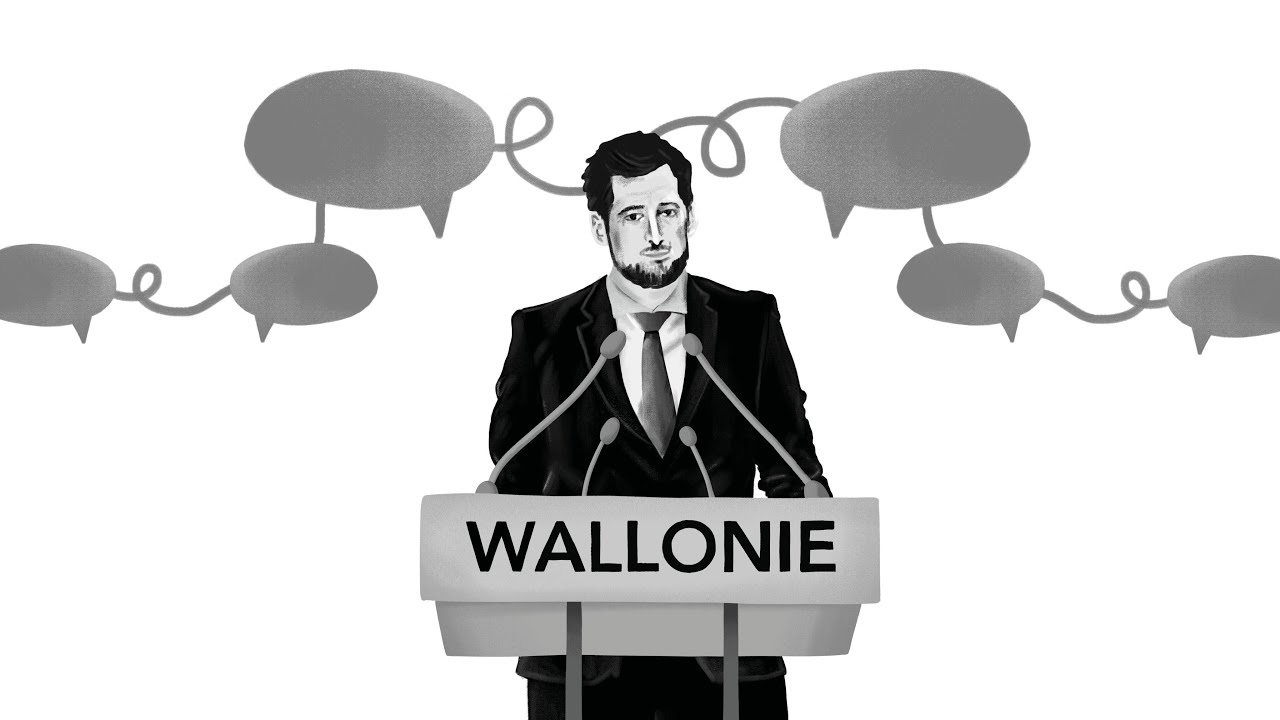
Rencontre avec Adrien Dolimont
Keywords
Summary
194 words
Critical Evaluation
Value of the Information & Strength of the Argument
The talk provides valuable insights from a political insider on the mechanisms of misinformation and its effects on democracy. The speaker’s argumentation is coherent and grounded in personal experience, though it lacks systematic evidence. He effectively illustrates the gap between media headlines and nuanced reality, using a concrete example from his own portfolio. The discussion on the crisis of trust and the role of algorithms is pertinent, but the analysis remains at a general level without deep scientific backing.
Scientific Rigor, Source Quality, Title Accuracy
The speaker references a few studies and reports (e.g., a report on 1.5 billion daily fake news, Herbert Simon’s attention economy) but does not provide specific citations. The title ‘Rencontre avec Adrien Dolimont’ is generic and does not reflect the specific topic of misinformation, which is a minor mismatch. The content is well-structured and the speaker demonstrates intellectual honesty by acknowledging his own mistakes, which adds credibility. However, the lack of verifiable sources limits the scientific rigor.
171 words
Title / Content Match
The title is generic and does not reflect the specific topic of misinformation and public debate; it is more of a meeting format.
Quality & Reliability
7/10
The speaker is a political figure with a technical background (engineer, PhD) and provides personal experiences and references to studies, but the talk is primarily an opinion/expert commentary rather than a rigorous scientific analysis. The content is coherent and well-structured, but lacks systematic citation of sources.
Key Moments
Markers derived by PSI from the transcript: the creator did not define chapters.
- Introduction by the host, welcoming the audience and presenting the program.
- Presentation of Adrien Dolimont's background and achievements.
- Dolimont begins his talk on misinformation, citing the 1.5 billion daily fake news statistic.
- Discussion on the shift from scheduled news to continuous information flow and its impact on verification.
- Analysis of emotional information and the role of algorithms in creating echo chambers.
- Exploration of the crisis of trust in institutions and media, and its consequences.
- Personal example of the registration fee reform and media distortion of the facts.
- Call for citizens to verify information and for politicians to communicate transparently.
- Opening of the Q&A session with the audience.
Cited Sources
- Rapport d'experts sur les intox quotidiennes sur les réseaux sociaux — Cité en début de conférence pour illustrer l'ampleur de la désinformation.
- Herbert Simon - Économie de l'attention — Référence à la citation sur l'abondance d'information et le manque de temps pour l'analyser.
- Baromètre des notaires — Utilisé pour illustrer l'exemple des droits d'enregistrement et la hausse des prix immobiliers.
Concurring Sources
- Rapport sur la désinformation en ligne — European Commission's efforts to combat disinformation, aligning with the speaker's concerns.
Dissenting Sources
- Étude sur la confiance dans les médias — Some studies suggest that trust in media varies by country and may not be as low as implied, but no specific source was cited in the video.
Contribution & Novelties
The talk offers a unique perspective from a sitting minister on the challenges of misinformation in political communication. It provides a concrete example of how media headlines can distort policy impacts, and emphasizes the need for collective introspection. The speaker’s dual background as an engineer and politician adds a technical dimension to the discussion.
Pour aller plus loin :
- Attention economy — Concept central to the talk, explaining the scarcity of attention in information-rich environments.
- Echo chamber (media) — Relevant to the discussion on social media algorithms reinforcing beliefs.
- Fake news — Core topic of the conference, providing background on the phenomenon.
102 words
Radar Profile
The radar profile shows moderate to high scores across all dimensions, with a slight dip in technical level and reliability. This indicates a well-rounded talk that is informative and credible, but not deeply technical or heavily sourced.
💬 No comments were provided for analysis.