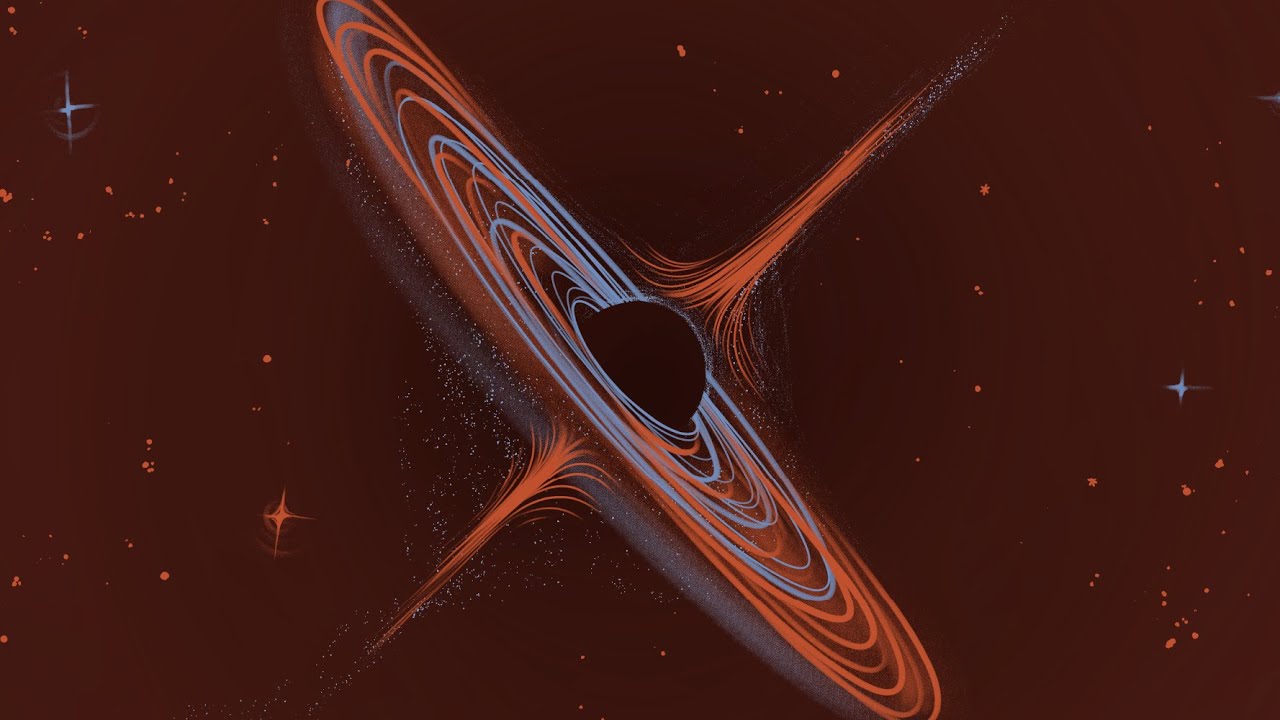
Suivez-moi à l’intérieur d’un trou noir par Carlo Rovelli
Keywords
Summary
202 words
Critical Evaluation
Value of the Information & Strength of the Argument
The value of the information is high, as it presents both established knowledge and cutting-edge theoretical speculation from a leading expert. The argumentation is solid: Rovelli clearly distinguishes between what is well-established (e.g., the existence of black holes, the predictions of general relativity) and what is speculative (e.g., the fate of the singularity, the existence of white holes). He uses analogies and clear explanations to make complex concepts accessible. The logical flow from observations to theory is coherent and persuasive.
Scientific Rigor, Source Quality, Title Accuracy
The scientific rigor is high. Rovelli relies on well-established physics for the first part of the talk, citing observations of black holes and gravitational waves. For the speculative parts, he clearly labels them as theoretical work in progress. The sources he mentions (e.g., the Event Horizon Telescope, LIGO) are credible. The title accurately reflects the content, as the talk is a guided journey into a black hole. The presentation is well-structured and the speaker is transparent about the limits of current knowledge.
177 words
Title / Content Match
The title accurately reflects the content: a guided journey into a black hole, from established physics to speculative theories.
Quality & Reliability
9/10
The speaker is a leading physicist in loop quantum gravity, and the first part of the talk is based on well-established physics (general relativity, black hole observations). The speculative parts are clearly identified. The presentation is rigorous and well-structured.
Key Moments
Markers derived by PSI from the transcript: the creator did not define chapters.
- Introduction by the host, presenting Carlo Rovelli and the context of the lecture.
- Rovelli begins his talk, thanking the audience and outlining the structure: first established physics, then speculative theories.
- Discussion of the abundance of black holes in the universe, contrasting with earlier skepticism.
- Explanation of the first image of a black hole and the optical illusion of the ring.
- Historical account: from Einstein's equations to the discovery of the first radio signal from a black hole by Jansky.
- Description of what happens when approaching a black hole: time dilation and the event horizon.
- Discussion of the singularity and the breakdown of classical physics.
- Introduction to loop quantum gravity and its prediction of a quantum bounce leading to a white hole.
- Explanation of white holes as time-reversed black holes and their potential observational signatures.
- Concluding remarks on the nature of time and the quest for a quantum theory of gravity.
Cited Sources
- Event Horizon Telescope — Mentioned as the collaboration that produced the first image of a black hole.
- LIGO — Mentioned as the observatory that detected gravitational waves from black hole mergers.
Concurring Sources
- Event Horizon Telescope — The image of M87* black hole confirms predictions of general relativity.
- LIGO — Gravitational wave detections confirm the existence of black hole mergers.
Contribution & Novelties
The talk provides a unique perspective from a leading physicist on the current state of black hole physics, bridging established knowledge with speculative theories like loop quantum gravity. It offers a clear explanation of complex concepts such as the event horizon, singularity, and white holes, making them accessible to a general audience. The emphasis on the distinction between what is known and what is theoretical is valuable.
Pour aller plus loin :
- Loop quantum gravity — A theory that attempts to quantize gravity, central to Rovelli’s work.
- White hole — A hypothetical time-reversed black hole, discussed in the talk.
- Event Horizon Telescope — The project that captured the first black hole image.
- Gravitational wave — Ripples in spacetime, detected by LIGO, providing evidence for black hole mergers.
127 words
Radar Profile
The radar profile shows high scores in information quantity, quality, and reliability, with a slightly lower technical level, indicating a talk that is rich in content and well-supported but accessible to a broader audience.