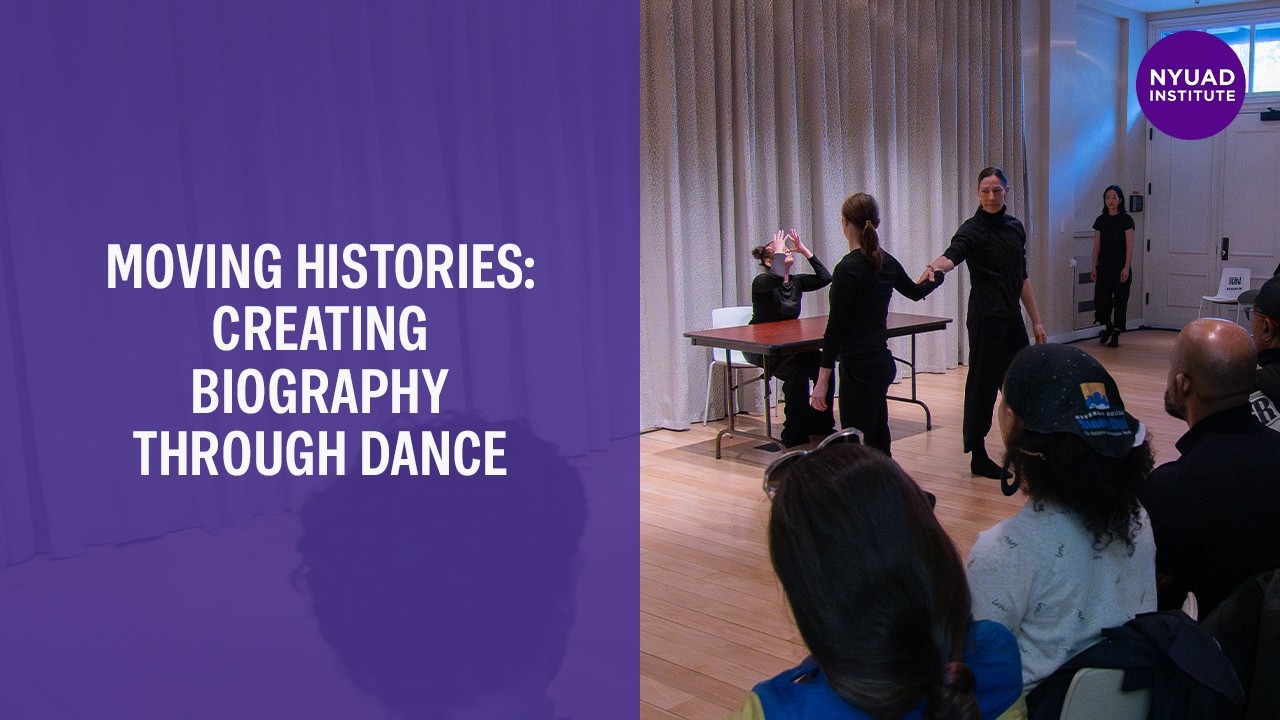
Moving Histories: Creating Biography Through Dance
Keywords
Summary
159 words
Critical Evaluation
Value of the Information & Strength of the Argument
The value of the information lies in its innovative interdisciplinary approach, combining historical methodology with dance practice. The speakers provide concrete examples of their process, such as body inventories and improvisation exercises, which offer practical insights for scholars and artists. The argumentation is solid, grounded in their collaborative experience and theoretical reflections on history and memory. They effectively challenge traditional linear narratives and propose dance as a valid medium for representing the past. The discussion is nuanced, acknowledging limitations and open questions, which enhances its credibility.
Scientific Rigor, Source Quality, Title Accuracy
The scientific rigor is high, given the academic credentials of the speakers and the institutional support. The sources cited are primarily their own research and practice, which is appropriate for a discussion of methodology. The title accurately reflects the content, and the event is well-structured. The description provides links to the NYUAD Institute and Center for Ballet and the Arts, which are credible institutions. No external sources are cited, but the nature of the event is a presentation of ongoing work rather than a literature review.
187 words
Title / Content Match
The title accurately reflects the content: the event explores how dance can create biographies and represent history through movement.
Quality & Reliability
8/10
The event features established scholars and artists (Tara Zahra, a professor of history at the University of Chicago, and choreographer Meredith Dincolo) presenting a well-structured, interdisciplinary discussion. The content is grounded in their collaborative research and practice, with clear methodological reflections. While not peer-reviewed, the expertise and institutional backing lend high credibility.
Key Moments
Markers derived by PSI from the transcript: the creator did not define chapters.
- Introduction by Jennifer Homans, director of the Center for Ballet and the Arts.
- Tara Zahra begins her personal history, discussing her body and injuries.
- Meredith Dincolo introduces the project 'Dance as History' and its goals.
- Kendra Moore performs an improvisation based on her biography.
- Discussion on improvisation as a tool for collecting historical information.
- Jessica Tong and Tara Zahra perform improvisations on motherhood.
- Discussion on the ephemeral nature of dance and historical contingency.
- Abstract dance segment representing collective biography.
- Concluding remarks on scaling up the project and future directions.
Cited Sources
- NYUAD Institute — Institutional page for the NYU Abu Dhabi Institute, co-presenter of the event.
- 19 Washington Square North — Venue and program information for NYUAD Institute events.
- NYUAD Institute Mailing List — Sign-up for updates on future events.
Concurring Sources
- Embodied cognition — Supports the idea that the body plays a role in knowledge and memory.
- Oral history — Relates to the use of personal narratives in historical research.
Contribution & Novelties
The event offers a novel perspective on the intersection of dance and history, proposing that movement can serve as a historical source and a medium for representing the past. It challenges traditional textual approaches and highlights the value of embodied knowledge. The collaborative process between a historian and a choreographer is itself innovative, providing a model for interdisciplinary research.
Pour aller plus loin :
- Embodied cognition — Relevant to the idea that knowledge is not solely mental but also physical.
- Oral history — Discusses the use of personal testimony in historical research, which parallels the project’s use of personal narratives.
- Performance studies — Academic field that examines performance as a cultural and historical phenomenon.
114 words
Radar Profile
The radar profile shows high scores in quality and reliability, with moderate scores in quantity and technical level. This indicates a focused, expert-led discussion with strong methodological content, but limited in scope and technical depth.
💬 No comments were provided for analysis.