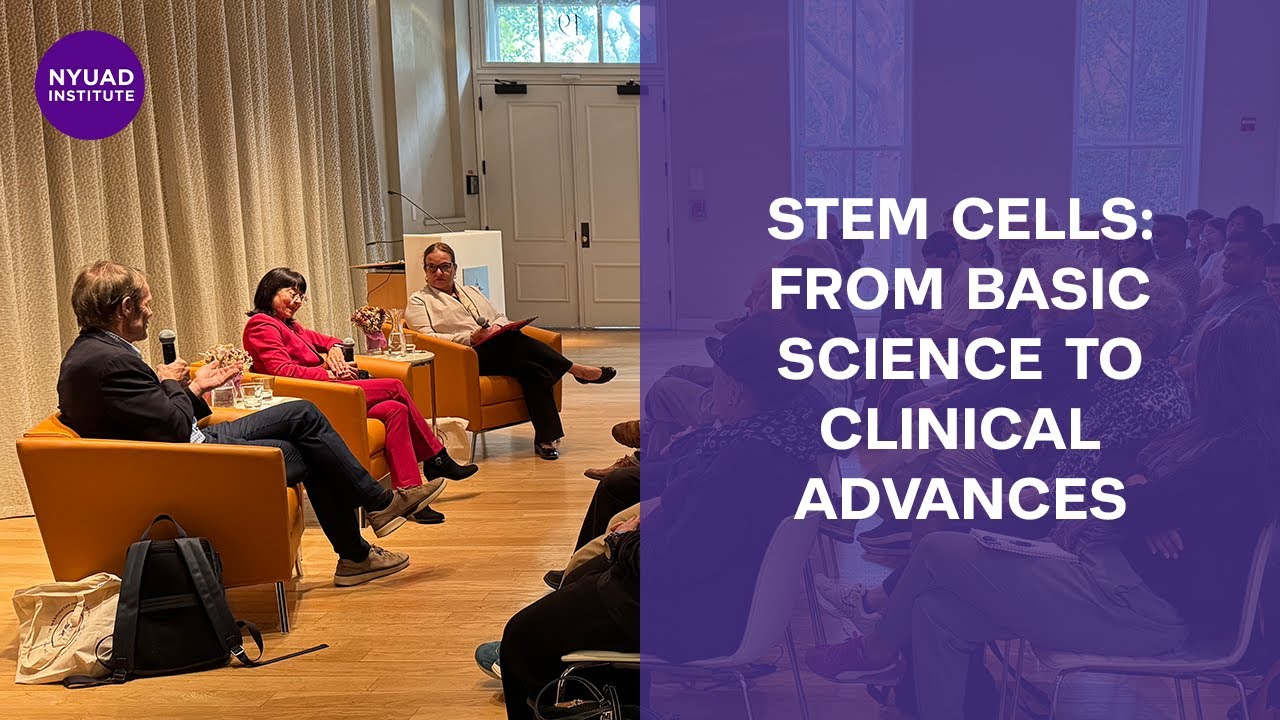
Stem Cells: From Basic Science to Clinical Advances
Keywords
Summary
154 words
Critical Evaluation
Value of the Information & Strength of the Argument
The discussion provides valuable insights into the current state of stem cell research, particularly the translation from basic science to clinical applications. The speakers present a balanced view, acknowledging both the potential and the challenges. The argumentation is solid, grounded in the speakers’ extensive experience and specific examples, such as the Parkinson’s disease trial. They also critically address the issue of unproven stem cell treatments, offering practical advice for patients. The conversation is well-structured, with each speaker contributing complementary perspectives.
Scientific Rigor, Source Quality, Title Accuracy
The scientific rigor is high, given the expertise of the speakers. They reference specific studies and trials, though without formal citations. The sources mentioned include the ISSCR website and the speakers’ own publications, but no external references are provided in the description. The title accurately reflects the content, which covers both fundamental aspects and clinical advances. The discussion is appropriate for a general audience but maintains scientific accuracy.
163 words
Title / Content Match
The title accurately reflects the content, which covers stem cell biology from fundamental principles to clinical applications, including Parkinson's disease therapy and ethical considerations.
Quality & Reliability
8/10
The discussion features two leading stem cell researchers (Lorenz Studer and Sarah E. Millar) with established credentials, providing a high level of expertise. The content is scientifically accurate and balanced, covering both basic science and clinical applications, with appropriate caution about unproven therapies. However, as a public panel discussion, it lacks detailed citations and peer-reviewed references, and some claims are presented without specific data.
Key Moments
Markers derived by PSI from the transcript: the creator did not define chapters.
- Introduction by Kirsten Sadler Edepli, setting the stage for the discussion.
- Sarah Millar explains what stem cells are, including embryonic and adult stem cells.
- Discussion on induced pluripotent stem cells (iPSCs) and their applications.
- Lorenz Studer describes the journey from fetal cells to iPSC-derived neurons for Parkinson's disease.
- Details of the phase I clinical trial for Parkinson's disease and its promising results.
- Discussion on the importance of basic science and developmental biology in stem cell research.
- Ethical considerations and the role of ISSCR in regulating stem cell therapies.
- Warning about unregulated stem cell clinics and the risks of unproven treatments.
- Discussion on future directions and the potential of stem cell therapies.
- Q&A session begins, addressing audience questions.
Cited Sources
- NYUAD Institute Research — Mentioned as the host institution for the event.
- 19 Washington Square North — Venue for the event.
- NYUAD Institute Event Mailing List — Provided for audience to stay informed about future events.
Concurring Sources
- ISSCR Guidelines for Stem Cell Research and Clinical Translation — Referenced indirectly by Lorenz Studer as a resource for ethical standards.
Contribution & Novelties
The video provides a comprehensive overview of stem cell biology and its clinical translation, with unique insights from two leading researchers. It highlights the long and rigorous process of developing cell-based therapies, using Parkinson’s disease as a case study. The discussion also addresses ethical and regulatory challenges, offering a balanced perspective on the field’s future.
Pour aller plus loin :
- Induced pluripotent stem cells — Overview of iPSC technology and its applications.
- International Society for Stem Cell Research — Official website with resources on stem cell research and ethics.
- Parkinson’s disease — Background on the disease and current treatments.
99 words
Radar Profile
The radar profile shows high scores in quality and reliability, reflecting the expertise of the speakers and the balanced discussion. The quantity of information is moderate, as the panel format limits depth, and the technical level is accessible to a general audience.
💬 No comments were provided for analysis.