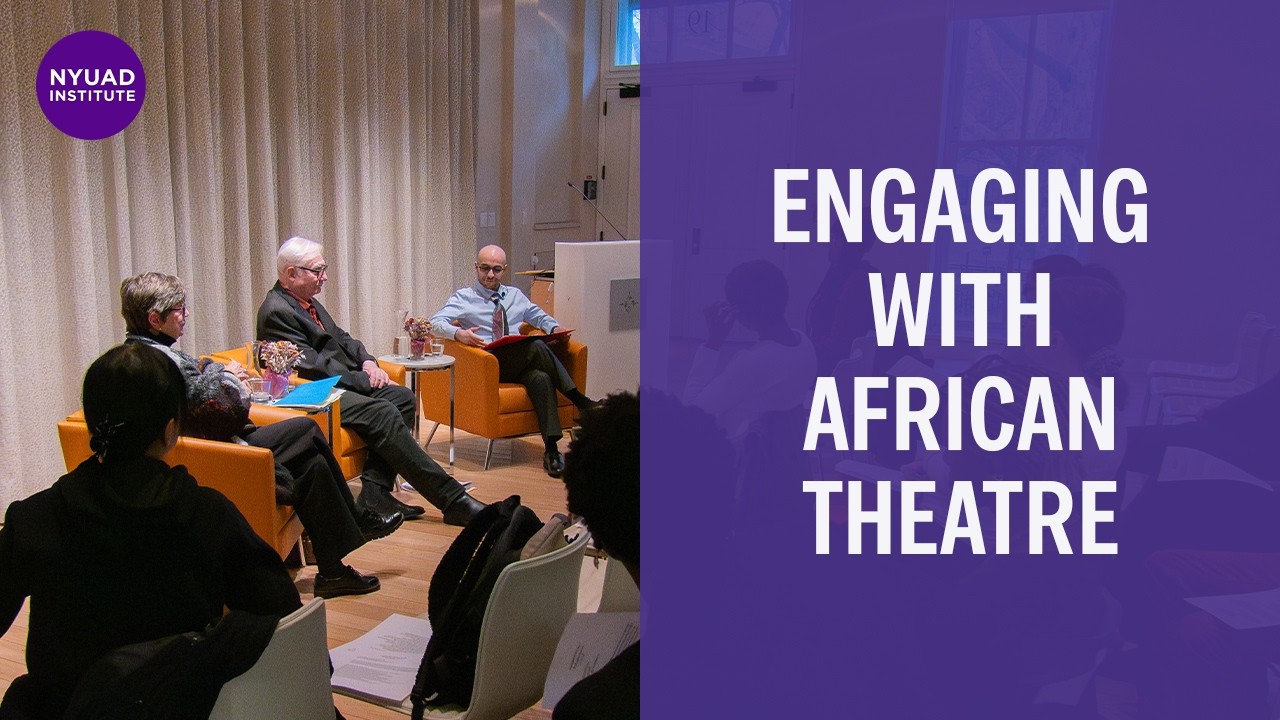
Engaging with African Theatre
Keywords
Summary
148 words
Critical Evaluation
Value of the Information & Strength of the Argument
The talk provides valuable insights into the field of African theater, particularly regarding the representation of women playwrights and the complexities of translation. Vorlicky’s data on the underrepresentation of African countries in anthologies is compelling, and his argument for bilingual publication is well-supported. Miller’s analysis of Francophone theater’s evolution and its political engagement is equally strong. The speakers’ arguments are grounded in their extensive research and practical experience, making the discussion credible and informative.
Scientific Rigor, Source Quality, Title Accuracy
The speakers cite specific plays, authors, and scholarly works, such as Ngugi wa Thiong’o’s ‘Decolonizing the Mind’ and Penina Mlama’s essay, which adds rigor. The title accurately reflects the content, focusing on engagement with African theater. The sources are credible, and the discussion is well-structured. The event is hosted by an academic institution, further enhancing its reliability.
146 words
Title / Content Match
The title accurately reflects the content, which focuses on contemporary African theater through the lens of two scholars' anthologies and translation work.
Quality & Reliability
8/10
The talk features two established scholars and translators of African theater, providing detailed insights into their anthologies and translation practices. The content is well-structured and grounded in their research, though it is primarily an expert discussion rather than a peer-reviewed study.
Key Moments
Markers derived by PSI from the transcript: the creator did not define chapters.
- Introduction by Adam Elsayigh, setting the context for the event.
- Robert Vorlicky begins his talk, discussing the anthology 'Speaking Our Selves' and the underrepresentation of African women playwrights.
- Vorlicky highlights the six dramaturgical features of contemporary African women's plays, including agency and bilingualism.
- Discussion on the politics of language, referencing Ngugi wa Thiong'o and the choice of writing in African languages.
- Judith Miller begins her talk, focusing on Francophone African theater and its historical context.
- Miller discusses specific plays in her anthology, including works by Bernard Dadié and Were Were Liking, and the challenges of translation.
- Conversation between Vorlicky, Miller, and Elsayigh, exploring themes of translation, feminism, and the future of African theater.
- Q&A session with the audience, addressing questions about the anthologies and translation practices.
Cited Sources
- NYUAD Institute — Host institution for the event.
- 19 Washington Square North — Venue for the event.
- NYUAD Institute Mailing List — Sign-up for future events.
Concurring Sources
- Speaking Our Selves: New Plays by African Women — Vorlicky's anthology, mentioned in the talk.
- Contemporary Francophone African Plays: An Anthology — Miller's anthology, mentioned in the talk.
Contribution & Novelties
The event provides a unique opportunity to hear from two scholars actively working to expand the canon of African theater in English translation. Vorlicky’s anthology brings attention to previously underrepresented countries and emphasizes the importance of bilingual publication, while Miller’s work offers a comprehensive overview of Francophone African theater. The discussion highlights the political and ethical dimensions of translation, offering practical insights for scholars and practitioners.
Pour aller plus loin :
- Decolonising the Mind — Ngugi wa Thiong’o’s influential work on language and colonialism.
- Francophone literature — Overview of literature in French, including African works.
- African theatre — General overview of theatrical traditions in Africa.
105 words
Radar Profile
The radar profile shows high scores in information quantity, quality, and reliability, with a moderate technical level. This indicates a well-informed and credible discussion, though it may require some background knowledge to fully appreciate the nuances of translation and theater studies.
💬 No comments were provided for analysis.