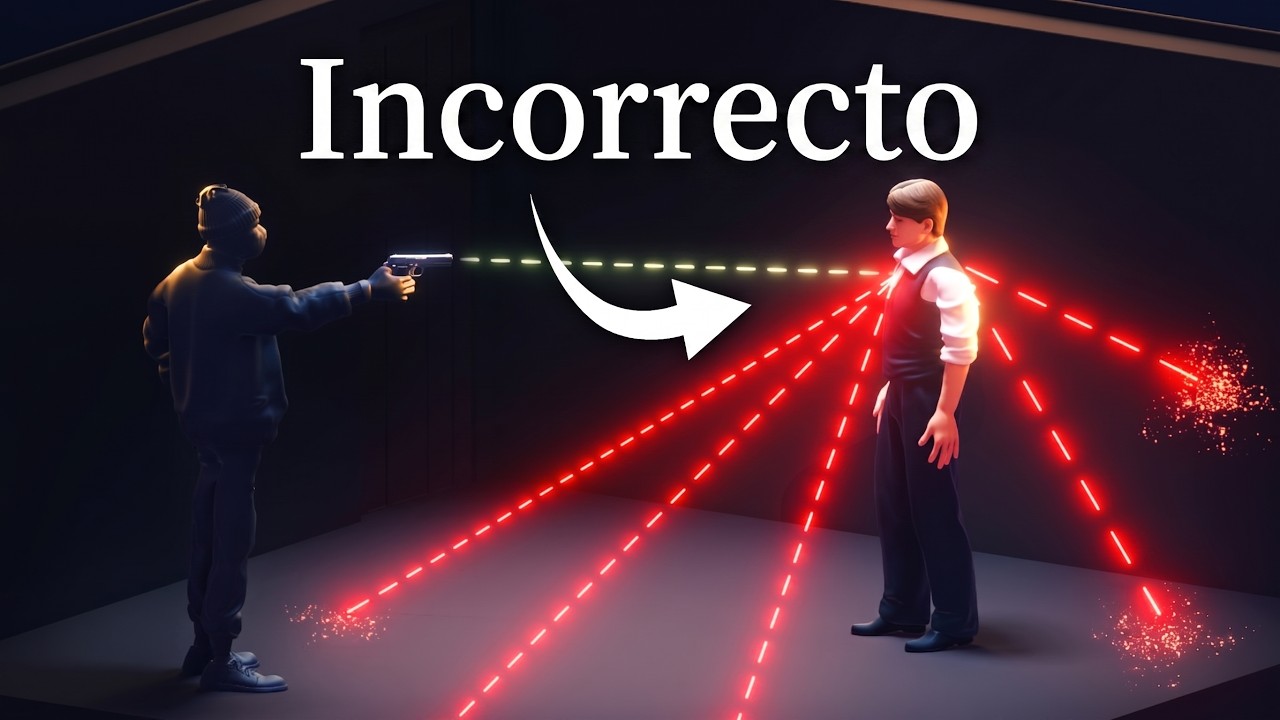
Durante 50 Años Hemos Estado Usando la Ciencia Equivocada en las Cortes.
Keywords
Summary
164 words
Critical Evaluation
Value of the Information & Strength of the Argument
The video provides substantial value by synthesizing a large body of research and expert opinions into a coherent narrative. It effectively argues that many forensic techniques lack a solid scientific foundation, using concrete examples and data to support its claims. The argumentation is strong, presenting both historical context and modern studies, and it acknowledges the complexity of the issues, such as the trade-off between sensitivity and contamination in DNA analysis. The inclusion of expert interviews and references to peer-reviewed literature enhances credibility.
Scientific Rigor, Source Quality, Title Accuracy
The video demonstrates high scientific rigor by citing peer-reviewed studies, official reports (NAS, FBI, NIST), and expert interviews. It includes a correction note, indicating attention to accuracy. The title accurately reflects the content, which critically examines the scientific validity of forensic techniques used in courts over the past 50 years. The sources are clearly listed in the description, and the video distinguishes between established facts and ongoing debates.
165 words
Title / Content Match
The title accurately reflects the content, which critically examines the scientific validity of forensic techniques used in courts over the past 50 years.
Quality & Reliability
8/10
The video is well-researched, citing peer-reviewed studies, official reports (NAS, FBI, NIST), and expert interviews. It clearly distinguishes established facts from ongoing debates, and includes a correction note. Minor limitations include reliance on anecdotal cases and the inherent bias of the presenter.
Chapters
- La primera investigación forense
- ¿Qué tan confiable es el análisis de cabello?
- Por qué las marcas de mordidas nunca deberían usarse en un juicio
- Análisis de patrones de manchas de sangre
- ¿Qué tan únicas son las huellas dactilares?
- ¿La evidencia de ADN es confiable?
- ¿Cómo podemos mejorar la ciencia forense?
Cited Sources
- Forensics References — List of references cited in the video, including scientific studies and reports.
- Elements of Truth Game — Commercial edition of the Veritasium trivia game, mentioned at the end of the video.
- Snatoms Molecular Modeling Kit — Product mentioned in the description, not directly related to the video content.
- Veritasium Newsletter — Newsletter sign-up, mentioned in the description.
- Patreon — Patreon page for supporting Veritasium, mentioned in the description.
Concurring Sources
- National Academy of Sciences Report — The 2009 report cited in the video, which concluded that only nuclear DNA analysis has been rigorously validated.
- NIST DNA Mixture Study — The 2013 NIST study on DNA mixtures, which found that 69% of laboratories made errors in interpretation.
Dissenting Sources
- FBI Hair Analysis Correction — The video initially stated that 96% of cases were false, but the FBI report actually said that examiners offered erroneous or exaggerated testimony in 96% of cases. This correction is noted in the description.
Contribution & Novelties
The video provides a comprehensive and accessible overview of the scientific limitations of common forensic techniques, synthesizing historical context, expert interviews, and recent studies. It highlights the systemic issues of confirmation bias and lack of validation, which are often overlooked in public discourse. The video also offers a balanced perspective, acknowledging the value of forensic science while advocating for rigorous standards.
Pour aller plus loin :
- National Academy of Sciences Report on Forensic Science — The 2009 report that critically assessed the scientific basis of forensic methods.
- NIST Scientific Foundation Reviews — NIST’s ongoing efforts to evaluate and improve forensic science.
- Innocence Project — Organization that uses DNA evidence to exonerate wrongfully convicted individuals, highlighting forensic errors.
117 words
Radar Profile
The radar profile shows high scores in information quantity and technical level, indicating a content-rich video with substantial depth. The quality and reliability scores are also high, reflecting the use of credible sources and expert input. The overall profile suggests a well-balanced, informative, and trustworthy production.
💬 No comments were provided for analysis.