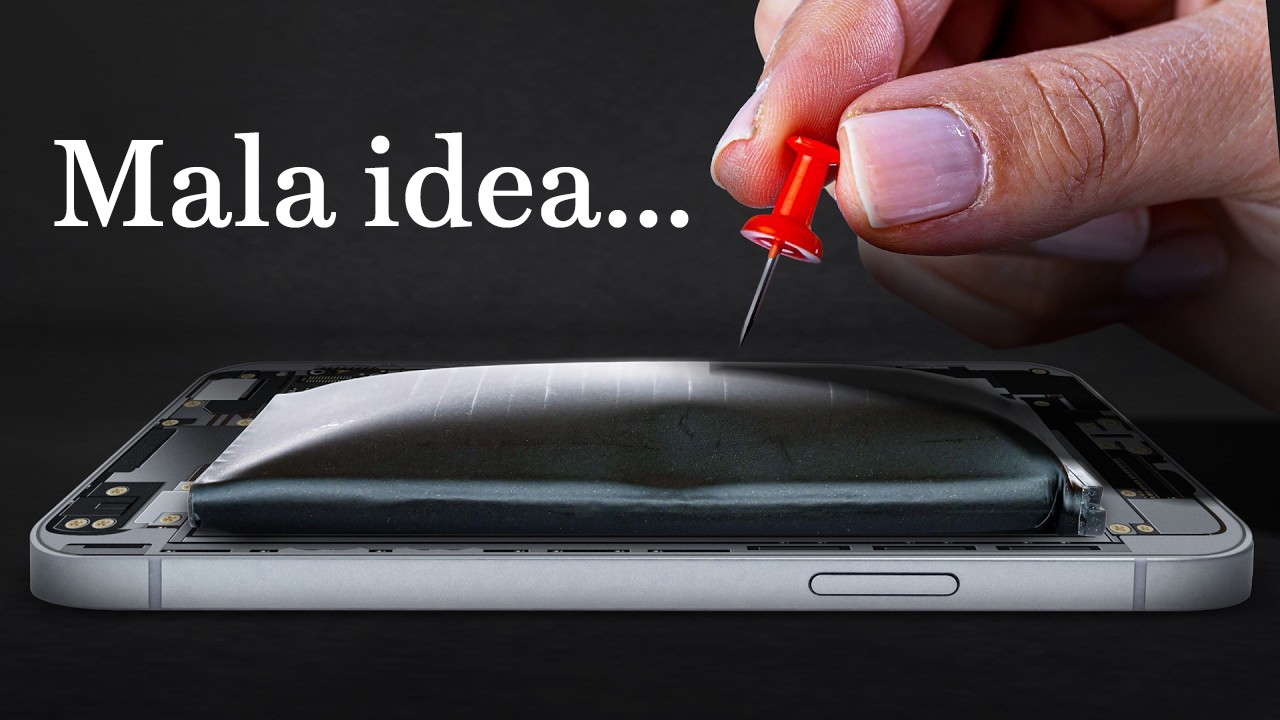
El Material Perfecto Para Baterías es Peligroso
Keywords
Summary
129 words
Critical Evaluation
Value of the Information & Strength of the Argument
The video provides a comprehensive and engaging account of the development of lithium-ion batteries, combining historical narrative with clear explanations of the underlying chemistry. The argumentation is solid, supported by interviews with the scientists involved and demonstrations of key concepts. The value lies in its ability to make complex scientific concepts accessible to a general audience while maintaining accuracy. The narrative is well-structured, building from the basics of electrochemistry to the specific innovations that made lithium-ion batteries viable, and it effectively conveys the challenges and breakthroughs that shaped the technology.
Scientific Rigor, Source Quality, Title Accuracy
The video demonstrates high scientific rigor, with accurate explanations of the chemistry and physics involved. It cites the original research papers and patents, and features interviews with the key scientists, adding credibility. The title accurately reflects the content, emphasizing the dual nature of the material. The video is well-researched and presents a balanced view of the history, including the setbacks and the eventual success. The sources are credible and the information is consistent with established knowledge in the field.
184 words
Title / Content Match
The title accurately reflects the content, highlighting the dual nature of the material (perfect but dangerous) and drawing viewers in.
Quality & Reliability
9/10
The video is a well-researched historical account of the lithium-ion battery development, featuring interviews with key scientists and archival footage. It accurately explains the scientific principles and the challenges faced, and it is consistent with established knowledge in the field. The production quality is high, and the information is presented in an engaging and accessible manner.
Key Moments
Markers derived by PSI from the transcript: the creator did not define chapters.
- Introduction to the problem of battery energy density and the early limitations.
- Explanation of the basic electrochemistry with the lemon battery experiment.
- Whittingham's work at Exxon and the development of the first lithium battery.
- The dangers of lithium metal anodes and the formation of dendrites.
- Goodenough's improvement with lithium cobalt oxide cathode.
- Yoshino's development of the carbon anode and the first lithium-ion battery.
- Commercialization by Sony and the impact on portable electronics.
- Conclusion and Nobel Prize recognition.
Cited Sources
- Unilingo — Channel management and translation services.
Concurring Sources
- Nobel Prize in Chemistry 2019 — Official Nobel Prize page confirming the award to Whittingham, Goodenough, and Yoshino.
Contribution & Novelties
The video provides a compelling and detailed historical narrative of the lithium-ion battery, highlighting the contributions of Whittingham, Goodenough, and Yoshino, and the challenges they overcame. It offers a clear explanation of the scientific principles, including intercalation and the SEI layer, making it accessible to a broad audience. The video also underscores the importance of the oil crisis in driving innovation and the eventual commercialization that transformed technology.
Pour aller plus loin :
- Lithium-ion battery - Wikipedia — Comprehensive overview of the technology and its history.
- Intercalation (chemistry) - Wikipedia — Explanation of the intercalation process central to battery function.
- Solid electrolyte interphase - Wikipedia — Details on the SEI layer and its role in battery stability.
117 words
Radar Profile
The radar profile shows high scores in information quantity, quality, and reliability, with a slightly lower technical level, indicating that the video is highly informative and trustworthy but may not delve into the most advanced technical details. The overall balance suggests a well-rounded and accessible presentation.
💬 Très positif. Sur les 30 commentaires analysés, les spectateurs expriment une grande appréciation pour la clarté et la profondeur de l'explication, et partagent des anecdotes personnelles et des connaissances complémentaires.