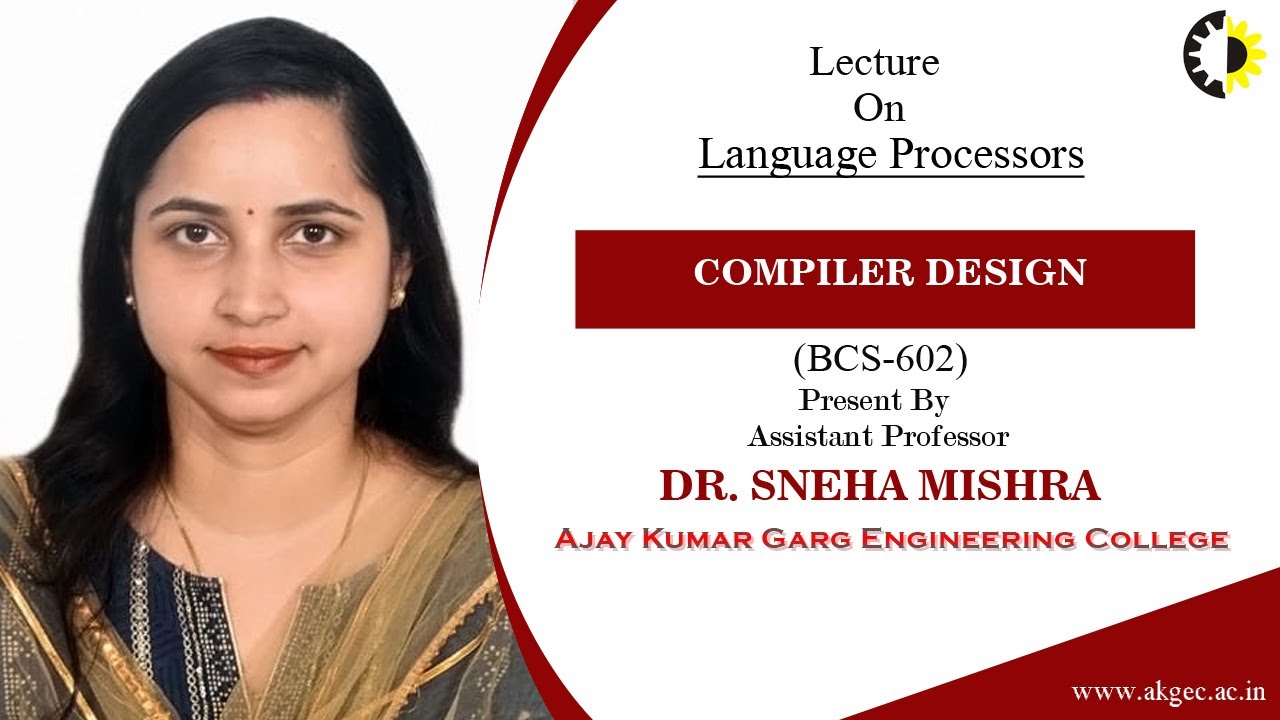
LANGUAGE PROCESSORS | COMPILER DESIGN | LECTURE 01 BY DR. SNEHA MISHRA | AKGEC
Keywords
Summary
165 words
Critical Evaluation
Value of the Information & Strength of the Argument
The lecture provides a basic overview of language processors, which is valuable for beginners. It explains the roles of preprocessors, compilers, interpreters, assemblers, linkers, and loaders in the translation process. The argumentation is straightforward but lacks depth; it relies on simple definitions and examples without delving into technical details or formal models. The comparison between compilers and interpreters is clear and highlights practical differences. However, the presentation is somewhat informal and includes digressions, which may detract from the clarity. The content is accurate but does not offer novel insights or advanced perspectives.
Scientific Rigor, Source Quality, Title Accuracy
The lecture is scientifically accurate in its basic definitions and distinctions, but it does not cite any external sources or references. The content is based on standard compiler design knowledge, but the lack of citations reduces its scholarly rigor. The title accurately reflects the content, as it is indeed a lecture on language processors. The presentation is clear but could benefit from more structured explanations and visual aids. No comments were provided for analysis.
181 words
Title / Content Match
Title accurately reflects the content: a lecture on language processors in compiler design.
Quality & Reliability
6/10
Content is accurate and aligns with standard compiler design concepts, but lacks depth and references. Presentation is informal with some digressions and unclear explanations.
Key Moments
Markers derived by PSI from the transcript: the creator did not define chapters.
- Introduction and course overview
- Definition of language processors
- Types of language processors: preprocessor, compiler, interpreter, assembler, hybrid compiler
- Preprocessor explanation and example with #include and #define
- Compiler definition and working, syntax errors, and object program generation
- Interpreter definition and line-by-line execution
- Assembler, linker, and loader explanations
- Comparison between compiler and interpreter
- Summary and conclusion
Cited Sources
- AKGEC Official Website — Institution providing the lecture
- Compiler Design Playlist — Full course playlist for further lectures
Concurring Sources
- Compilers: Principles, Techniques, and Tools (Dragon Book) — Standard reference for compiler design, covering language processors in depth.
Contribution & Novelties
This lecture serves as an introductory tutorial for compiler design, specifically focusing on language processors. It provides a clear, albeit basic, explanation of the roles of preprocessors, compilers, interpreters, assemblers, linkers, and loaders. The main contribution is its pedagogical approach, making these concepts accessible to beginners. However, it does not introduce new research or advanced insights.
Pour aller plus loin :
- Compiler - Wikipedia — Provides a comprehensive overview of compiler design and implementation.
- Interpreter (computing) - Wikipedia — Detailed explanation of interpreters and their differences from compilers.
- Assembly language - Wikipedia — Background on assembly language and its role in translation.
102 words
Radar Profile
The radar profile shows moderate scores across all dimensions, indicating a balanced but not exceptional lecture. The highest score is in fiabilite_globale, suggesting the content is reliable, while quantite_information and niveau_technique are lower, reflecting the introductory nature and limited depth.