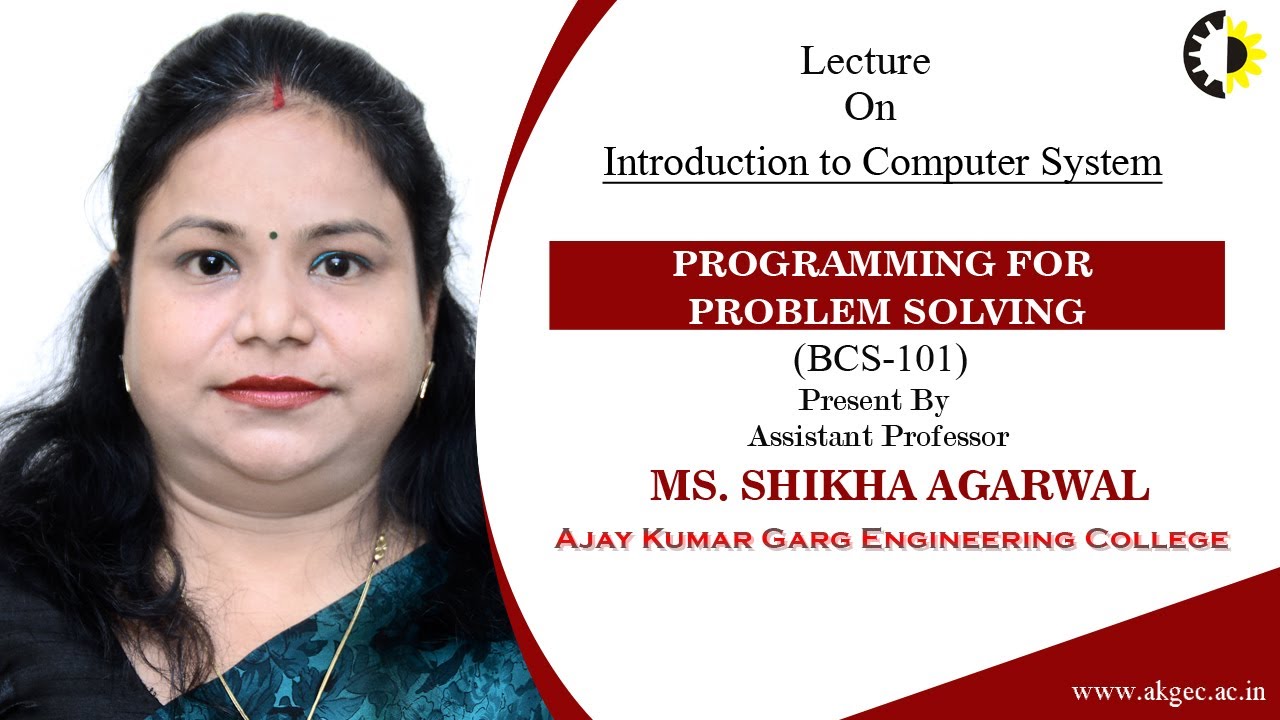
INTRODUCTION TO COMPUTER SYSTEM | PPS | LECTURE 01 BY MS. SHIKHA AGARWAL | AKGEC
Keywords
Summary
174 words
Critical Evaluation
Value of the Information & Strength of the Argument
The lecture provides a clear and structured introduction to computer systems, covering essential concepts such as the IPO model, characteristics of computers, and basic hardware components. The argumentation is logical and easy to follow, with examples to illustrate abstract ideas. However, the content is largely descriptive and lacks depth; it does not delve into technical details or provide critical analysis. The value lies in its pedagogical clarity for beginners, but it offers little beyond standard textbook material.
Scientific Rigor, Source Quality, Title Accuracy
The lecture does not cite any external sources or references, relying solely on the instructor’s explanations. The title accurately reflects the content, which is an introductory overview. The lack of citations reduces the scientific rigor, but the information presented is generally accurate and aligns with established knowledge in computer science. The description provides links to the institution’s website and a playlist, but these are not used as sources within the lecture.
163 words
Title / Content Match
Title accurately reflects the content: an introductory lecture on computer systems.
Quality & Reliability
6/10
Content is accurate but basic, with some minor imprecisions (e.g., 'no IQ' oversimplification). No citations or references provided.
Key Moments
Markers derived by PSI from the transcript: the creator did not define chapters.
- Introduction and definition of computer system
- Explanation of IPO model and data vs information
- Characteristics of computers: speed, accuracy, diligence, versatility, storage, automation
- Applications of computers in various fields
- Components of computer system: input, storage, CPU, output
- Detailed discussion on input devices and storage units
- CPU components: control unit and ALU
- Memory hierarchy and conclusion
Cited Sources
- AKGEC Official Website — Institution's official website, mentioned in the video description.
- Programming for Problem Solving Playlist — Playlist containing this lecture and other units, linked in the description.
Concurring Sources
- Computer Organization and Design — Standard textbook on computer architecture, consistent with the lecture's content.
Contribution & Novelties
The lecture provides a foundational overview of computer systems, but it does not introduce new or original concepts. Its contribution is primarily pedagogical, offering a structured introduction for beginners. The explanation of the IPO model and memory hierarchy is standard.
Pour aller plus loin :
- Von Neumann architecture — Relevant to understanding the CPU and memory organization.
- Memory hierarchy — Directly related to the discussion on memory types and trade-offs.
- Central processing unit — Provides more detailed information on CPU components and functions.
83 words
Radar Profile
The radar profile shows moderate scores across all dimensions, with a slightly higher score in information quantity and quality, but lower in technical level. This indicates a balanced introductory lecture that is informative but not highly technical.