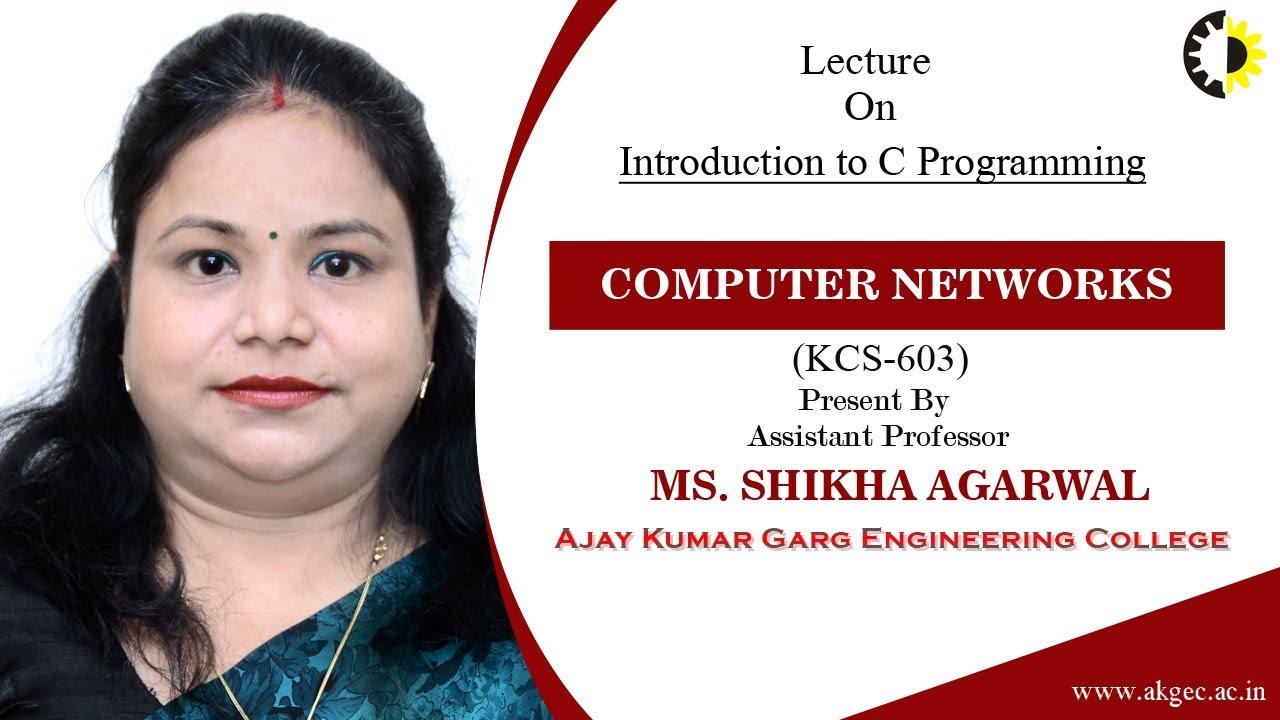
INTRODUCTION TO C PROGRAMMING | PROGRAMMING FOR PROBLEM SOLVING | LECTURE 03 BY MS. SHIKHA AGARWAL
Keywords
Summary
168 words
Critical Evaluation
Value of the Information & Strength of the Argument
The lecture provides a solid foundational overview of C programming concepts, which is valuable for beginners. The explanation of tokens, data types, and program structure is clear and logically organized. However, the argumentation is mostly descriptive, lacking critical analysis or comparative evaluation. The instructor does not provide code examples beyond a simple ‘Hello World’ and a few conceptual snippets, which limits the practical value. The presentation is straightforward but could benefit from more engaging delivery and visual aids.
Scientific Rigor, Source Quality, Title Accuracy
The scientific rigor is moderate; the content is accurate but not deeply sourced. The instructor mentions historical facts and standard features of C, but no specific references are cited within the lecture. The description provides links to the institution’s website and a playlist, which are relevant but not primary sources. The title accurately reflects the content, which is an introductory lecture. There are no comments provided, so no analysis of public reception is possible.
167 words
Title / Content Match
The title accurately reflects the content, which is an introductory lecture on C programming.
Quality & Reliability
6/10
The lecture provides a structured introduction to C programming, covering history, features, character sets, tokens, data types, and program structure. The content is accurate but lacks depth and practical examples. The presentation is clear but the audio quality is poor, and the delivery is somewhat monotonous. The sources are limited to institutional links.
Key Moments
Markers derived by PSI from the transcript: the creator did not define chapters.
- Introduction and overview of the lecture topics.
- History of C programming: ALGOL, CPL, BCPL, B, and Dennis Ritchie.
- Features of C: high-level, stable, simple, operators, keywords, pointers, extensible.
- Components of C: character set, data types, constants, variables, keywords.
- Character set details: alphabets, digits, special symbols, white spaces, operators.
- Tokens: definition and categories (keywords, identifiers, constants, special symbols, operators).
- Keywords: predefined words, 32 keywords, examples (int, printf).
- Identifiers: rules for naming, valid and invalid examples.
- Constants: integer, floating-point, character, string; escape sequences.
- Structure of a C program: documentation, preprocessor directives, global declarations, main function.
- Example: 'Hello World' program and explanation of preprocessor directives.
Cited Sources
- AKGEC Official Website — Institutional website of the college providing the lecture.
- Programming for Problem Solving Playlist — Playlist containing the full series of lectures.
Concurring Sources
- C (programming language) - Wikipedia — Confirms the history and features of C as presented in the lecture.
Contribution & Novelties
This lecture serves as a basic introduction to C programming, covering fundamental concepts such as tokens, data types, and program structure. It is suitable for beginners but does not offer novel insights or advanced topics. The presentation is clear but lacks depth and practical examples.
Pour aller plus loin :
- C (programming language) - Wikipedia — Comprehensive overview of C language history and features.
- C Programming Language Standard — Reference for C language syntax and semantics.
- The C Programming Language (book) by Kernighan and Ritchie — Classic textbook for learning C.
91 words
Radar Profile
The radar profile shows moderate scores across all dimensions, indicating a balanced but not exceptional lecture. The highest score is in 'quantite_information' and 'fiabilite_globale', suggesting the content is informative and reliable, while 'niveau_technique' is slightly lower, reflecting the introductory level.