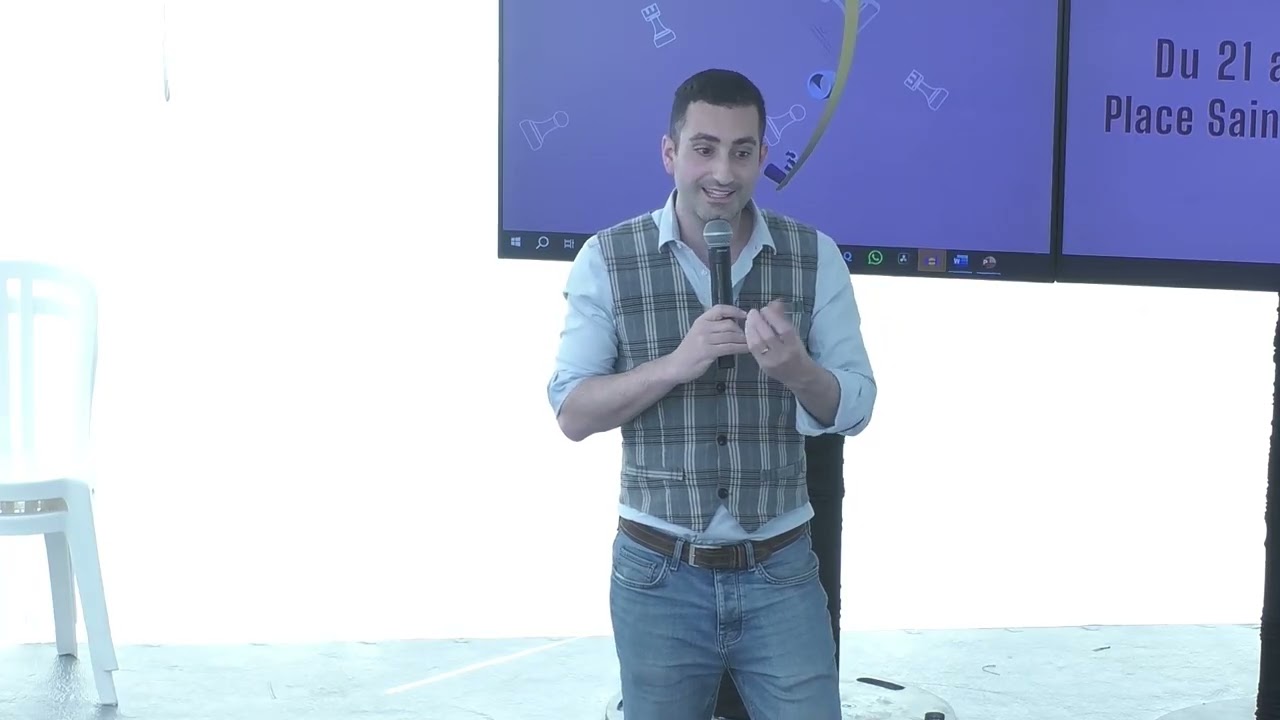
Une histoire des mathématiques au féminin
Keywords
Summary
186 words
Critical Evaluation
Value of the Information & Strength of the Argument
The talk provides valuable insights into the historical context of women in mathematics, challenging common misconceptions. The speaker uses specific examples and primary sources to support his arguments, such as the writings of Socrates Scholasticus for Hypatia and the publication of Émilie du Châtelet’s memoir in the Academy of Sciences. He also highlights the role of social class and political factors in shaping women’s opportunities. The argumentation is coherent and well-structured, though some claims could benefit from more explicit citations.
Scientific Rigor, Source Quality, Title Accuracy
The speaker demonstrates scientific rigor by referencing historical documents and academic works. He mentions primary sources like Socrates Scholasticus and the publication of Émilie du Châtelet’s memoir. However, he does not provide a formal bibliography, and some statements are based on general historical knowledge. The title accurately reflects the content, which is a historical overview rather than a comprehensive study. The talk is well-suited for a general audience interested in the history of science.
169 words
Title / Content Match
The title accurately reflects the content, which is a historical overview of women in mathematics through selected examples.
Quality & Reliability
7/10
The speaker is a specialist in history of mathematics and editor-in-chief of Tangente magazine. He presents a well-structured historical overview with references to primary sources and academic context. However, some claims are presented without explicit citations, and the talk is a conference presentation rather than a peer-reviewed study.
Key Moments
Markers derived by PSI from the transcript: the creator did not define chapters.
- Introduction by the host and start of the talk.
- Introduction to the topic and the four examples to be discussed.
- Discussion of Hypatia: her life, death, and the myth of her as a martyr.
- Hypatia's mathematical work and the problem of attribution.
- Transition to Émilie du Châtelet and her scientific achievements.
- Émilie du Châtelet's competition on fire and her recognition.
- Discussion of the impact of the French Revolution on women in science.
- Marie Curie: her Nobel Prizes and the discrimination she faced.
- Mileva Einstein and the question of her contributions.
- Conclusion and final thoughts on the importance of remembering these women.
Cited Sources
- Socrates Scholasticus, Ecclesiastical History — Mentioned as the primary source for the death of Hypatia.
- Émilie du Châtelet, Institutions de physique — Mentioned as her major work in physics.
- Marie Curie's Nobel Prize records — Referenced for her two Nobel Prizes and the circumstances of the 1903 prize.
Concurring Sources
- Women in Mathematics: A Historical Overview — General historical accounts support the existence and contributions of female mathematicians.
Dissenting Sources
- Some historians argue that Mileva Einstein's contributions were minimal — There is ongoing debate about the extent of Mileva Einstein's involvement in Albert Einstein's early work.
Contribution & Novelties
The talk provides a fresh perspective on well-known figures by emphasizing the historical context and the systemic erasure of women’s contributions. It challenges the romanticized view of Hypatia and highlights the role of social class in Émilie du Châtelet’s career. The discussion of Mileva Einstein adds nuance to the debate about her involvement in Einstein’s work.
Pour aller plus loin :
- Women in Mathematics — Overview of the history and contributions of women in mathematics.
- Hypatia — Detailed article on her life and legacy.
- Émilie du Châtelet — Biography and scientific achievements.
- Marie Curie — Comprehensive biography and scientific contributions.
- Mileva Marić — Discussion of her life and the controversy over her contributions.
113 words
Radar Profile
The radar profile shows high scores in quantity of information and technical level, reflecting the speaker's expertise and the depth of historical detail. The quality of information and global reliability are also strong, though slightly lower due to the lack of formal citations. Overall, the talk is informative and well-argued.
💬 Sur les 0 commentaires analysés, aucune tendance n'est disponible.