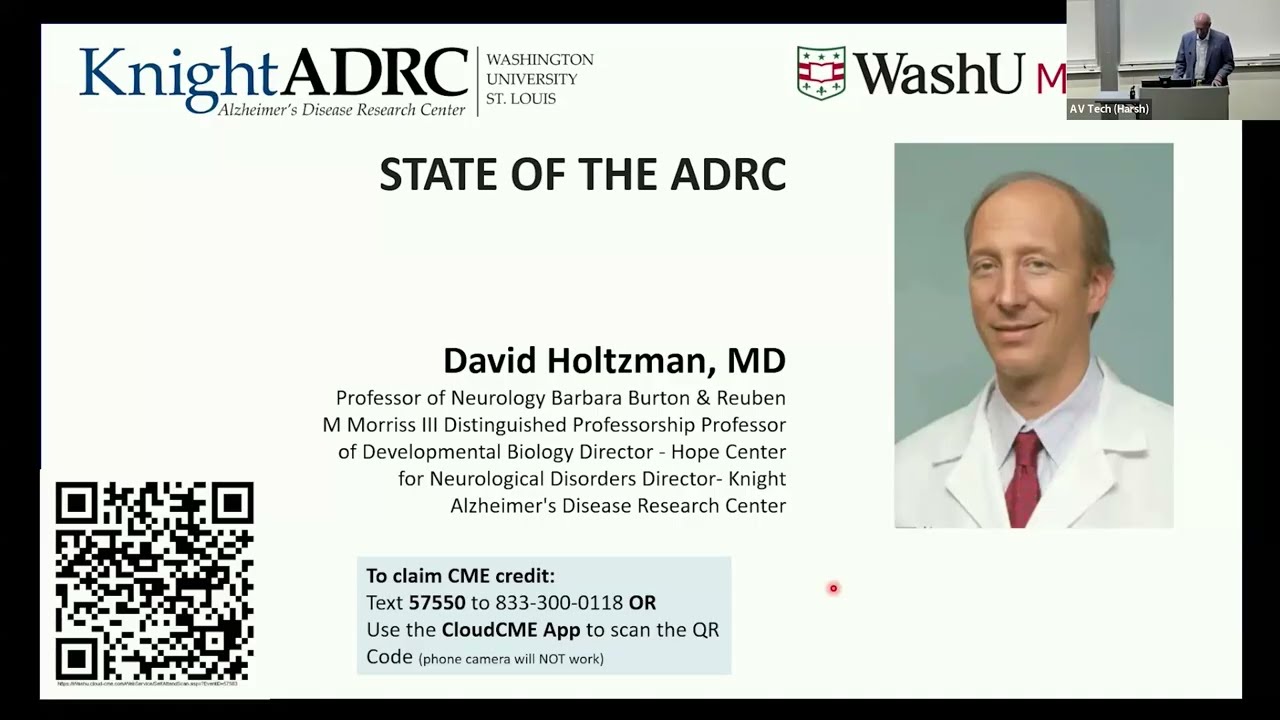
State of the Knight ADRC for 2026
Keywords
Summary
176 words
Critical Evaluation
Value of the Information & Strength of the Argument
The lecture provides valuable insights into the operations and strategic priorities of a major Alzheimer’s research center. It offers a detailed account of the center’s contributions to the field, including its role in developing biomarkers and conducting clinical trials. The argumentation is based on the speaker’s direct experience and institutional data, lending credibility to the information. However, the talk is primarily a status report and does not present new scientific findings or a critical analysis of research methods. The value lies in its comprehensive overview of the current state of Alzheimer’s research and the challenges posed by funding and policy changes.
Scientific Rigor, Source Quality, Title Accuracy
The lecture demonstrates a high level of scientific rigor, with the speaker referencing specific studies, grants, and institutional data. The sources cited are primarily internal to the Knight ADRC and its affiliated projects, which are well-established in the field. The title accurately reflects the content, as it is indeed a state-of-the-center address. The speaker does not cite external publications in detail, but the information is consistent with known research in the field. The talk also addresses the impact of NIH funding changes, which is a relevant and timely topic. Overall, the sources are reliable and the title is appropriate.
215 words
Title / Content Match
The title accurately reflects the content, which is an annual state-of-the-center address.
Quality & Reliability
8/10
The lecture is delivered by the director of the Knight ADRC, a leading Alzheimer's research center, and provides a comprehensive overview of ongoing research, funding challenges, and institutional achievements. The information is based on direct involvement and institutional data, but it is primarily an expert opinion and status report rather than a peer-reviewed presentation.
Key Moments
Markers derived by PSI from the transcript: the creator did not define chapters.
- Introduction and CME information
- Overview of unprecedented era in Alzheimer's research
- Central themes of the Knight ADRC
- Funding landscape and NIH payline changes
- Memory and Aging Project participant characteristics
- SCAN neuroimaging initiative and data sharing
- Challenges with disease-modifying therapies
- Community partnerships and African-American Advisory Board
- Future directions and new grant proposals
Cited Sources
- Knight ADRC Events Calendar — Mentioned in the video description as a resource for upcoming lectures.
Concurring Sources
- Alzheimer's Association — The lecture mentions partnership with the Alzheimer's Association, which aligns with their mission.
Contribution & Novelties
The lecture provides an insider’s perspective on the current state of Alzheimer’s research at a leading center, highlighting recent advancements and ongoing challenges. It underscores the importance of biomarkers and the shift towards disease-modifying therapies. The talk also sheds light on the impact of federal funding changes on research operations.
Pour aller plus loin :
- Alzheimer’s disease biomarkers — Overview of biomarkers used in AD diagnosis and research.
- Dominantly Inherited Alzheimer Network — International collaboration studying familial AD.
- National Institute on Aging — Official site for AD research funding and information.
91 words
Radar Profile
The radar profile shows high scores in information quantity, quality, and reliability, reflecting the comprehensive and authoritative nature of the lecture. The technical level is also high, indicating a specialized audience. The overall profile suggests a well-rounded and informative presentation.