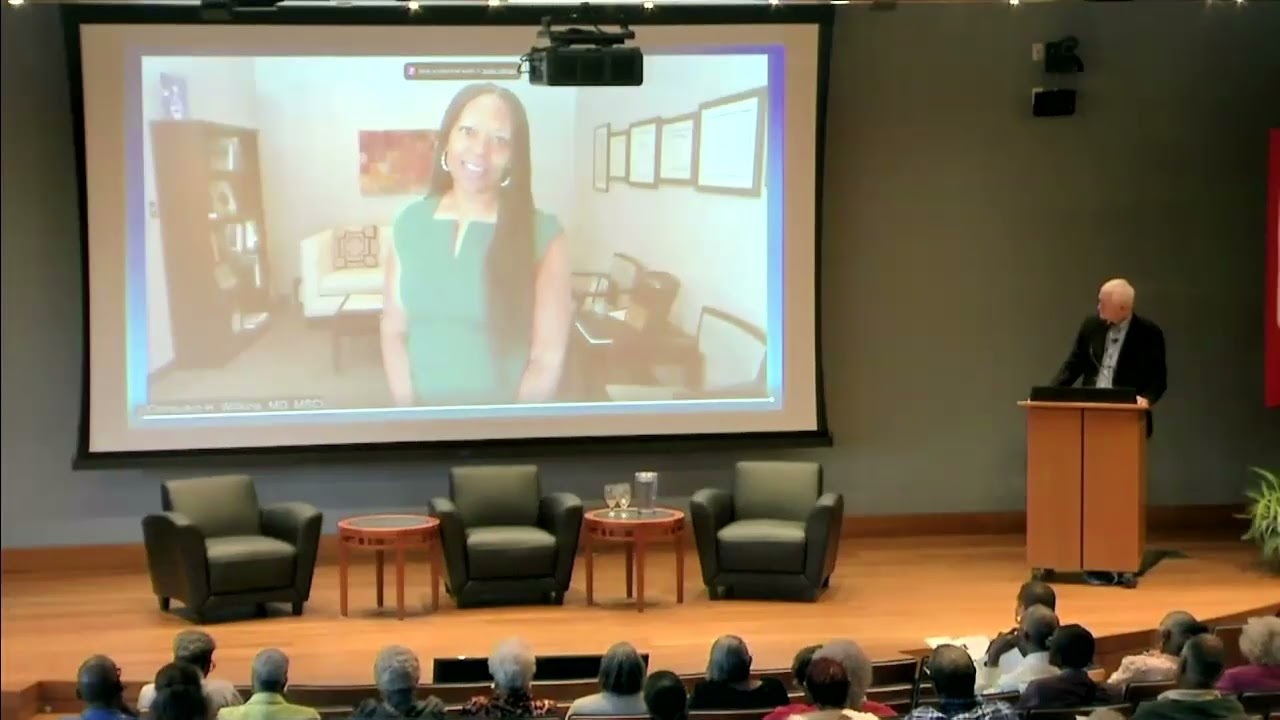
The 2025 Norman R. Seay Lecture - 20th Anniversary
Keywords
Summary
181 words
Critical Evaluation
Value of the Information & Strength of the Argument
The video provides valuable insights into the importance of community engagement in Alzheimer’s disease research, particularly for African American populations. The argumentation is based on personal experiences and historical accounts, which are compelling but not systematically presented. The value lies in highlighting successful strategies for increasing diversity in research and the role of community advisory boards. The argumentation is persuasive in advocating for culturally sensitive research practices, but it lacks empirical evidence and relies heavily on anecdotal support.
Scientific Rigor, Source Quality, Title Accuracy
The scientific rigor is moderate; the content is primarily narrative and historical, with some quantitative data on research participation. The sources cited are the speakers’ own experiences and the event’s website, which is not a peer-reviewed source. The title accurately reflects the content, which is a commemorative lecture. The video does not provide a systematic review or original research, but it does offer credible perspectives from established researchers and community leaders.
164 words
Title / Content Match
The title accurately reflects the content, which is a commemorative lecture series event.
Quality & Reliability
8/10
The event is a formal academic lecture featuring reflections from established researchers and community leaders. The information is primarily anecdotal and historical, with some data on research participation percentages. The content is reliable within its scope, but lacks peer-reviewed citations and is not a systematic review.
Key Moments
Markers derived by PSI from the transcript: the creator did not define chapters.
- Introduction by Dr. John Morris, welcoming attendees and outlining the event.
- Dr. Morris introduces the African American Advisory Board and its history.
- Video reflections from past Seay lecturers: Dr. Consuelo Wilkins, Dr. Robert Turner, and Dr. Crystal Glover.
- Dr. Morris shares the history of Norman Seay and the founding of the AAAB.
- Discussion on the impact of the AAAB on research diversity, including statistics on participant representation.
- Roundtable discussion on building trust and engaging communities in research.
- Call to action for research participation and closing remarks.
Cited Sources
- Seay Lecture Event Page — Official event page for the Norman R. Seay Lecture, providing details and background.
Concurring Sources
- Alzheimer's Association - African Americans and Alzheimer's — Provides statistics on Alzheimer's prevalence in African Americans, supporting the need for diverse research.
Contribution & Novelties
The video provides a unique historical account of the Norman R. Seay Lecture and the African American Advisory Board, highlighting the importance of community engagement in Alzheimer’s research. It offers personal narratives from researchers and community leaders, emphasizing the need for diversity and trust in research. The video also showcases successful initiatives like the Men’s Brain Health Conference and the COMPASS study, which are innovative approaches to community-based research.
Pour aller plus loin :
- Alzheimer’s Association - African Americans and Alzheimer’s — Provides statistics and information on Alzheimer’s in African American communities.
- National Institute on Aging - Alzheimer’s Disease Research Centers — Overview of ADRCs and their role in research.
- Community-Based Participatory Research (CBPR) — A framework for engaging communities in research.
122 words
Radar Profile
The radar profile shows high scores in quality of information and reliability, but lower in quantity and technical level. This reflects a video that is rich in qualitative insights and trustworthy narratives, but lacks in-depth technical detail and extensive data. The moderate quantity score indicates a focused, event-based content rather than a comprehensive review.
💬 No comments were provided for analysis.