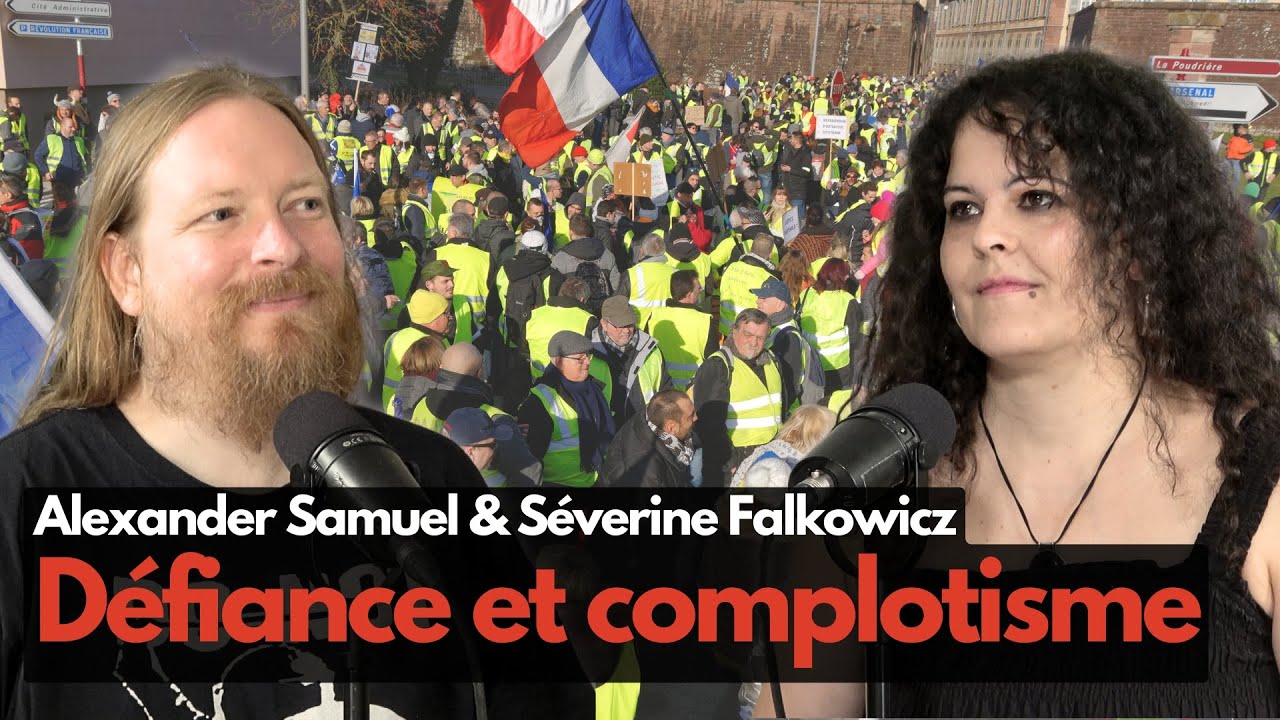
Déjouer les fausses croyances, avec Séverine Falkowicz & Alexander Samuel
Keywords
Summary
177 words
Critical Evaluation
Value of the Information & Strength of the Argument
The video provides valuable insights into the psychology of conspiracy beliefs and practical strategies for countering misinformation. The authors argue convincingly that conspiracy thinking is not a simple matter of ignorance but is often rooted in legitimate social grievances and a lack of trust in institutions. They advocate for a nuanced approach that addresses underlying needs rather than simply debunking false claims. The argumentation is solid, drawing on scientific literature and personal experiences, though some points are presented as general observations without specific citations.
Scientific Rigor, Source Quality, Title Accuracy
The discussion is scientifically rigorous, with references to academic works and the authors’ own research. The sources mentioned include the book ‘Twitter and Tear Gas’ by Zeynep Tufekci and the concept of ‘prebunking’. The title accurately reflects the content, and the video is well-structured. The description provides links to relevant resources, including the book and related articles on Conspiracy Watch. The overall quality is high, though the format is an interview rather than a formal academic presentation.
176 words
Title / Content Match
The title accurately reflects the content: a discussion on countering false beliefs with the two authors.
Quality & Reliability
8/10
The video features two authors with academic credentials (a social psychology lecturer and a doctor in molecular biology) discussing their book on conspiracy theories and misinformation. They reference scientific literature and their own experiences, but the format is an interview/debate, not a peer-reviewed presentation. The information is reliable and well-argued, but some claims are anecdotal.
Key Moments
Markers derived by PSI from the transcript: the creator did not define chapters.
- Discussion of the 'Bloquons-tout' movement and its similarities to the 'Gilets Jaunes'.
- Alexander Samuel shares his experience as a former 'Gilet Jaune' and his engagement against misinformation.
- Séverine Falkowicz explains the concept of 'information hygiene' and how to evaluate sources.
- The importance of rebuilding a common cultural understanding of reliable sources.
- Discussion on how algorithmic bias can make us more susceptible to misinformation.
- Difference between conspiracy thinking and false beliefs, with the example of naturopathy.
- Why the authors chose to invest in the fight against misinformation.
- Comparison between racism and conspiracy thinking as similar mental mechanisms.
- Explanation of 'persuasive inoculation' (prebunking) as a strategy.
- The role of repetition in legitimizing false information.
Cited Sources
- Complotisme et manipulation. Petit guide pour déjouer les fausses croyances, fake news, et autres fadaises — The book co-authored by the guests, which is the main topic of the discussion.
- Au cœur de l'esprit critique — Another book by Séverine Falkowicz, mentioned as a resource for critical thinking.
- Petit traité de manipulation à l'usage des honnêtes gens — Referenced as a resource on manipulation techniques.
- Bloquons-tout : comment le mouvement est passé de l'extrême droite à l'extrême gauche — Article on Conspiracy Watch analyzing the 'Bloquons-tout' movement.
- Enquête complotisme 2019 : focus sur le mouvement des gilets jaunes — Survey on conspiracy beliefs among 'Gilets Jaunes'.
Concurring Sources
- Conspiracy Watch — The channel and website are dedicated to monitoring conspiracy theories, aligning with the video's content.
External References
Contribution & Novelties
The video offers a unique perspective by combining academic expertise with field experience from a former ‘Gilet Jaune’. It provides practical advice on countering misinformation, emphasizing the importance of addressing underlying social needs and using ‘prebunking’ techniques. The discussion of the ‘Bloquons-tout’ movement adds current relevance.
Pour aller plus loin :
- Prebunking — The concept of ‘inoculation’ against misinformation, discussed in the video.
- Zeynep Tufekci’s ‘Twitter and Tear Gas’ — Referenced in the video, this book analyzes social media’s role in protest movements.
- Conspiracy theory — General overview of conspiracy theories and their psychological underpinnings.
95 words
Radar Profile
The radar profile shows high scores in information quantity, quality, and reliability, with a slightly lower technical level, reflecting the accessible yet expert nature of the discussion.
💬 No comments were provided for analysis.