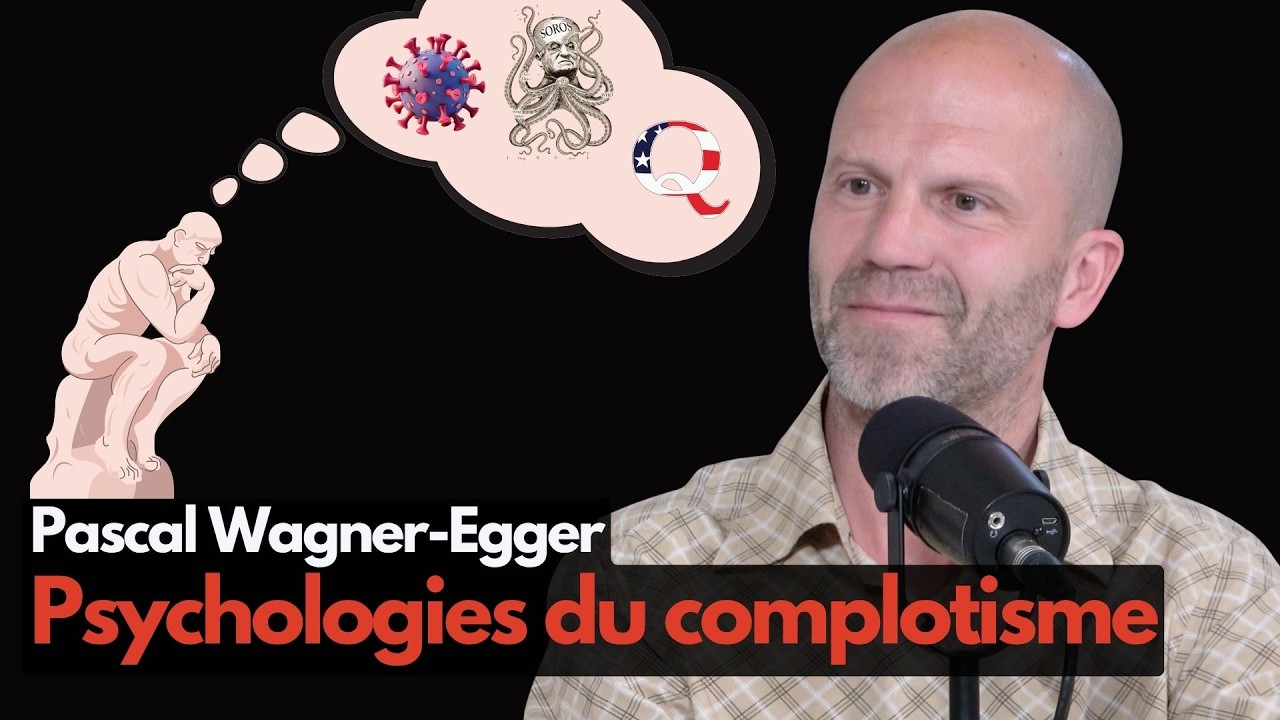
Je ne suis pas complotiste, mais...
Keywords
Summary
157 words
Critical Evaluation
Value of the Information & Strength of the Argument
The value of the information is high, as it provides a comprehensive overview of the psychological mechanisms behind conspiracy beliefs, supported by references to scientific studies. The argumentation is solid, with clear definitions and distinctions (e.g., between real conspiracies and conspiracy theories). The guest’s expertise adds credibility, and he acknowledges the complexity of the phenomenon, including social and political factors. However, the format is an interview, so some points are simplified for a general audience.
Scientific Rigor, Source Quality, Title Accuracy
The scientific rigor is good, with references to peer-reviewed research and the guest’s own publications. The sources cited in the description include a PLOS ONE article and a Conspiracy Watch article on countering conspiracy theories. The title accurately reflects the content, which explores the phrase ‘I’m not a conspiracy theorist, but…’ and the psychology behind it. The discussion is well-structured and grounded in empirical evidence.
155 words
Title / Content Match
The title accurately reflects the content, which explores the common phrase 'I'm not a conspiracy theorist, but...' and the psychology behind conspiracy beliefs.
Quality & Reliability
8/10
The discussion is based on established psychological research and the guest is a recognized researcher in social psychology. However, the format is an interview and not a peer-reviewed presentation, so some simplification is expected.
Key Moments
Markers derived by PSI from the transcript: the creator did not define chapters.
- Introduction to the phrase 'I'm not a conspiracy theorist, but...'
- Definition of conspiracy theories and distinction from real conspiracies
- Mechanism from legitimate doubt to conspiracy belief
- Explanation of 'conspiracy mentality' and its correlation with other beliefs
- Cognitive biases: illusory correlation, jumping to conclusions, intentionality bias, confirmation bias
- Why conspiracy theorists distrust journalism
- Porosity between far-right and conspiracy theories
- COVID-19 as an accelerator of conspiracy theories
- Analysis of the Brigitte Macron conspiracy theory
- Strategies for countering conspiracy theories
- The 'argumentative millefeuille' technique
- Debating conspiracy theorists: effectiveness and risks
- Accusations of 'controlled opposition'
- Inventing a conspiracy theory to inoculate against them
- Are public policies sufficient?
- Is conspiracy theory a form of political action?
- Guest answers Conspiracy Watch's questionnaire
Cited Sources
- Comment lutter contre la prolifération des théories du complot — Referenced in the video description as a resource for going further on countering conspiracy theories.
- PLOS ONE article on conspiracy beliefs — Referenced in the video description as a scientific source related to conspiracy theories.
Concurring Sources
- PLOS ONE article on conspiracy beliefs — The article likely provides empirical evidence supporting the psychological factors discussed in the interview.
External References
Contribution & Novelties
The interview provides a clear and accessible synthesis of psychological research on conspiracy theories, emphasizing the role of cognitive biases and social factors. It offers practical insights for understanding and countering conspiracy beliefs, making it valuable for both general audiences and those interested in media literacy.
Pour aller plus loin :
- Conspiracy mentality scale — A measure used in research to assess individual differences in conspiracy beliefs.
- Cognitive biases — Overview of systematic patterns of deviation from norm or rationality in judgment.
- Social identity theory — Explains how group membership influences beliefs and behaviors, relevant to the social aspects of conspiracy beliefs.
102 words
Radar Profile
The radar profile shows high scores in quantity and quality of information, with moderate technical level and high reliability. This indicates a well-informed discussion that is accessible to a broad audience while maintaining scientific credibility.
💬 The comments are mixed, with some praising the guest and the content, while others express skepticism or criticism. Overall, the tone is balanced, with a slight positive lean due to appreciation for the expert's clarity and the channel's work.