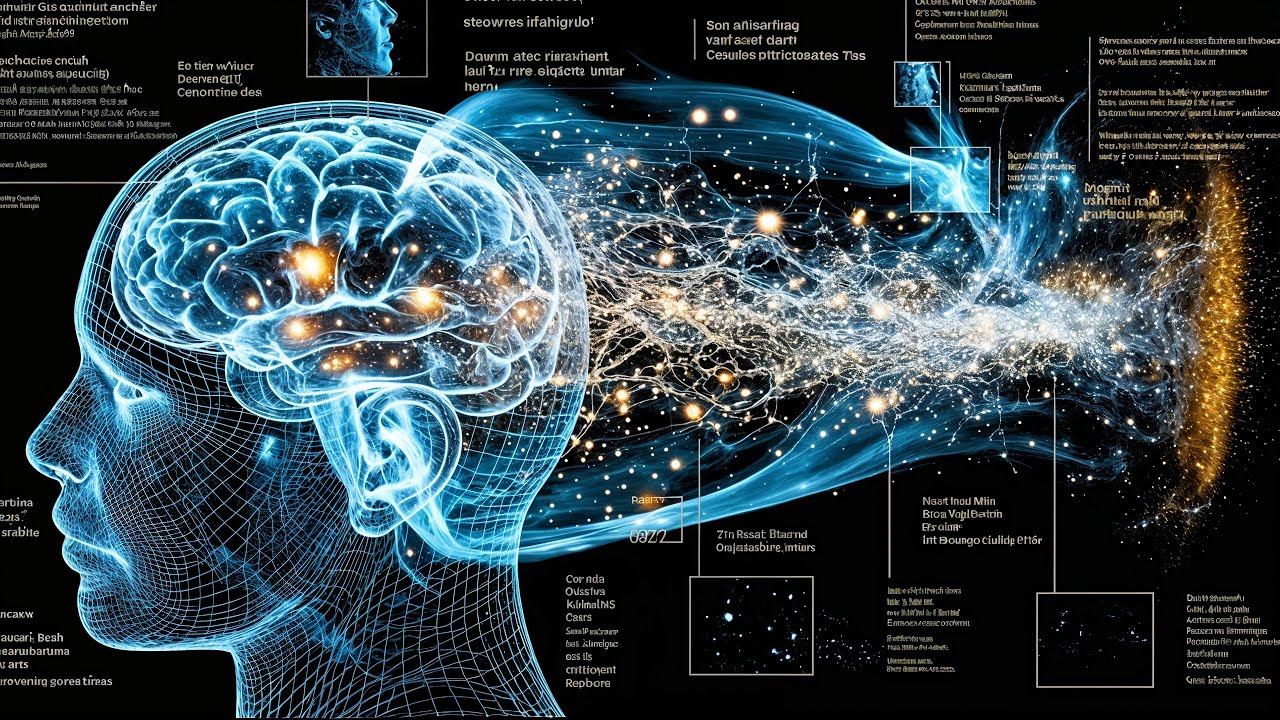
This Terrifying Quantum Theory Could Explain Consciousness | Sleepy Physicist
Keywords
Summary
163 words
Critical Evaluation
Value of the Information & Strength of the Argument
The video provides a comprehensive overview of the Orch-OR theory, explaining its key components and the evidence cited by proponents. It effectively communicates the hard problem of consciousness and the potential role of quantum mechanics. However, the argumentation is one-sided, presenting the theory as plausible without adequately addressing the substantial criticisms from the scientific community. The video does not mention the lack of empirical evidence for quantum coherence in the brain or the alternative classical explanations for the anesthesia study. The speculative sections on free will and universal consciousness are presented as logical consequences rather than as highly speculative interpretations.
Scientific Rigor, Source Quality, Title Accuracy
The video mentions several scientific concepts and studies, but it does not provide specific citations or links to original research. The description contains only hashtags and a disclaimer, with no references. The title accurately reflects the content, but the content is presented with a sensationalist tone that may overstate the certainty of the theory. The video does not discuss the scientific consensus or the significant criticisms of Orch-OR, which limits its rigor. The disclaimer at the end acknowledges the speculative nature, but the overall presentation may mislead viewers into thinking the theory is more accepted than it is.
213 words
Title / Content Match
The title accurately reflects the content, which discusses the Orch-OR theory and its implications for consciousness.
Quality & Reliability
6/10
The video presents a speculative theory (Orch-OR) with some references to experimental evidence, but it lacks rigorous sourcing and includes speculative extrapolations. The content is presented as educational but with a sensationalist tone.
Key Moments
Markers derived by PSI from the transcript: the creator did not define chapters.
- Introduction to the quantum theory of consciousness and the hard problem.
- Explanation of the Orch-OR theory and the roles of Penrose and Hameroff.
- Discussion of quantum biology examples: photosynthesis and bird navigation.
- Description of microtubules as potential quantum computers.
- Presentation of the anesthesia study with microtubule-stabilizing drugs.
- Implications for free will and creativity from quantum consciousness.
- Exploration of quantum entanglement and the possibility of universal consciousness.
- Discussion of the observer effect and its implications for reality.
- Speculation about quantum AI and the future of consciousness.
- Conclusion and teaser for the next episode.
Cited Sources
- Orch-OR theory (Penrose-Hameroff) — The video discusses the Orch-OR theory as the central theme.
- Quantum biology — The video mentions quantum effects in photosynthesis and bird navigation.
- Anesthesia study on microtubules — The video references a study where microtubule-stabilizing drugs delayed anesthesia in rats.
Concurring Sources
- Orch-OR theory (Penrose-Hameroff) — The video's main theory is consistent with the Wikipedia overview.
- Quantum biology — The video's examples of quantum effects in biology align with this field.
Dissenting Sources
- Criticism of Orch-OR — The scientific community has raised significant objections regarding decoherence times and lack of empirical evidence, which the video does not address.
Contribution & Novelties
The video provides an accessible introduction to the Orch-OR theory, synthesizing concepts from quantum physics and neuroscience. It highlights recent experimental evidence, such as the anesthesia study, which adds a layer of empirical support. The speculative implications for free will and universal consciousness are presented in a thought-provoking manner, encouraging viewers to consider the profound consequences of quantum consciousness.
Pour aller plus loin :
- Orchestrated objective reduction — Overview of the theory and its criticisms.
- Quantum biology — Examples of quantum effects in biological systems.
- Hard problem of consciousness — Philosophical background.
- Microtubule — Structural and functional details.
- Quantum entanglement — Key quantum phenomenon discussed.
105 words
Radar Profile
The radar profile shows moderate scores across all dimensions, with a slightly higher score for quantity of information and lower for reliability. This indicates a video that provides a broad overview but lacks depth and critical evaluation.
💬 No comments were provided for analysis.