Agentic AI L7: Working with memory and knowledge RAG for agents Part 2
Keywords
Summary
171 words
Critical Evaluation
Value of the Information & Strength of the Argument
The video provides valuable practical insights into implementing RAG for agents, with clear explanations of concepts and hands-on code examples. The instructor effectively argues for the importance of choosing the right retrieval method based on the nature of the information (factual vs. semantic). He demonstrates real-world issues and solutions, such as the need for hybrid search and the pitfalls of relying solely on semantic search for specific facts. The argumentation is solid, though informal, and the practical demonstrations reinforce the theoretical points.
Scientific Rigor, Source Quality, Title Accuracy
The scientific rigor is moderate; the instructor does not cite formal sources but references tools like ChromaDB, OpenAI embeddings, and concepts like TF-IDF and graph databases. The title accurately reflects the content. The video is a tutorial, so it does not claim to present original research but rather to teach practical skills. The lack of formal citations is typical for such content, but the technical accuracy is high.
165 words
Title / Content Match
The title accurately reflects the content, which focuses on memory and knowledge RAG for agents, specifically covering vector search, keyword search, and hybrid approaches.
Quality & Reliability
7/10
The video provides a practical tutorial on RAG for agents, with clear explanations and code demonstrations. The content is technically accurate, but the presentation is informal and lacks rigorous citations. The instructor shows real implementation issues and solutions, which adds credibility.
Key Moments
Markers derived by PSI from the transcript: the creator did not define chapters.
- Introduction to retrieval methods: keyword vs semantic search
- Demonstration of TF-IDF and cosine similarity with scikit-learn
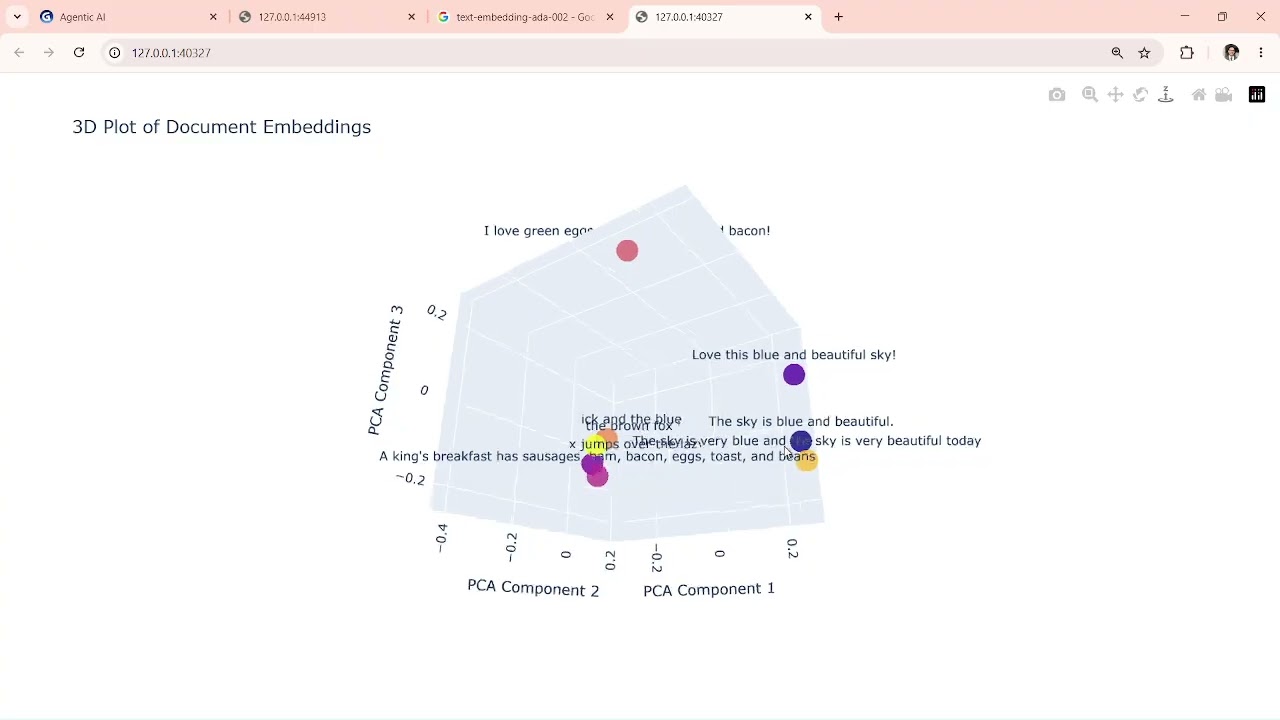
- Introduction to embeddings and using OpenAI's text-embedding-ada-002
- Storing embeddings in ChromaDB and performing semantic search
- Discussion of retrieval types: keyword, vector, hybrid, relational, graph
- Building an agent with a retrieval tool for a movie script
- Implementing hybrid search combining vector and keyword retrieval
- Troubleshooting agent inconsistencies and the importance of understanding code
Cited Sources
- ChromaDB — Vector database used for storing and retrieving embeddings
- OpenAI Embeddings — Used for generating text embeddings with text-embedding-ada-002
- scikit-learn — Used for TF-IDF vectorization and cosine similarity
Concurring Sources
- ChromaDB Documentation — Official documentation for ChromaDB, confirming usage and features.
- OpenAI Embeddings Guide — Official guide for OpenAI embeddings, confirming model details.
Contribution & Novelties
The video offers a practical, hands-on approach to implementing RAG for agents, bridging the gap between theory and code. It emphasizes the importance of hybrid search and provides real-world examples of troubleshooting. The instructor’s informal style makes complex topics accessible.
Pour aller plus loin :
- Retrieval-Augmented Generation (RAG) — Overview of RAG and its applications.
- Word embedding — Background on embeddings and semantic representation.
- Graph database — Explanation of graph databases and their use in relational data.
77 words
Radar Profile
The radar profile shows high scores in quantity and quality of information, with moderate technical level and reliability. This indicates a comprehensive tutorial that is informative but may lack formal rigor.
💬 No comments were provided for analysis.