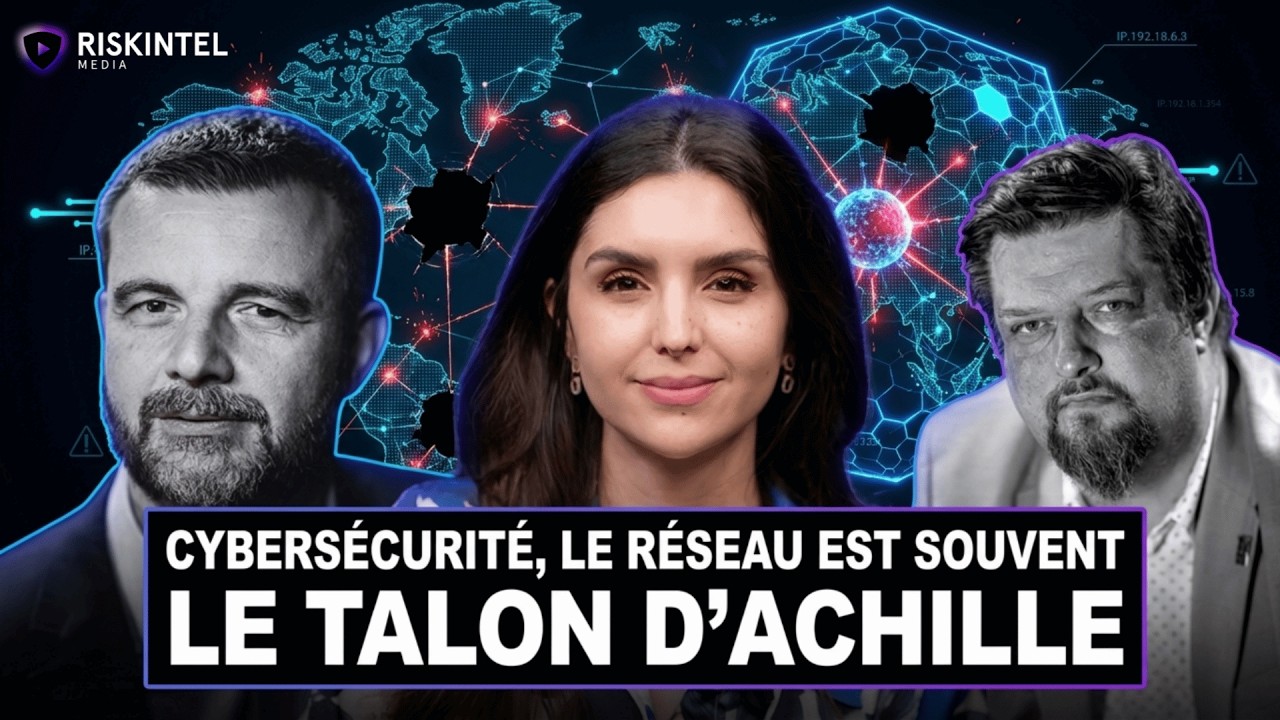
L'innovation qui a changé la cybersécurité : le SASE, l'Interview
Keywords
Summary
173 words
Critical Evaluation
Value of the Information & Strength of the Argument
The video provides valuable insights into the practical aspects of SASE adoption, highlighting real-world challenges such as governance, contractual issues, and the need for change management. The experts argue convincingly that SASE is not a single product but a convergence of technologies, and they stress the importance of phased implementation and partner support. Their argumentation is coherent, drawing on professional experience and market observations. However, the discussion is largely anecdotal, lacking quantitative data or case studies with specific metrics. The promotional tone, particularly from the vendor representative, slightly undermines the objectivity, but the acknowledgment of obstacles adds credibility.
Scientific Rigor, Source Quality, Title Accuracy
The scientific rigor is moderate: the experts are credible industry professionals, but they do not cite external studies or official reports. The sources mentioned are limited to the company’s own materials and general references to SOC 2 audits. The title accurately reflects the content, focusing on SASE as a transformative innovation. The discussion is well-structured and stays on topic, but the lack of independent sources and the promotional elements reduce the overall scientific quality. No comments were provided for analysis.
193 words
Title / Content Match
The title accurately reflects the content, which focuses on SASE as a transformative innovation in cybersecurity, presented through an interview format.
Quality & Reliability
7/10
The video features two industry experts discussing SASE adoption, challenges, and sovereignty. The content is based on professional experience and market observations, but lacks concrete data or references to independent studies. The discussion is balanced, acknowledging both benefits and obstacles, but remains promotional in tone.
Key Moments
Markers derived by PSI from the transcript: the creator did not define chapters.
- Introduction: scenario illustrating network security challenges
- Definition of SASE and its emergence during the pandemic
- Adoption rates in France and reasons for slower uptake
- Main blockers: governance, contractual issues, CAPEX vs OPEX
- Overcoming challenges: partner role and peer references
- Measuring success: KPIs, ROI, and user experience
- Return on experience: cost savings of 25-40% on underlay
- Sovereignty concerns and lack of fully sovereign SASE solutions
- Versa's negotiation with a German provider for European sovereignty
- Conclusion: future of SASE and final thoughts
Cited Sources
- Riskintel Newsletter — Mentioned as a way to receive further analyses from the channel.
- Riskintel LinkedIn — Mentioned as a platform to follow the channel.
- Riskintel Official Site — Mentioned as the official website for more information.
Concurring Sources
- Gartner Glossary: Secure Access Service Edge (SASE) — Gartner defines SASE and its components, aligning with the video's description.
Contribution & Novelties
The video offers a practitioner’s perspective on SASE adoption, emphasizing the importance of governance, partner ecosystems, and sovereignty considerations. It provides practical advice for enterprises considering SASE, such as starting with a phased approach and leveraging peer references. The discussion on sovereignty is timely, highlighting the lack of fully sovereign solutions and the ongoing efforts to address this gap.
Pour aller plus loin :
- SASE (Secure Access Service Edge) - Wikipedia — Overview of SASE architecture and components.
- Zero Trust Security - NIST — NIST’s guidance on Zero Trust architecture, a key component of SASE.
- SD-WAN - Wikipedia — Explanation of SD-WAN, another core element of SASE.
107 words
Radar Profile
The radar profile shows balanced scores across information quantity, quality, technical level, and reliability, indicating a well-rounded but not exceptional discussion. The video is informative and credible, but lacks depth in technical details and independent verification.