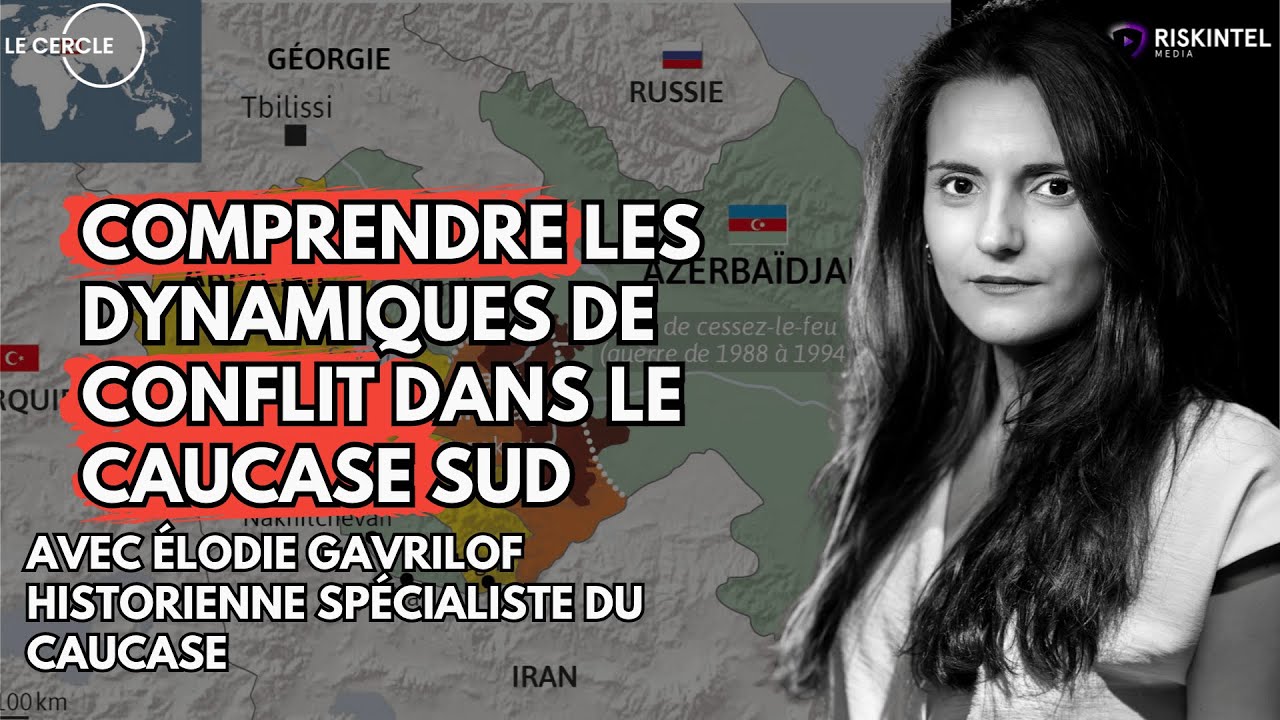
Comprendre les dynamiques de Guerre dans le Caucase Sud, avec l'historienne Elodie Gavrilof
Keywords
Summary
129 words
Critical Evaluation
Value of the Information & Strength of the Argument
The video provides valuable insights into the historical and geopolitical complexities of the South Caucasus. The historian’s expertise is evident, and she offers a nuanced perspective that goes beyond simplistic narratives. The argumentation is solid, grounded in historical facts and geopolitical analysis. She effectively explains how the region’s history as a borderland of empires has shaped current conflicts. The discussion of the ‘confins d’empire’ concept and the role of the Soviet Union in creating ethnic enclaves is particularly illuminating. The interview also addresses the strategic interests of external powers, providing a comprehensive view of the conflict. However, the format is an interview, so the argumentation is conversational and may lack the depth of a formal academic analysis. The host’s questions guide the discussion, but the historian’s responses are substantive and well-reasoned.
Scientific Rigor, Source Quality, Title Accuracy
The video demonstrates a good level of scientific rigor, as the historian relies on historical facts and academic concepts. She references the work of scholars like Sabine Dullin and Eric Janz, which adds credibility. However, the video does not provide direct citations or a bibliography, which limits its scientific rigor. The title accurately reflects the content, focusing on the dynamics of war in the South Caucasus. The video is well-structured, with clear chapters that help navigate the discussion. The host’s questions are relevant and allow the historian to elaborate on key points. Overall, the video is informative and reliable, but it would benefit from more explicit sourcing.
253 words
Title / Content Match
The title accurately reflects the content, which focuses on the dynamics of war in the South Caucasus, with the historian providing historical context and geopolitical analysis.
Quality & Reliability
7/10
The video features a historian specializing in the Caucasus, providing a nuanced historical and geopolitical analysis. The information is well-structured and based on historical facts, but the format is an interview with personal opinions and interpretations, which limits its scientific rigor. The host's framing and the lack of direct citations to academic sources in the video reduce the overall reliability score.
Key Moments
Markers derived by PSI from the transcript: the creator did not define chapters.
- Introduction of the guest and the topic.
- Discussion on the August 8, 2025 photo and the Trump peace route.
- Historical background of the Nagorno-Karabakh conflict.
- Analysis of the US involvement in the region.
- Discussion on the Turkish-Azerbaijani alliance.
- Why Turkey does not recognize the Armenian genocide.
- Prospects for a lasting peace between Armenia and Azerbaijan.
- The role of great powers in the Caucasus.
- Who really governs Armenia and Azerbaijan?
- Positions of France, Iran, and Israel in the conflict.
Cited Sources
- Newsletter subscription — Mentioned in the video description for receiving analyses.
- Riskintel LinkedIn — LinkedIn page of the channel.
- Riskintel official website — Official website of the channel.
Concurring Sources
- International Crisis Group — Provides analysis and reports on the Caucasus region.
Dissenting Sources
- Azerbaijani official narrative — The Azerbaijani government's official position on the conflict may differ from the historian's perspective, particularly regarding the status of Nagorno-Karabakh and the peace process.
Contribution & Novelties
The video offers a comprehensive historical and geopolitical analysis of the South Caucasus conflict, providing context that is often missing in mainstream media. The historian’s expertise brings depth to the discussion, particularly in explaining the concept of ‘confins d’empire’ and the Soviet legacy of ethnic enclaves. The interview also highlights the shifting power dynamics in the region, with the US and other powers vying for influence. The discussion on the Armenian genocide denial and the Turkish-Azerbaijani alliance adds valuable insights. Overall, the video contributes to a better understanding of the complexities of the conflict.
Pour aller plus loin :
- Nagorno-Karabakh conflict — Provides a detailed overview of the conflict.
- Armenian genocide — Historical background on the genocide and its denial.
- South Caucasus — Geographic and geopolitical context of the region.
130 words
Radar Profile
The radar profile shows high scores in quantity of information and reliability, reflecting the historian's expertise and the depth of the discussion. The technical level is moderate, as the content is accessible to a general audience but still provides nuanced analysis. The overall quality is strong, with a slight dip in technicality due to the interview format.
💬 Sur les 0 commentaires analysés, aucune tendance n'est disponible.