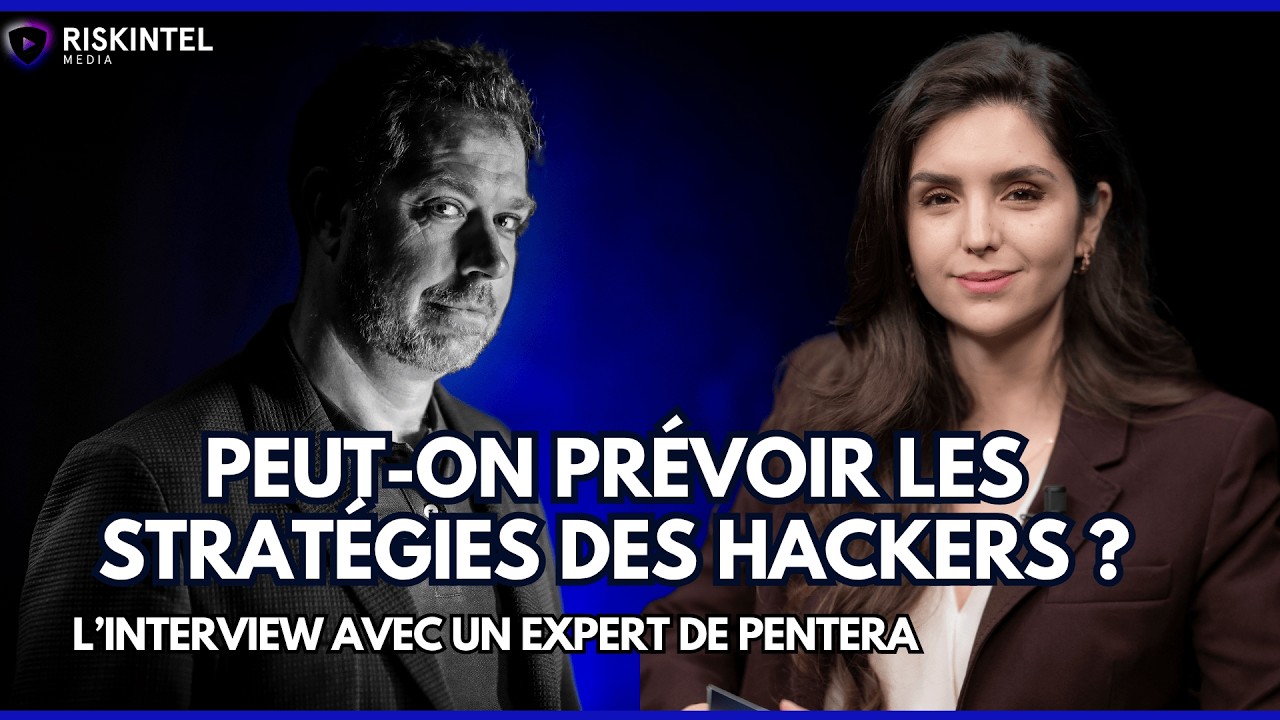
La cybersécurité peut être proactive
Keywords
Summary
154 words
Critical Evaluation
Value of the Information & Strength of the Argument
The video provides valuable insights into proactive cybersecurity practices, particularly the distinction between vulnerability scanning and validation. The argumentation is solid, grounded in real-world examples and professional experience. Culbert effectively argues that attackers have more time and that security teams must automate to gain visibility. The discussion on AI’s role in both enabling attacks and enhancing defenses is nuanced, acknowledging the risks while explaining Pentera’s cautious approach. However, the argumentation could be strengthened with more concrete data or case studies, as some claims are anecdotal.
Scientific Rigor, Source Quality, Title Accuracy
The scientific rigor is moderate; the content is based on expert opinion and industry experience rather than peer-reviewed research. The sources cited are primarily Pentera’s own materials and general references to frameworks like MITRE ATT&CK. The title accurately reflects the content, focusing on proactive security. The video does not provide specific citations for the statistics mentioned, such as the 60% credential usage, which could be seen as a weakness. Overall, the information is credible but not deeply sourced.
178 words
Title / Content Match
The title 'La cybersécurité peut être proactive' accurately reflects the core message of the video, which emphasizes proactive security validation over reactive measures.
Quality & Reliability
7/10
The video features an expert interview with William Culbert, SVP at Pentera, discussing proactive cybersecurity validation. The content is based on professional experience and industry knowledge, but lacks detailed citations or references to specific studies. The claims are plausible and align with common cybersecurity practices, but the lack of verifiable sources and the promotional nature of the discussion slightly reduce the reliability score.
Key Moments
Markers derived by PSI from the transcript: the creator did not define chapters.
- Introduction of William Culbert and Pentera's role in security validation.
- Discussion on Scam Agent and AI's role in lowering the barrier for cybercrime.
- Analysis of the Claude jailbreak attack and the use of multiple AI tools.
- Explanation of Pentera's use of AI for external reconnaissance and algorithms for internal simulation.
- Differentiation between proactive validation and traditional vulnerability scanning.
- Discussion on KPIs and mapping to MITRE ATT&CK framework.
- Operational challenges, including blind spots and the LLMNR example.
- Conclusion and call to action.
Cited Sources
- Pentera Website — Mentioned as the official site for RISKINTEL MEDIA, not directly for Pentera.
- Newsletter Subscription — Provided in the description for further analyses.
- LinkedIn Company Page — LinkedIn page for RISKINTEL MEDIA.
Concurring Sources
- MITRE ATT&CK — Referenced in the video as a mapping framework for security validation.
Contribution & Novelties
The video offers a practical perspective on proactive cybersecurity validation, emphasizing the need to test defenses continuously rather than relying on periodic scans. It highlights the role of AI in both attack and defense, and the importance of addressing blind spots. The discussion on using multiple AI tools in attacks is particularly insightful.
Pour aller plus loin :
- MITRE ATT&CK Framework — Central to understanding attack techniques and mapping security controls.
- LLMNR Poisoning — A technique related to the LLMNR protocol mentioned in the video.
- NIST Cybersecurity Framework — A widely used framework for improving cybersecurity posture.
97 words
Radar Profile
The radar profile shows balanced scores across information quantity, quality, technical level, and reliability, with a slight emphasis on practical applicability. This indicates a well-rounded discussion that is informative and credible, though not deeply technical or research-heavy.
💬 No comments were provided for analysis.