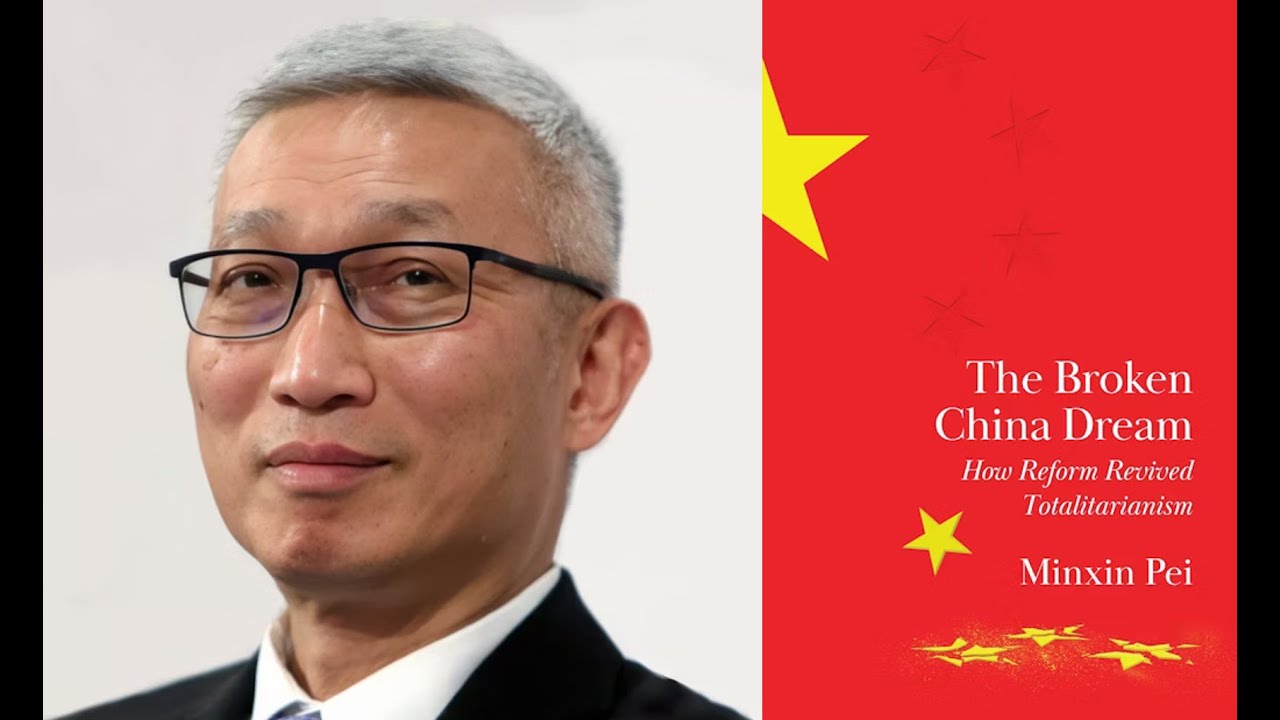
The Broken China Dream with Dr. Minxin Pei
Keywords
Summary
152 words
Critical Evaluation
Value of the Information & Strength of the Argument
The lecture provides valuable insights into the dynamics of authoritarian resilience and the limits of economic reform. Pei’s argument is well-structured and supported by historical evidence, such as the failure of institutional reforms in the 1980s and the role of corruption in enabling Xi’s consolidation of power. He effectively challenges the assumption that economic growth leads to democratization, drawing on scholarly literature and comparative cases. However, the argumentation is primarily based on his own interpretation and may not fully account for alternative perspectives or recent developments.
Scientific Rigor, Source Quality, Title Accuracy
The speaker demonstrates high scholarly rigor, referencing his own extensive academic work and drawing on established theories in political science and international relations. The sources cited in the description include his book’s publisher page and his faculty profile, which add credibility. The title accurately reflects the content, focusing on the central thesis of the book. The lecture is well-organized and the arguments are presented clearly, though it is an opinion-based analysis rather than a peer-reviewed study.
177 words
Title / Content Match
The title accurately reflects the content, which focuses on the thesis of Dr. Pei's book about the revival of totalitarianism in China.
Quality & Reliability
8/10
The speaker is a recognized academic with extensive publications and institutional affiliations. The content is based on his book and scholarly research, but it is primarily an opinion/expert analysis rather than a peer-reviewed study.
Key Moments
Markers derived by PSI from the transcript: the creator did not define chapters.
- Introduction of Dr. Minxin Pei and his academic background.
- Pei outlines the three main research questions of his book.
- Discussion on Deng Xiaoping's reforms and their limitations.
- Analysis of the fragility of institutional rules and the balance of power.
- Explanation of how corruption enabled Xi Jinping to consolidate power.
- Critique of modernization theory and its applicability to China.
- Discussion on the reformability of totalitarian regimes and the Soviet case.
- Application of realism to explain the new cold war between China and the US.
Cited Sources
- The Broken China Dream (Princeton University Press) — The book discussed in the lecture, providing the main arguments.
- Minxin Pei Faculty Profile — Background on the speaker's academic credentials and publications.
- CSUSB Modern China Lecture Series — The series hosting this lecture.
Concurring Sources
- The Sentinel State: Surveillance and the Survival of Dictatorship in China — Pei's earlier book on surveillance and authoritarian resilience, which complements the arguments in this lecture.
- China's Crony Capitalism: The Dynamics of Regime Decay — Pei's previous work on corruption and regime dynamics, relevant to his discussion of corruption's role.
Dissenting Sources
- The China Dream: A New Vision for China — This source presents the official Chinese narrative of the 'China Dream', which contrasts with Pei's critical analysis.
Contribution & Novelties
The lecture offers a comprehensive and nuanced explanation of why China’s economic reforms did not lead to political liberalization, emphasizing the role of elite decisions and the inherent fragility of totalitarian systems. It challenges common assumptions about modernization theory and provides a realist perspective on US-China relations. The book itself is a significant contribution to the literature on authoritarianism and political change.
Pour aller plus loin :
- Modernization Theory — Provides background on the theory Pei critiques.
- Totalitarianism — Defines the concept central to the lecture.
- Realism (International Relations) — The theoretical framework used to explain the new cold war.
100 words
Radar Profile
The radar profile shows high scores in information quantity, quality, and technical level, reflecting the depth and rigor of the lecture. The reliability score is also high, indicating a trustworthy source. The overall profile suggests a well-researched and authoritative presentation.
💬 No comments were provided for analysis.