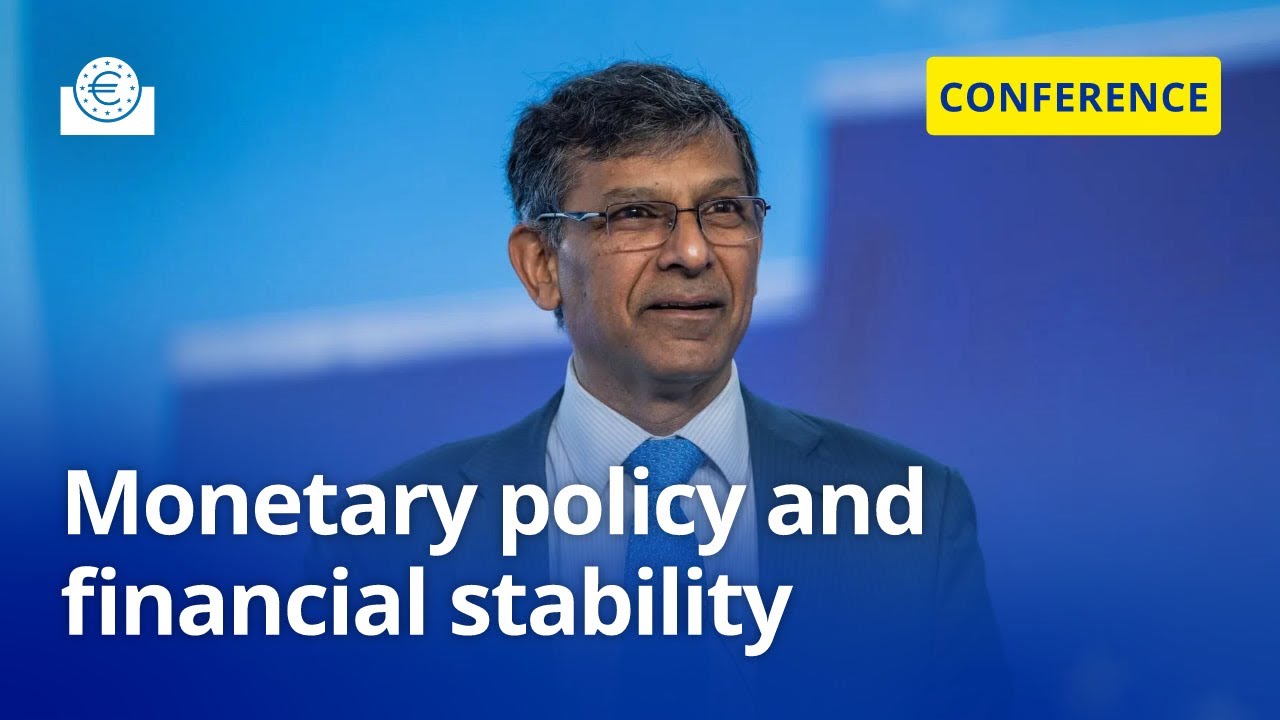
Monetary policy and financial stability | “The Next Financial Crisis?”
Keywords
Summary
197 words
Critical Evaluation
The lecture provides a compelling and well-argued perspective on the complex interplay between monetary policy and financial stability. Rajan, a distinguished economist and former central banker, brings substantial credibility and practical insight. He systematically builds his case by referencing a body of empirical research, including influential papers like ‘Credit Bites Back’ and studies on monetary policy stance and crisis probability. The use of the euro area as a natural experiment is particularly effective, illustrating how a single policy rate can have heterogeneous effects across countries, leading to financial imbalances. The discussion of the Mexican banking sector further strengthens the argument by showing a direct causal link from foreign monetary policy to domestic credit risk. Rajan’s exploration of behavioral mechanisms behind risk-taking adds depth, though it relies on experimental findings that may not fully capture real-world complexity. The lecture is dense with information and assumes a sophisticated audience familiar with economic concepts. While Rajan acknowledges the limitations of macroprudential tools, he could have delved deeper into potential solutions or policy frameworks. The title is apt, as the talk indeed addresses the potential for future financial crises. Overall, the content is rigorous, well-sourced, and thought-provoking, though it represents an expert opinion rather than a systematic review. The lack of visual aids in the transcript may limit accessibility, but the verbal explanations are clear. The lecture does not explicitly address counterarguments in depth, but it does acknowledge the Tinbergen rule’s appeal and the practical challenges of coordination. The sources cited are credible and relevant, though not all are formally referenced in the transcript. The adéquation titre/contenu is strong, as the talk directly addresses the question of whether monetary policy can be separated from financial stability concerns. The note globale of 4 reflects the high quality and relevance of the content, with minor deductions for the absence of a more balanced discussion of alternative views and the reliance on selected studies.
317 words
Title / Content Match
The title accurately reflects the content, which focuses on the interplay between monetary policy and financial stability, with a forward-looking perspective on potential crises.
Quality & Reliability
8/10
The lecture is delivered by a renowned economist (Raghuram Rajan) at a prestigious ECB research conference, referencing multiple peer-reviewed studies and empirical evidence. The content is well-structured and grounded in academic research, though it represents an expert opinion rather than a systematic review.
Key Moments
Markers derived by PSI from the transcript: the creator did not define chapters.
- Introduction: Rajan sets the stage, discussing the Tinbergen rule and the separation of monetary policy and financial stability.
- Discussion of 'Credit Bites Back' paper: evidence that financial crisis recessions are worse and recoveries slower, especially with high credit growth.
- Presentation of research on monetary policy stance and crisis probability, showing a U-shaped relationship.
- Use of euro area as a natural experiment: divergent stances across countries and credit booms in the periphery.
- Study on foreign bank lending in Mexico: easing in parent countries increases credit and delinquency rates.
- Exploration of why low rates induce risk-taking: reference points and salience.
- Conclusion: central banks must consider financial stability in monetary policy, and macroprudential tools alone are insufficient.
Cited Sources
- ECB Annual Research Conference 2025 programme — Official conference page providing context and programme details.
- YouTube playlist of conference sessions — Playlist containing other sessions from the conference.
Concurring Sources
- ECB Annual Research Conference 2025 programme — Confirms the event and its academic nature.
Contribution & Novelties
The lecture synthesizes recent research to argue that monetary policy and financial stability cannot be cleanly separated, challenging the Tinbergen rule’s application to central banking. It provides a comprehensive overview of empirical evidence, including the euro area natural experiment and cross-border banking effects, and offers behavioral explanations for risk-taking. The talk emphasizes the need for central banks to internalize financial stability considerations in their policy decisions.
Pour aller plus loin :
- Tinbergen rule — Foundational concept in economic policy.
- Macroprudential policy — Key policy tool discussed in the lecture.
- Financial stability — Core concept of the talk.
- Credit Bites Back paper — Reference to the study by Jordà, Schularick, and Taylor (2013).
112 words
Radar Profile
The radar profile shows high scores across all dimensions, indicating a well-rounded and reliable presentation. The lecture excels in quality of information and technical depth, with slightly lower scores for quantity and overall reliability due to its focused scope and reliance on selected studies.