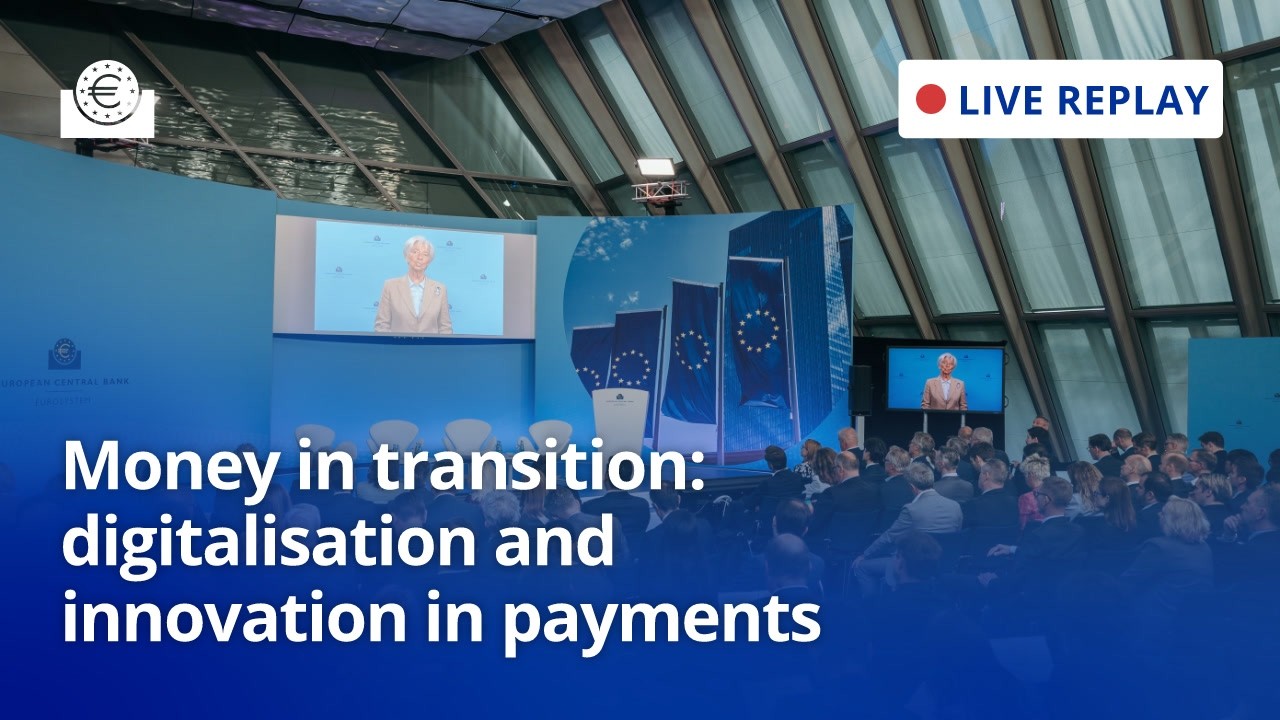
Money in transition: digitalisation and innovation in payments
Keywords
Summary
123 words
Critical Evaluation
The conference provides a comprehensive overview of the current state and future direction of digital payments in Europe, featuring authoritative speakers from the ECB and academia. The content is highly relevant and timely, addressing critical issues such as tokenization, the digital euro, and cross-border payment efficiency. The arguments are well-structured, with a clear emphasis on the need for European integration and sovereignty in financial infrastructure. The speakers present a coherent vision, supported by references to ongoing projects like the digital euro and TIPS. However, the discussion is largely policy-oriented, with limited critical examination of potential drawbacks or alternative perspectives. The reliance on institutional viewpoints may introduce bias, and the lack of opposing views reduces the depth of analysis. The technical level is accessible to a broad audience, but some concepts may require prior knowledge. Overall, the conference offers valuable insights into the future of money, though it could benefit from a more balanced and critical approach.
156 words
Title / Content Match
The title accurately reflects the conference's focus on the transformation of money through digitalisation and innovation in payments.
Quality & Reliability
8/10
The conference features high-level speakers from the ECB and academia, providing authoritative insights into digital payments and central bank digital currencies. The content is well-structured and grounded in institutional expertise, though it primarily represents policy perspectives rather than peer-reviewed research.
Chapters
- Opening Speech - Christine Lagarde, President, European Central Bank
- Keynote speech - Markus Brunnermeier, Edwards S. Sanford Professor of Economics, Princeton University
- Session 1 - Fostering digital finance in Europe
- Session 2 - Wholesale digital money and the evolution of tokenised markets
- Keynote speech - María Abascal, Chairwoman of the Executive Committee of the European Banking Federation and Director General of the Spanish Banking Association (AEB)
- Session 3 - Borderless payments: Business needs and perspectives
- Session 4 - Retail payments in Europe: Towards a resilient euro ecosystem
- Closing remarks - Thomas Vlassopoulos, Director General Market Infrastructure and Payments, European Central Bank
Cited Sources
- Conference programme — Official programme of the conference, providing details on speakers and sessions.
Concurring Sources
- ECB report on a digital euro — The ECB's official documentation on the digital euro aligns with the conference's discussions.
Contribution & Novelties
The conference provides a high-level overview of the ECB’s strategy for digital finance, including the digital euro and tokenization initiatives. It offers insights into the geopolitical dimensions of monetary sovereignty and the need for resilience in payment systems.
Pour aller plus loin :
- Digital euro — Official ECB page on the digital euro project.
- Tokenization — Overview of tokenization concepts.
- TIPS — ECB’s TARGET Instant Payment Settlement system.
68 words
Radar Profile
The radar profile shows high scores in information quantity, quality, and reliability, with a slightly lower technical level, indicating a well-balanced and authoritative conference suitable for a broad audience.