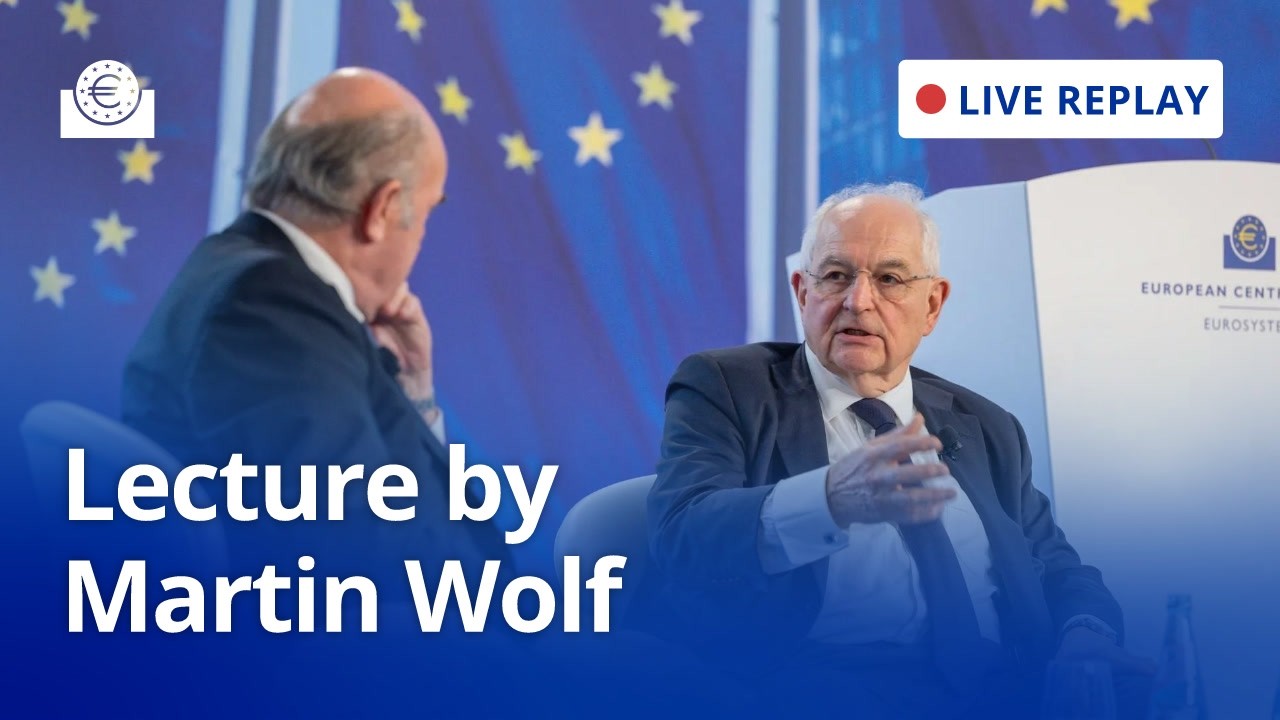
Martin Wolf Lecture - The Crisis of the Liberal World Order
Keywords
Summary
153 words
Critical Evaluation
Martin Wolf’s lecture offers a comprehensive and thought-provoking analysis of the current geopolitical landscape. His argument is well-structured, drawing on historical analogies to illuminate present challenges. The use of data, such as the trade-to-GDP ratio and democratization indices, lends empirical weight to his claims. However, the lecture is primarily an opinion piece, and while Wolf is a respected economist, his analysis is not peer-reviewed. He does not provide detailed citations for his sources, though he references his own book and the Polity IV database. The argument is coherent, but some claims, such as the correlation between globalization and democratization, are presented as causal without rigorous testing. The lecture’s strength lies in its synthesis of economic and political factors, and its clear articulation of the stakes for Europe. The adéquation between title and content is excellent, as the lecture directly addresses the crisis of the liberal world order. The main weakness is the lack of concrete policy prescriptions, as Wolf focuses more on diagnosis than solutions. Overall, the lecture is valuable for its insights and clarity, but it should be viewed as an expert opinion rather than a definitive academic analysis.
190 words
Title / Content Match
The title accurately reflects the content: a lecture on the crisis of the liberal world order, covering historical parallels, current state, and future prospects.
Quality & Reliability
8/10
Martin Wolf, chief economics commentator at the Financial Times, delivers a well-structured lecture grounded in historical data and economic analysis. He cites specific historical periods, uses charts (trade-to-GDP ratio, democratization trends), and references his book 'The Crisis of Democratic Capitalism'. The lecture is an expert opinion, not peer-reviewed, but the arguments are coherent and supported by data. The sources are not explicitly cited in detail, but the analysis is credible.
Key Moments
Markers derived by PSI from the transcript: the creator did not define chapters.
- Introduction by ECB representative, praising Martin Wolf.
- Martin Wolf begins lecture, introduces two quotes: Jan Tumlir and Donald Trump.
- Overview of lecture structure: five parts.
- Discussion of history rhymes, referencing Mark Twain and Thomas Mann's Magic Mountain.
- Chart showing trade-to-GDP ratio since 19th century, highlighting two globalization waves.
- Correlation between democratization and globalization, using Polity IV data.
- Shift of economic power from West to East, particularly China.
- Erosion of international institutions like WTO and NATO.
- Europe's choice: unify or be dismantled.
- Conclusion: need for new partnerships and core values.
Cited Sources
- The Crisis of Democratic Capitalism — Martin Wolf's book, referenced as basis for his arguments on globalization and democracy.
- Polity IV database — Used to show democratization trends over time.
Concurring Sources
- The Crisis of Democratic Capitalism — Wolf's own book aligns with his lecture arguments.
- Polity IV database — Data supports democratization trends.
Contribution & Novelties
The lecture provides a synthesis of historical and current trends, arguing that the current crisis of the liberal order is part of a recurring pattern. It emphasizes the interconnection of economics and politics, and the need for Europe to adapt. The novelty lies in the clear articulation of the parallels between the late 19th century and today, and the call for Europe to unify.
Pour aller plus loin :
- The Crisis of Democratic Capitalism — Martin Wolf’s book expands on these themes.
- Polity IV Project — Source of democratization data.
- Globalization and Its Discontents — Joseph Stiglitz’s critique of globalization.
100 words
Radar Profile
The radar profile shows high scores in information quantity, quality, technical level, and reliability, indicating a well-rounded and credible lecture. The strengths are in the depth of analysis and the use of data, while the main limitation is the lack of detailed citations.