Monetary policy and inflation | Bridging science and practice
Keywords
Summary
152 words
Critical Evaluation
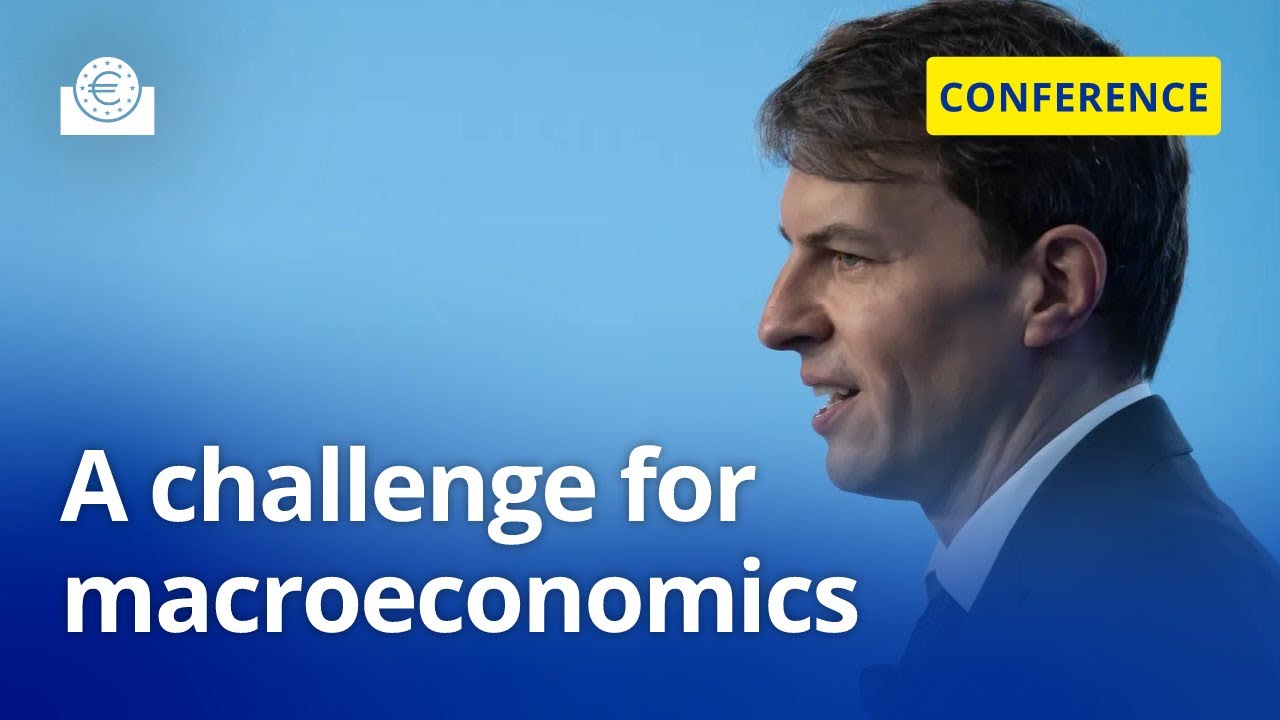
The talk provides a thought-provoking critique of a foundational assumption in modern macroeconomics. Moll’s argument is well-structured and grounded in both the historical literature and recent computational challenges. He effectively highlights the ‘monster equation’ problem, where the cross-sectional distribution enters agents’ decision problems, making models extremely hard to solve. The historical perspective adds depth, showing that the original motivation for rational expectations was operationality, which is now undermined in heterogeneous agent settings. The proposal to consider alternatives is reasonable, though Moll admits he does not have a definitive solution. The discussion by Laura Gati likely adds further nuance, but is not included in the transcript. The talk is rigorous and technically sound, but it represents an opinion piece rather than a systematic review or new empirical evidence. The sources cited are primarily academic papers and the conference program, which are appropriate. The title is somewhat broad, but the content aligns with the session’s focus on monetary policy and inflation. Overall, this is a valuable contribution for researchers and advanced students, offering a fresh perspective on a central modeling choice.
179 words
Title / Content Match
The title is broad, but the session focuses on monetary policy and inflation, and the talk specifically addresses a key challenge in macroeconomic modeling relevant to these topics.
Quality & Reliability
8/10
The talk is by a leading economist (Benjamin Moll) at a prestigious ECB conference. It presents a critical perspective on rational expectations in heterogeneous agent models, grounded in academic literature and mathematical reasoning. The content is rigorous and well-argued, though it represents the author's viewpoint rather than a systematic review.
Key Moments
Markers derived by PSI from the transcript: the creator did not define chapters.
- Introduction and setup: Moll outlines his argument against rational expectations in heterogeneous agent models.
- Explanation of the 'monster equation' and the challenge of forecasting prices using the cross-sectional distribution.
- Historical context: rational expectations originally aimed for operationality, but in heterogeneous models it complicates.
- Discussion of recent advances in solving such models using deep learning, but still lacking global methods.
- Moll proposes criteria for alternatives and mentions bounded rationality and adaptive learning as promising directions.
Cited Sources
- ECB Conference on Monetary Policy 2025 programme — Official conference programme providing context for the session.
- ECB Conference on Monetary Policy 2025 playlist — Playlist containing the full conference sessions.
Concurring Sources
- Lucas and Prescott (1971) Investment under Uncertainty — Cited by Moll as an early example of rational expectations emphasizing operationality.
Dissenting Sources
- Standard rational expectations literature — Moll challenges the standard assumption, but acknowledges it is widely used and has been successful in representative agent models.
Contribution & Novelties
The talk offers a novel critique of rational expectations in heterogeneous agent models, arguing that it creates an unrealistic computational burden and suggesting that alternative expectations mechanisms could improve both tractability and realism. It bridges historical perspectives with modern computational challenges.
Pour aller plus loin :
- Heterogeneous agent models in macroeconomics — Overview of the literature.
- Rational expectations — Background on the concept.
- Mean field games — Mathematical framework related to the master equation.
74 words
Radar Profile
The radar profile shows high scores in information quality and technical level, reflecting the academic depth and rigor. The moderate score in quantity of information is due to the focused scope of the talk, while reliability is high given the speaker's expertise and institutional setting.
💬 No comments were provided for analysis.