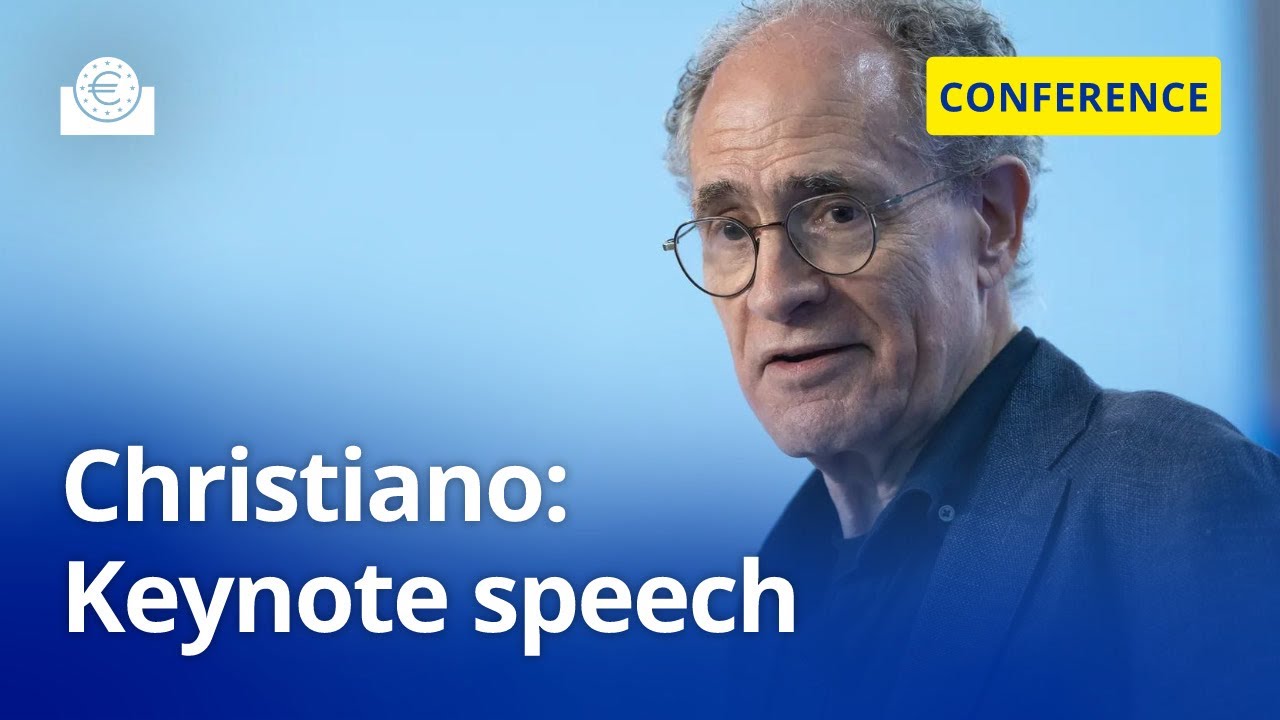
Keynote speech: When the Fed Sneezes, the Cold Goes Global Through the Import Channel
Keywords
Summary
167 words
Critical Evaluation
The keynote presents a compelling and provocative thesis that challenges the conventional wisdom on international monetary policy transmission. Christiano’s argument is grounded in empirical evidence, using well-established methods such as high-frequency identification and panel VARs. The emphasis on the import channel is a significant contribution, as it redirects attention from financial markets to trade linkages. The analysis is rigorous, with attention to robustness and heterogeneity across advanced and emerging economies. However, the presentation is a keynote speech, so it provides an overview rather than a full exposition of the research. Some details, such as the construction of the risk-adjusted interest rate and the counterfactual simulations, are only briefly mentioned. The speaker acknowledges the complexity and frictions in the global economy, which adds nuance. The sources cited are primarily the conference program and playlist, which are institutional but not directly to the research paper. The talk is well-structured and accessible, though it assumes familiarity with macroeconomic concepts. The title is apt, and the content aligns with it. Overall, this is a high-quality presentation of ongoing research that is likely to stimulate further debate and investigation.
184 words
Title / Content Match
The title accurately reflects the central thesis of the talk, which is that US monetary policy shocks transmit globally primarily through the import channel.
Quality & Reliability
8/10
The speaker is a renowned economist, and the presentation is based on rigorous empirical work with co-authors, using established methodologies and data. However, as a keynote speech, it presents preliminary findings and interpretations that may not yet be fully peer-reviewed.
Key Moments
Markers derived by PSI from the transcript: the creator did not define chapters.
- Introduction of keynote speaker by Roberto Motto
- Christiano begins his talk, explaining the title and the main thesis: US monetary policy transmits through imports, not financial markets.
- Discussion of the Mundell-Fleming view and the emerging consensus that US tightening contracts the rest of the world.
- Presentation of US impulse responses showing a large decline in imports after a monetary tightening.
- Breakdown of imports by category, highlighting industrial supplies as the most affected.
- Introduction of panel VAR results for advanced and emerging economies, showing differential responses.
- Discussion of the role of dollar debt in emerging markets and the larger contraction in those economies.
- Outline of planned counterfactual simulations to quantify the import channel versus financial frictions.
- Conclusion and Q&A session begins.
Cited Sources
- ECB Conference on Monetary Policy 2025 programme — Official conference programme providing context for the keynote speech.
- ECB Conference on Monetary Policy 2025 playlist — YouTube playlist containing the keynote speech and other conference sessions.
Concurring Sources
- ECB Conference on Monetary Policy 2025 programme — The conference programme lists the keynote speech and related sessions, supporting the academic context.
Contribution & Novelties
The talk presents a novel empirical finding that US monetary policy shocks transmit internationally primarily through a contraction in US imports, rather than through financial market channels as commonly emphasized. This challenges existing models and suggests a need to rethink the international transmission mechanism. The research also highlights the differential impact on emerging markets due to dollar debt exposure.
Pour aller plus loin :
- Mundell-Fleming model — Provides the classic framework for open economy macroeconomics, which the talk contrasts with its findings.
- High-frequency identification of monetary policy shocks — Discusses the methodology used to identify monetary policy shocks, as referenced in the talk.
- Dollar debt in emerging markets — Explains the concept of ‘original sin’ and why emerging markets borrow in foreign currency, relevant to the talk’s explanation of differential effects.
131 words
Radar Profile
The radar profile shows high scores across all dimensions, indicating a well-rounded and reliable presentation. The talk is technically rigorous, provides substantial information, and is based on credible research, though it is an expert opinion rather than a peer-reviewed publication.
💬 No comments were provided for analysis.