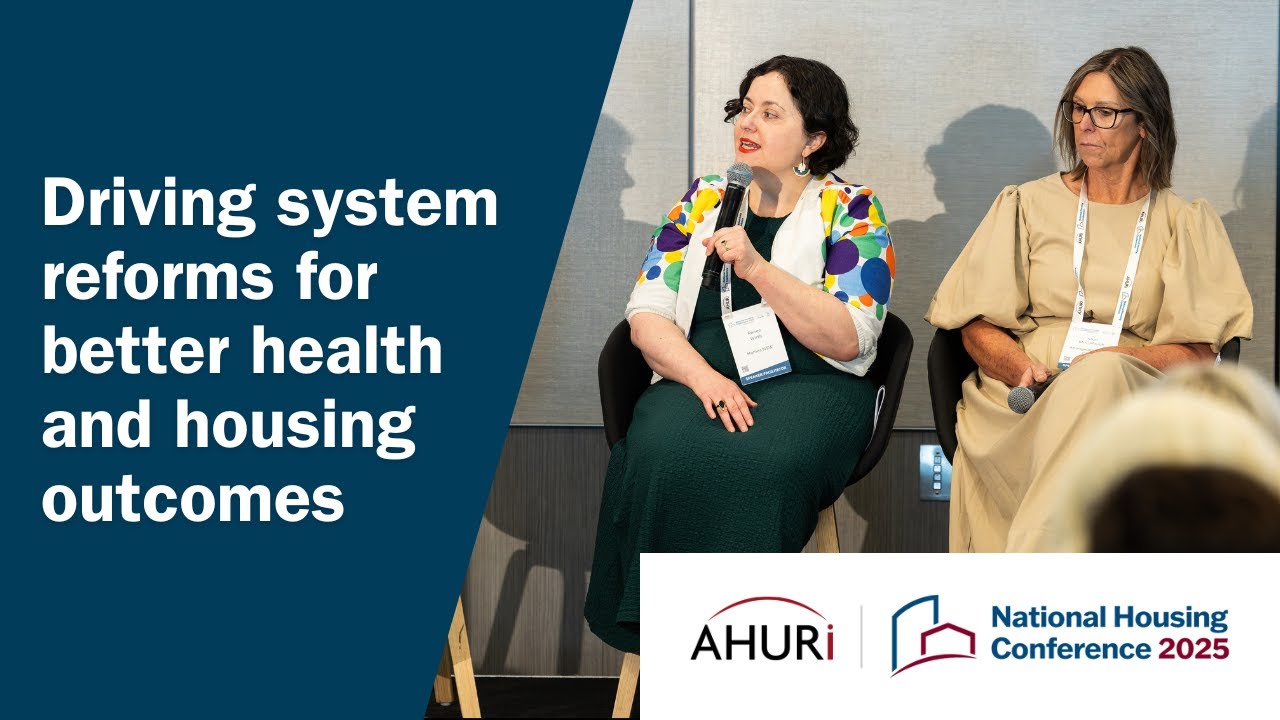
NHC25 | Concurrent 7 - Driving system reforms for better health and housing outcomes
Keywords
Summary
179 words
Critical Evaluation
Value of the Information & Strength of the Argument
The session provides valuable insights into real-world programs and policy initiatives. Deborah Pratt’s presentation is well-argued, using data on hospital costs and the Productivity Commission’s findings to make a case for supportive housing. The ‘More than a Roof’ position statement is a concrete policy document with specific recommendations. The ‘Services Our Way’ program is presented with evaluation data, including client satisfaction and return on investment, which strengthens the argument for its effectiveness. The personal testimonial adds emotional weight and illustrates the practical barriers faced by individuals. However, the argumentation is largely based on program evaluations and policy positions rather than rigorous academic evidence, and the session is more about sharing experiences than critically examining the evidence.
Scientific Rigor, Source Quality, Title Accuracy
The session is scientifically grounded, with references to the Australian Productivity Commission and evaluations of programs like Brisbane Common Ground. However, specific sources are not formally cited, and the presentations are based on expert opinion and program data. The title accurately reflects the content, focusing on systemic reforms. The session does not include a formal literature review, but the speakers demonstrate familiarity with relevant research. The lack of formal citations and the conference format limit the scientific rigor, but the content is credible given the expertise of the speakers.
220 words
Title / Content Match
The title accurately reflects the session's focus on systemic reforms integrating health and housing services.
Quality & Reliability
7/10
The session features expert speakers from government and research institutions, presenting evidence-based programs and evaluations. However, it is a conference panel discussion with limited peer-reviewed sources and no formal citations.
Key Moments
Markers derived by PSI from the transcript: the creator did not define chapters.
- Introduction by Julie-Ann Burgess, setting the context for the session.
- Deborah Pratt begins her presentation on supportive housing in Queensland.
- Deborah Pratt discusses the 'More than a Roof' position statement and its recommendations.
- Famey Williams and Shaz McCullough present 'Services Our Way' program.
- Evaluation results of 'Services Our Way' are shared, including return on investment.
- Video testimonial from a program participant is shown.
- Panel discussion begins, with questions from the audience.
Cited Sources
- More than a roof: Queensland Mental Health Commission's supportive housing position statement — Referenced by Deborah Pratt as a key policy document advocating for supportive housing.
- Brisbane Common Ground evaluation — Cited as an example of successful supportive housing with positive outcomes.
- Australian Productivity Commission report — Mentioned regarding the percentage of mental health patients who could be discharged with appropriate housing.
Concurring Sources
- Housing First — The session's emphasis on supportive housing aligns with the Housing First approach.
- Supportive housing — The session's focus on combining housing with support services is consistent with this model.
Contribution & Novelties
The session contributes to the discourse on integrating health and housing services by presenting concrete examples from Queensland and New South Wales. It highlights the importance of supportive housing models and the need for systemic reforms. The ‘Services Our Way’ program offers a unique Aboriginal-led approach that emphasizes holistic, person-centered support. The session underscores the economic and social benefits of such integration, providing a strong case for policy change.
Pour aller plus loin :
- Housing First — A key model referenced in the session for addressing homelessness.
- Supportive housing — The core concept discussed, combining housing with support services.
- Australian Productivity Commission — The government body cited for data on hospital discharges and housing needs.
115 words
Radar Profile
The radar profile shows balanced scores across information quantity, quality, technical level, and reliability, indicating a well-rounded presentation. The session is strong on practical examples and policy relevance, but slightly lower on technical depth and formal source citation.