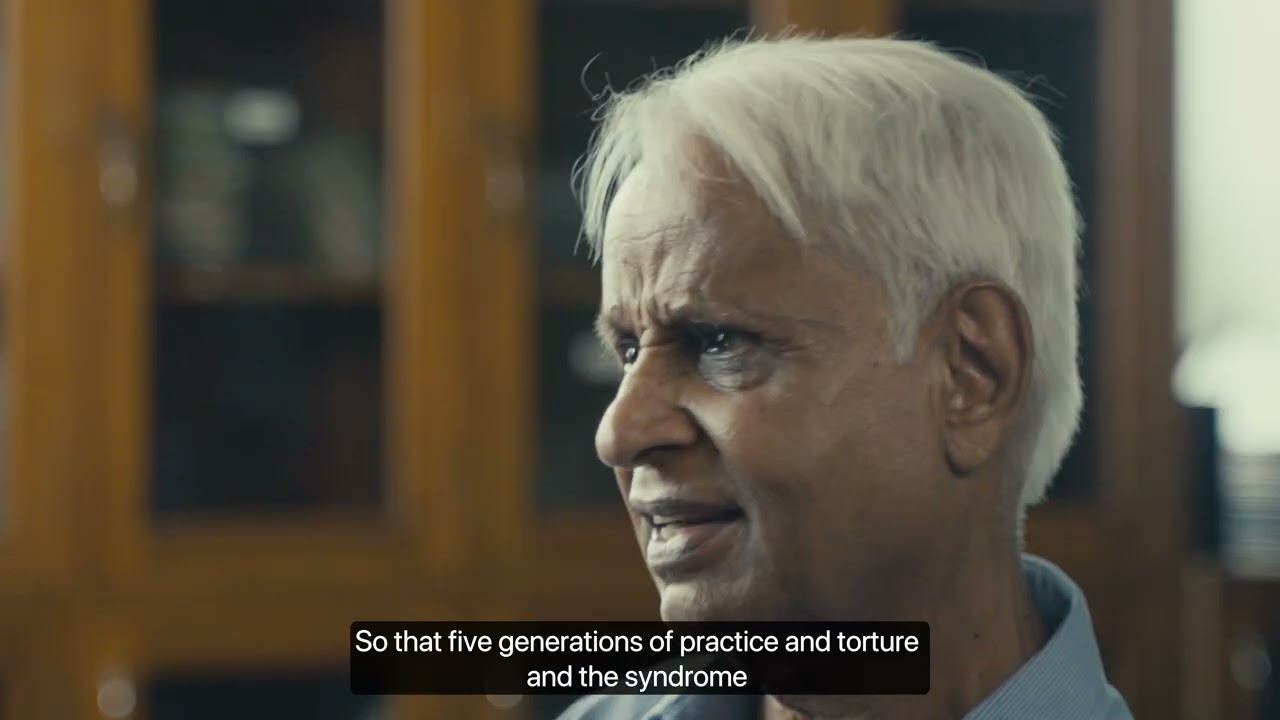
An interview with Dr Madhav Prasad Pokhrel during the 19th World Sanskrit Conference
Keywords
Summary
145 words
Critical Evaluation
Value of the Information & Strength of the Argument
The interview offers valuable personal perspectives on the decline of Sanskrit studies in Nepal, linking it to colonial history and social dynamics. The speaker’s argument that Sanskrit is integral to Nepali identity is compelling and supported by examples. However, the argumentation relies heavily on anecdotal evidence and historical claims that are not fully substantiated. The Macaulay quotes are presented without citation, and the causal chain from colonial policy to current educational preferences is oversimplified. The suggestion to revive Sanskrit by having elite schools teach it is interesting but lacks practical detail. Overall, the value lies in the personal insights and cultural observations, but the argumentation would benefit from more rigorous evidence.
Scientific Rigor, Source Quality, Title Accuracy
The interview does not cite specific sources, but the description includes a link to the International Association of Sanskrit Studies, which sponsored the video. The speaker’s claims about Macaulay and the history of education are not directly sourced, and some statements may be inaccurate or taken out of context. The title accurately reflects the content, as it is indeed an interview with Dr Pokhrel at the conference. The lack of verifiable sources and the reliance on personal testimony reduce the scientific rigor, though the speaker’s expertise in linguistics adds some credibility.
217 words
Title / Content Match
The title accurately describes the content: an interview with Dr Pokhrel at the 19th World Sanskrit Conference.
Quality & Reliability
6/10
The interview provides personal insights and historical claims, but lacks verifiable sources and contains potential inaccuracies (e.g., Macaulay's quotes). The speaker is a retired professor, lending some authority, but the content is largely anecdotal and opinion-based.
Key Moments
Markers derived by PSI from the transcript: the creator did not define chapters.
- Introduction of Dr Madhav Prasad Pokhrel and his background.
- Discussion on the prevalence of Sanskrit in Nepali language and culture.
- Critique of Macaulay's education policy and its impact on India and Nepal.
- Analysis of why Sanskrit is neglected and the social dynamics behind it.
- Proposal to revive Sanskrit by making it compulsory in elite schools.
- Discussion on the use of Sanskrit for coining technical terms.
- Comparison of insider vs. outsider perspectives in Sanskrit scholarship.
- Concluding remarks on the paradox of Sanskrit's global value and local neglect.
Cited Sources
- International Association of Sanskrit Studies — Sponsor of the video and organizer of the 19th World Sanskrit Conference.
Concurring Sources
- International Association of Sanskrit Studies — The organization promotes Sanskrit studies, aligning with the interview's emphasis on the importance of Sanskrit.
Contribution & Novelties
The interview provides a unique insider perspective on the decline of Sanskrit studies in Nepal, linking it to colonial history and social prestige. It offers a practical suggestion for revival by leveraging the copying behavior of the masses. The discussion on the use of Sanskrit for coining technical terms is insightful.
Pour aller plus loin :
- Sanskrit language — Provides background on the language’s history and significance.
- Thomas Babington Macaulay — Context on the historical figure and his education policy.
- Nepali language — Information on the language and its Sanskrit influence.
91 words
Radar Profile
The radar profile shows moderate scores across all dimensions, indicating a balanced but not exceptional content. The highest score is in quantity of information, reflecting the interview's breadth, while the lowest is in technical level, as the discussion is accessible and not highly specialized.
💬 No comments were provided for analysis.