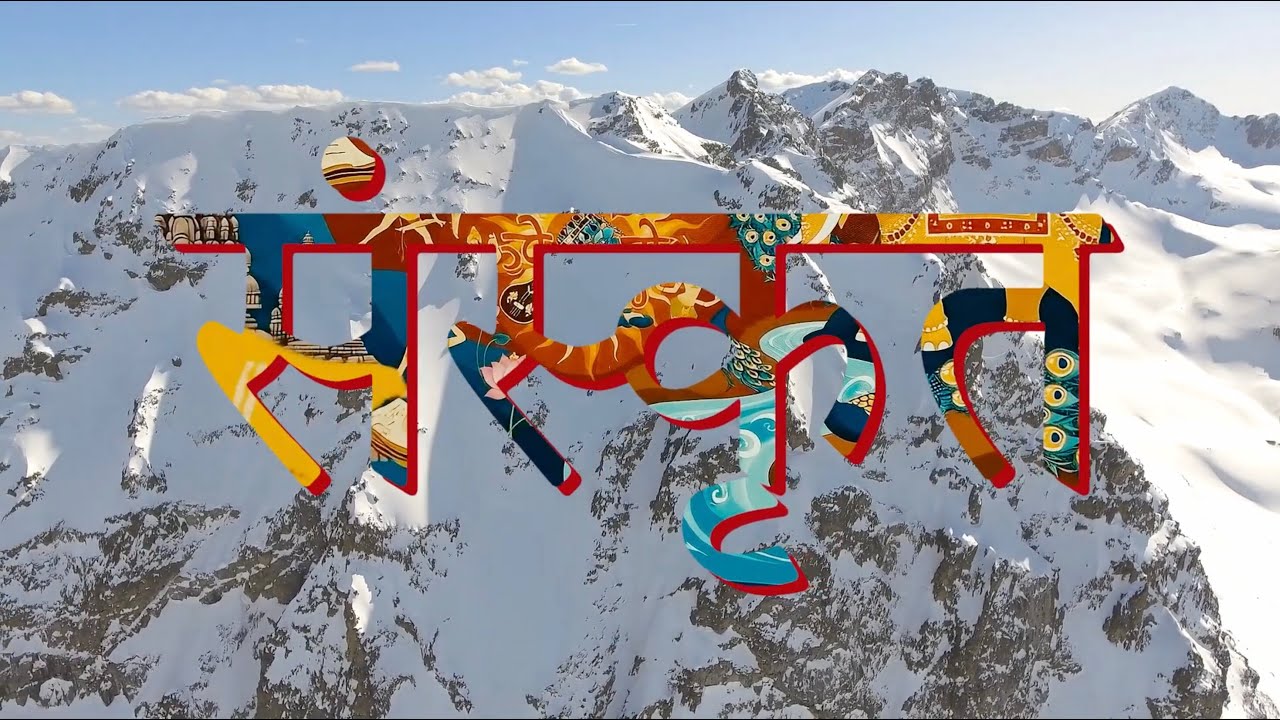
A short film made during the 19th World Sanskrit Conference in Nepal, June 26 to 30, 2025.
Keywords
Summary
128 words
Critical Evaluation
Value of the Information & Strength of the Argument
The film provides valuable insights into the contemporary relevance of Sanskrit, particularly through the voices of scholars and practitioners. It argues for Sanskrit’s vitality by showcasing its use in rituals, its role in preserving knowledge, and its potential for computational applications (e.g., OCR for manuscripts). The argumentation is largely anecdotal and testimonial, relying on the authority of the interviewees rather than systematic evidence. While the film effectively conveys the passion and dedication of the Sanskrit community, it does not critically examine challenges or counterarguments, such as the decline of spoken Sanskrit or debates about its historical claims. The value lies in its cultural and documentary significance rather than in rigorous scientific analysis.
Scientific Rigor, Source Quality, Title Accuracy
The film demonstrates moderate scientific rigor. It includes specific historical references (e.g., Panini, Ashvaghosha’s Buddha Charita) and highlights Nepal’s unique manuscript preservation, which are credible claims. However, it lacks formal citations or references to academic literature. The sources cited in the description are the International Association of Sanskrit Studies and a corrected version of the film, which are relevant but not scholarly references. The title accurately reflects the content, and the film’s production by a research institute adds some credibility. The absence of critical analysis and the promotional tone slightly reduce its scientific rigor.
221 words
Title / Content Match
The title accurately describes the film as a short documentary made during the conference, and the content matches this description.
Quality & Reliability
7/10
The film is a documentary featuring interviews with scholars and practitioners, providing firsthand perspectives on Sanskrit's living tradition. It includes specific historical and linguistic claims (e.g., Panini's grammar, manuscript preservation) that are generally accurate, but it lacks formal citations or peer-reviewed sources. The production is sponsored by a scholarly association, adding credibility, but the content is primarily testimonial and promotional.
Key Moments
Markers derived by PSI from the transcript: the creator did not define chapters.
- Opening: Introduction to Sanskrit in Nepal, setting the scene.
- Interview with Jan Houben on manuscripts and inscriptions in Kathmandu Valley.
- Scholars share personal stories of how they began studying Sanskrit.
- History of the World Sanskrit Conference, starting in 1972.
- Explanation of Sanskrit's origins and Panini's grammar.
- Discussion of Sanskrit as a language of yoga and meditation.
- Anecdote about Sanskrit being called a dead language, and rebuttal.
- Mention of computational approaches to Sanskrit, including OCR.
- Focus on Nepal's unique manuscript preservation and the Buddha Charita.
- Scholars discuss the future of Sanskrit and its relevance.
Cited Sources
- International Association of Sanskrit Studies — Sponsor of the film and organizer of the World Sanskrit Conference.
- Corrected Version 1.1 of the film — Mentioned in the description as a corrected version with an accurate map of India.
Concurring Sources
- International Association of Sanskrit Studies — The association's mission aligns with the film's promotion of Sanskrit studies.
Contribution & Novelties
The film offers a unique visual and testimonial perspective on the living Sanskrit tradition in Nepal, highlighting its continuity and global scholarly engagement. It brings together diverse voices, from traditional pundits to computational linguists, illustrating the language’s multifaceted relevance. The documentary’s novelty lies in its cinematic portrayal of the 19th World Sanskrit Conference and its emphasis on Nepal’s role in preserving ancient manuscripts.
Pour aller plus loin :
- Panini — The ancient grammarian whose rules define classical Sanskrit; central to the film’s discussion.
- Sanskrit — Overview of the language’s history and significance.
- World Sanskrit Conference — Background on the conference series mentioned in the film.
- Optical character recognition — Technology discussed for digitizing manuscripts.
- Buddha Charita — The epic poem by Ashvaghosha, whose manuscript was preserved in Nepal.
128 words
Radar Profile
The radar profile shows moderate to high scores across information quantity, quality, and reliability, with a lower technical level. This reflects a documentary that is informative and credible but not deeply technical, suitable for a general audience interested in cultural heritage.