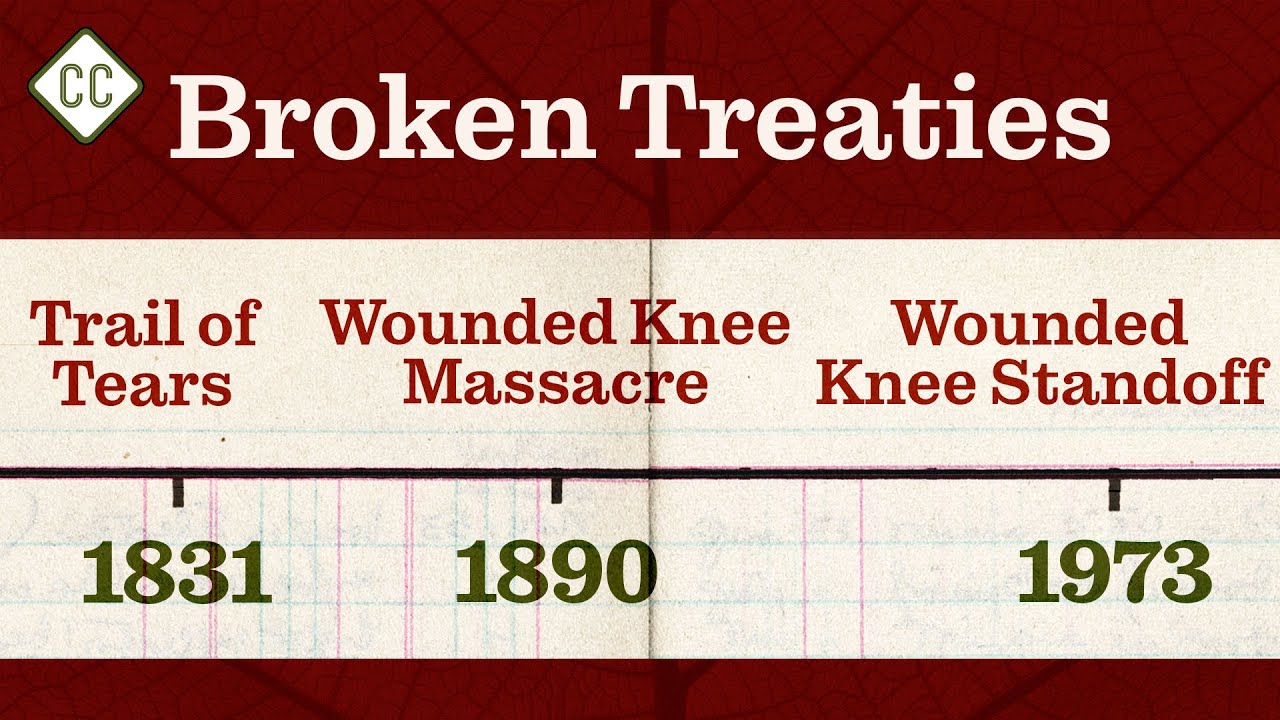
From the Trail of Tears to Wounded Knee: Ep 11 of Crash Course Native American History
Keywords
Summary
180 words
Critical Evaluation
Value of the Information & Strength of the Argument
The video offers valuable educational content by synthesizing a complex historical period into a coherent narrative. It effectively connects the dots between early colonial land transactions, the treaty era, the reservation system, and modern activism, providing viewers with a framework to understand the long-term consequences of U.S. policies. The argumentation is solid, supported by specific examples like the Treaty of New Echota and the reduction of the Lakota reservation. The host also acknowledges historical debates, such as the Manhattan purchase, which adds nuance. However, the argumentation is necessarily simplified due to the format, and some topics are only briefly touched upon.
Scientific Rigor, Source Quality, Title Accuracy
The video demonstrates a good level of scientific rigor for an educational series. It cites specific treaties, laws, and events, and the description includes a link to a document with sources. The host references a scholar (Joanna Gorlick) and quotes a historical figure (Red Cloud) to support points. The title accurately reflects the content, which is a historical overview. The video is part of a well-established educational series, which adds to its credibility. However, as a synthesis, it relies on secondary sources and does not present original research. The description also includes a link explaining how the series was made, which is transparent about its production process.
223 words
Title / Content Match
The title accurately reflects the content, which covers the Treaty Era, the Reservation Era, and the events leading up to Wounded Knee.
Quality & Reliability
8/10
The video is a well-structured educational overview, relying on established historical narratives and scholarly sources. It acknowledges historiographical debates (e.g., the Manhattan purchase) and provides a list of sources in the description. However, it is a synthesis rather than original research, and some simplifications are inherent to the format.
Key Moments
Markers derived by PSI from the transcript: the creator did not define chapters.
Cited Sources
- Sources document for Crash Course Native American History — Linked in the video description as the source list for this episode.
- How this series was made — Linked in the video description to explain the production process of the series.
Concurring Sources
- Native American History: A Chronology of the Vast Achievements of a People and Their Struggles Against Europeans — General historical reference that aligns with the narrative of treaty violations and forced removals.
Dissenting Sources
- The Manhattan Purchase: A Reassessment — Some historians argue that the Lenape sale of Manhattan was more of a land-sharing agreement than a sale, which the video acknowledges but does not fully explore.
External References
Contribution & Novelties
The video provides a concise and accessible synthesis of a complex historical period, connecting the Treaty Era and Reservation Era to contemporary Native American activism. It highlights the ongoing legal relevance of historical treaties, which is often overlooked in mainstream narratives. The inclusion of the 1973 Wounded Knee occupation as a framing device effectively demonstrates the long-term consequences of broken promises.
Pour aller plus loin :
- Indian Removal Act — The 1830 law that authorized the forced removal of Native Americans, central to the Trail of Tears.
- Treaty of Fort Laramie (1868) — The treaty that established the Great Sioux Reservation, later violated with the discovery of gold.
- American Indian Movement — The organization behind the 1973 Wounded Knee occupation, advocating for treaty rights.
124 words
Radar Profile
The radar profile shows high scores in quantity and quality of information, reflecting the video's comprehensive yet concise coverage. The technical level is moderate, suitable for a general audience, while reliability is strong due to the use of established historical sources.