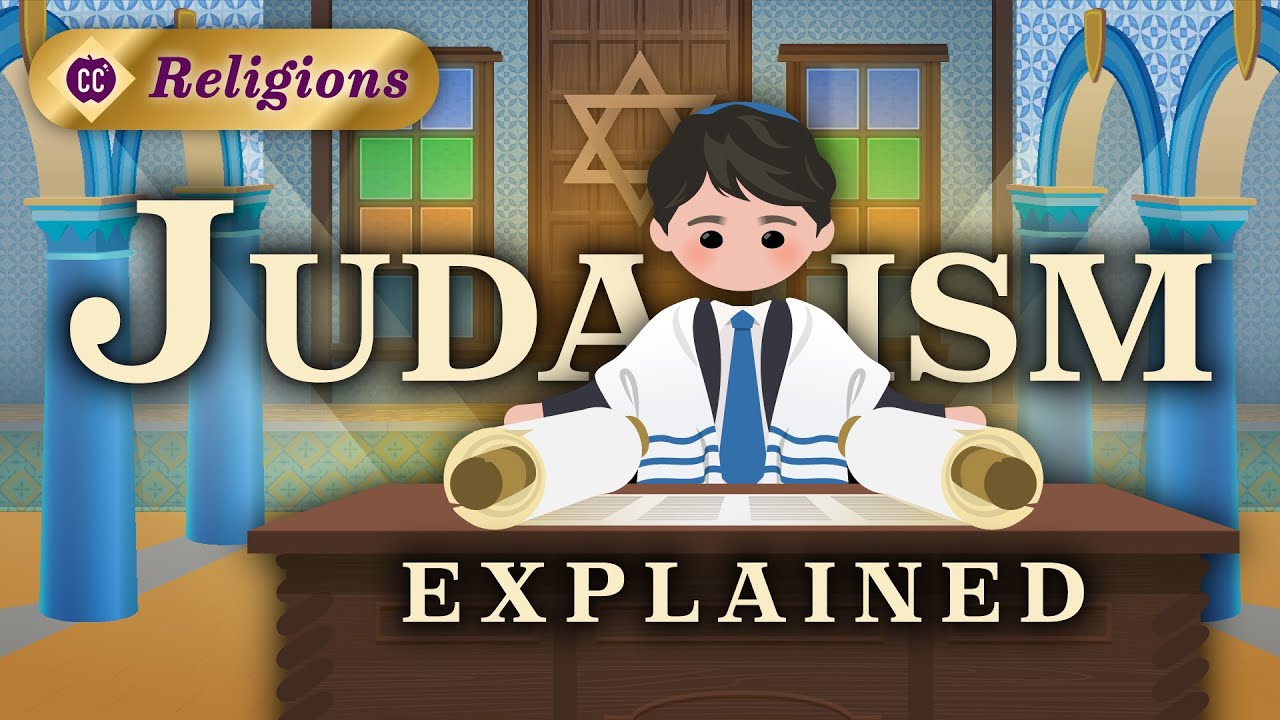
What Does it Mean to Be Jewish: Crash Course Religions #8
Keywords
Summary
191 words
Critical Evaluation
Value of the Information & Strength of the Argument
The video provides a valuable introduction to the complexity of Jewish identity, effectively challenging the stereotype of Judaism as a purely religious faith. It presents a balanced view by incorporating historical context, textual traditions, and contemporary diversity. The argumentation is clear and logical, building from the foundational texts to the various interpretations and branches. The use of examples, such as the Shabbat toothbrush and the debate between Hillel and Shammai, makes abstract concepts accessible. The video also acknowledges the political and historical sensitivities around Zionism and the state of Israel, presenting them as part of the broader discussion without taking a definitive stance. The overall argument is that Judaism is a ‘civilizational identity’ that encompasses religion, culture, and peoplehood, supported by a range of examples and perspectives.
Scientific Rigor, Source Quality, Title Accuracy
The video demonstrates a good level of scientific rigor for an introductory educational piece. It accurately presents the basic structure of Jewish texts (Tanakh, Written Torah, Oral Torah, Talmud) and the historical development of rabbinic debate. The discussion of antisemitism during the Black Death is historically grounded, and the mention of the Pope’s opposition to the blood libel adds nuance. The video does not cite specific academic sources within the narration, but the description provides a link to a Google Doc with further resources, which serves as a supplementary source. The title is perfectly adequate, as the content directly addresses the question posed. The video’s strength lies in its clear presentation of the diversity of Jewish practice and belief, which is a key aspect of the academic study of religion.
272 words
Title / Content Match
The title accurately reflects the content, which explores the multifaceted nature of Jewish identity through religious, cultural, and historical lenses.
Quality & Reliability
8/10
The video provides a well-structured overview of Jewish identity, drawing on historical context, textual traditions (Tanakh, Talmud), and contemporary diversity. It is produced by an established educational channel with a clear pedagogical approach. While it simplifies complex topics, it avoids major inaccuracies and acknowledges internal diversity. The main limitations are the brevity of treatment of certain historical and political issues and the lack of direct citation of academic sources within the video itself.
Key Moments
Markers derived by PSI from the transcript: the creator did not define chapters.
- Introduction: Shabbat toothbrush example illustrating Jewish law and diversity.
- The Many Versions of Judaism: Discussion of Jewish identity as religious, cultural, ancestral, and the diversity of belief.
- The Written Torah: Introduction to the Tanakh and the first five books of the Hebrew Bible.
- Zionism: Brief overview of the political movement and its connection to themes of exile and return.
- The Oral Torah & the Talmud: Explanation of the Oral Torah and the tradition of debate, including the schools of Hillel and Shammai.
- Branches of Judaism: Overview of Orthodox, Reform, and Conservative Judaism, and other groups.
- Review & Credits: Summary of key points and closing remarks.
Cited Sources
- Crash Course Religions Episode 8 - Teacher Resources — Linked in the video description as a resource for further information on the topics covered.
Concurring Sources
- Pew Research Center: Jewish Americans in 2020 — Provides data on Jewish identity, beliefs, and practices in the U.S., supporting the video's claims about diversity.
External References
Contribution & Novelties
The video’s original contribution lies in its accessible synthesis of the multifaceted nature of Jewish identity, moving beyond a purely religious definition to encompass cultural, ancestral, and civilizational dimensions. It effectively uses the example of the Shabbat toothbrush to illustrate the practical application of religious law and the diversity of observance. The episode also provides a clear explanation of the relationship between the Written and Oral Torah, and the significance of the Talmud as a record of ongoing debate. It situates Jewish identity within a historical context of persecution and diaspora, while acknowledging the contemporary diversity of belief and practice.
Pour aller plus loin :
- Judaism - Wikipedia — Provides a comprehensive overview of Jewish history, beliefs, and practices.
- Talmud - Wikipedia — Detailed article on the central text of rabbinic Judaism.
- Zionism - Wikipedia — Explores the history and ideologies of the Zionist movement.
- Jewish diaspora - Wikipedia — Discusses the dispersion of Jewish communities across the world.
159 words
Radar Profile
The radar profile shows a balanced performance across all dimensions, with slightly lower scores for technical depth and quantity of information, reflecting its introductory nature. The high scores for quality and reliability indicate a trustworthy educational resource.