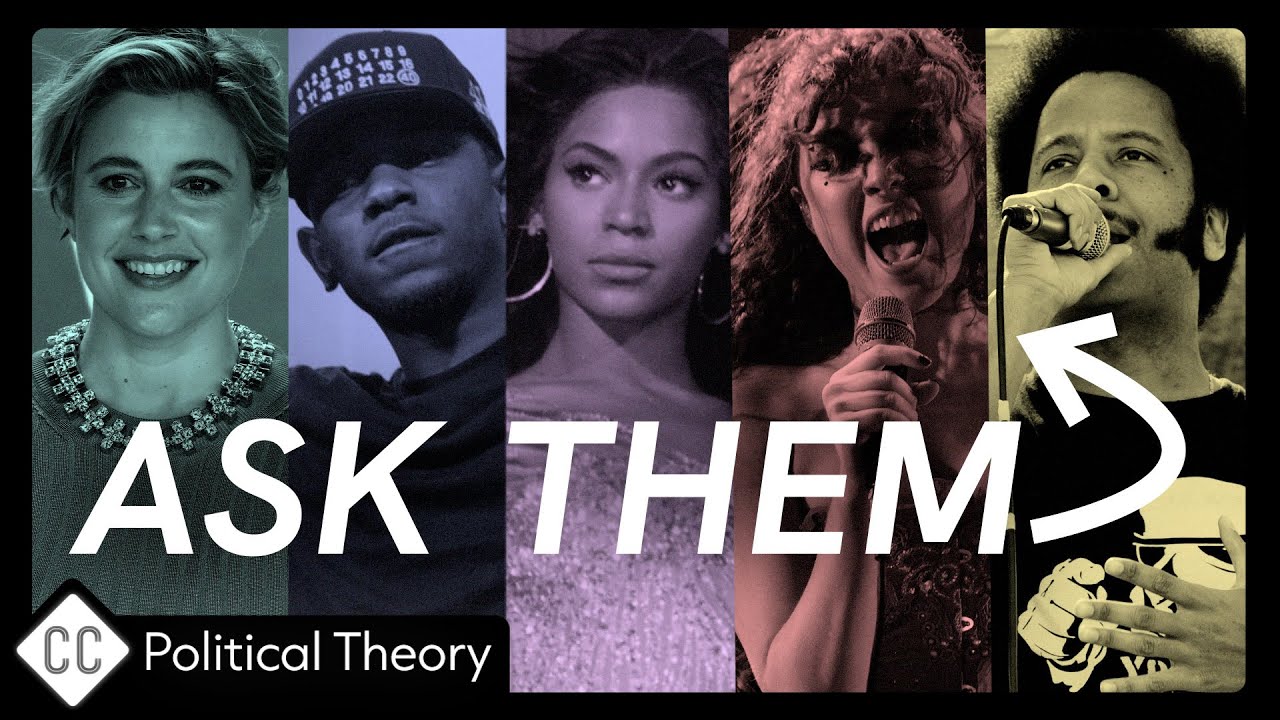
Should Art Be Political?
Keywords
Summary
172 words
Critical Evaluation
Value of the Information & Strength of the Argument
The video provides a valuable and accessible introduction to key philosophical positions on political art, using concrete historical and contemporary examples to illustrate abstract concepts. The argumentation is solid, presenting a clear progression from Plato’s concerns to modern debates, and effectively contrasts the ‘committed’ and ‘autonomous’ approaches. The inclusion of Walter Benjamin’s perspective adds depth, and the final example of Confederate statues grounds the discussion in a tangible, ongoing controversy. The video successfully argues that art is inherently political, but does so by presenting multiple viewpoints rather than a single dogmatic stance.
Scientific Rigor, Source Quality, Title Accuracy
The video demonstrates a good level of scientific rigor for an educational overview. It correctly attributes ideas to their original thinkers (Plato, Brecht, Adorno, Benjamin) and uses well-documented historical events (Nazi art exhibitions, Riefenstahl’s film). The sources are listed in a linked Google Doc, which is a positive practice. The title accurately reflects the content, which directly addresses the question of whether art should be political. The video is part of a well-established educational series, which lends credibility. However, as a synthesis, it necessarily simplifies complex philosophical debates, and the choice of examples could be seen as selective.
205 words
Title / Content Match
The title accurately reflects the central question explored throughout the video, which examines whether art should be political through historical and philosophical lenses.
Quality & Reliability
8/10
The video presents a well-structured overview of philosophical and historical perspectives on political art, drawing on established thinkers (Plato, Brecht, Adorno, Benjamin) and concrete examples (Nazi propaganda, Confederate statues). The arguments are clearly presented and attributed, and the video is produced by an established educational channel. However, it is a synthesis and interpretation rather than original research, and some simplifications are inherent to the format.
Key Moments
Markers derived by PSI from the transcript: the creator did not define chapters.
Cited Sources
- Sources document for the episode — The video description links to a Google Doc containing the sources used for the episode.
- CrashCourse Patreon — Support page for the channel, mentioned in the description.
- Complexly Support — General support page for the network, mentioned in the description.
- CrashCourse Email List — Sign-up for the Crash Course email list, mentioned in the description.
- CrashCourse Educators Newsletter — Sign-up for the educators newsletter, mentioned in the description.
- CC Kids — Link to the Crash Course Kids channel, mentioned in the description.
Concurring Sources
- Plato's Republic — The video's discussion of Plato's views on art and politics is consistent with the arguments in the Republic.
- Degenerate Art Exhibition — The video's description of the Nazi 'Degenerate Art' exhibition aligns with historical accounts.
Contribution & Novelties
The video offers a concise and engaging synthesis of key philosophical debates on political art, making them accessible to a broad audience. Its original contribution lies in connecting classical and modern theories (Plato, Brecht, Adorno, Benjamin) to contemporary cultural phenomena (Beyoncé, Greta Gerwig) and current political controversies (Confederate statues). It effectively frames the question not as ‘should art be political?’ but as ‘how is art political?’, shifting the focus from a normative debate to an analytical one.
Pour aller plus loin :
- Bertolt Brecht — The playwright’s concept of the ‘alienation effect’ is central to the ‘committed art’ approach.
- Theodor W. Adorno — His aesthetic theory, particularly on autonomous art, is a key reference.
- Walter Benjamin — His essay ‘The Work of Art in the Age of Mechanical Reproduction’ is directly relevant to the discussion of democratizing art.
- Triumph of the Will — The film is a prime example of art used as propaganda.
- Kehinde Wiley — The artist’s work, including the ‘Rumors of War’ sculpture, exemplifies contemporary political art.
170 words
Radar Profile
The radar profile shows a balanced video with high scores across information quantity, quality, and reliability, but a slightly lower technical level, indicating it is accessible to a general audience. The high reliability and quality scores reflect the video's solid grounding in established philosophical and historical sources.
💬 Très positif.