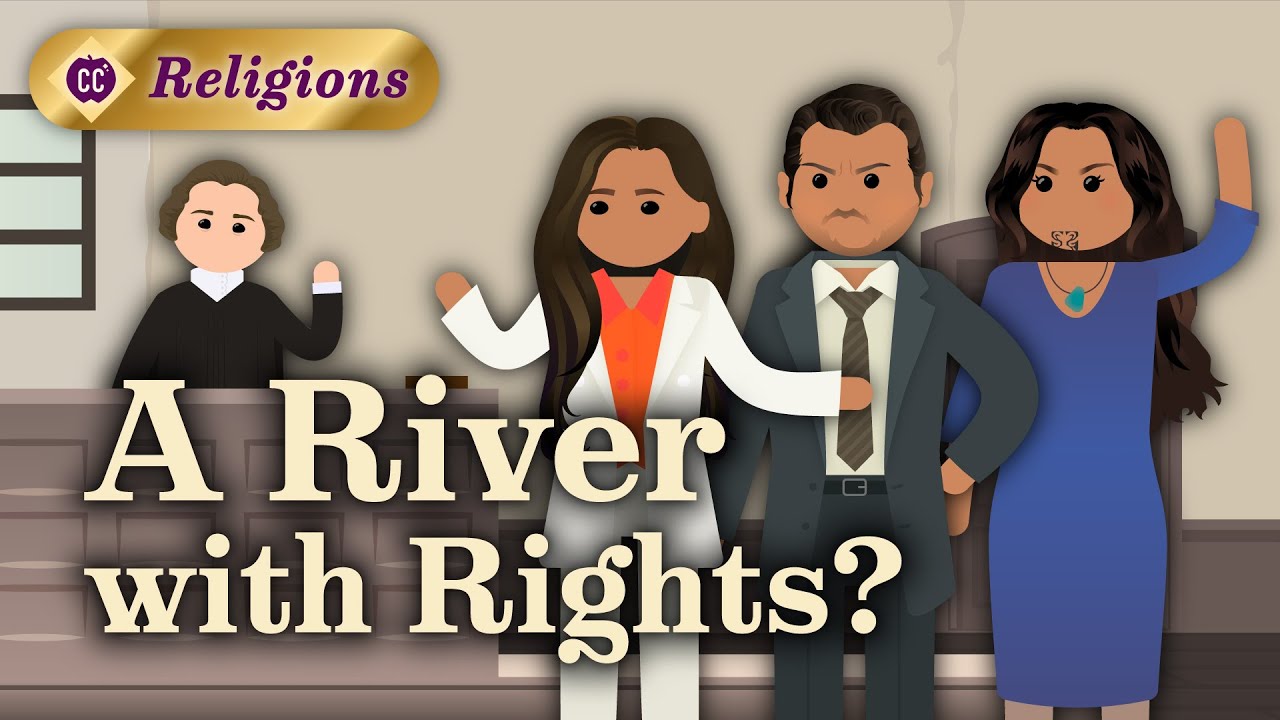
Can a River Be A Person? | Indigenous Traditions: Crash Course Religions #7
Keywords
Summary
142 words
Critical Evaluation
Value of the Information & Strength of the Argument
The video provides valuable insights into Indigenous religious traditions, offering concrete examples like the Whanganui River, the nagual in Mesoamerican traditions, and Haitian Vodou. It effectively argues that Western concepts of religion are inadequate for understanding these traditions, and it supports this with historical and legal contexts. The argumentation is coherent and well-structured, moving from general themes to specific cases, and it successfully challenges the viewer to reconsider the boundaries of religion. However, the video simplifies complex traditions for brevity, which may lead to overgeneralizations, but it does acknowledge the diversity within Indigenous cultures.
Scientific Rigor, Source Quality, Title Accuracy
The video maintains a high standard of scientific rigor for an educational series, with accurate representations of legal cases and cultural concepts. It references the 1840 Treaty of Waitangi and the 2017 legal personhood ruling, but does not provide direct citations to academic sources. The title accurately reflects the content, and the video’s structure aligns with its educational purpose. The production quality is high, and the content is presented in an engaging and accessible manner, though it may not delve deeply into academic debates.
193 words
Title / Content Match
The title accurately reflects the central question and content of the video, which explores the legal personhood of the Whanganui River within the context of Indigenous religious traditions.
Quality & Reliability
8/10
The video is produced by CrashCourse, known for educational content, and features a clear narrative with references to legal cases and cultural concepts. However, it lacks direct citations to academic sources within the video itself, and some generalizations about Indigenous traditions are simplified for a broad audience.
Key Moments
Markers derived by PSI from the transcript: the creator did not define chapters.
- Introduction to the Whanganui River and the Māori perspective
- Discussion on the term 'Indigenous Religion' and its Western origins
- Overview of common themes in Indigenous beliefs, including diverse spirits
- Explanation of kinship and its importance in Indigenous traditions
- The significance of place and connection to ancestral lands
- Legal battles for recognition, including the peyote case and the Whanganui River
- Review and credits
Cited Sources
- Crash Course Religions #7 - Teacher's Guide — The video description links to a document that likely contains additional resources and references for educators.
- Crash Course Support Page — The video description includes a link to support the channel, which may provide further information about the series.
- Crash Course Email Newsletter — The video description includes a link to sign up for the Crash Course newsletter, which may contain updates and additional content.
- Crash Course Educators Newsletter — The video description includes a link to a newsletter for educators, which may offer supplementary materials.
- Crash Course Kids Channel — The video description includes a link to the Crash Course Kids channel, which may have related educational content.
Concurring Sources
- Te Awa Tupua (Whanganui River Claims Settlement) Act 2017 — The legal act that granted personhood to the Whanganui River, confirming the video's claims.
- Indigenous religion - Wikipedia — Provides a broader context on the term and its usage, aligning with the video's discussion.
Dissenting Sources
- Critique of 'Indigenous religion' as a category — Some scholars argue that the term 'Indigenous religion' is itself a Western construct that may not accurately represent the diverse traditions, which the video acknowledges but does not deeply explore.
Contribution & Novelties
The video offers a novel perspective by framing the legal personhood of a river as a religious and cultural issue, bridging law, religion, and Indigenous studies. It provides a clear example of how Indigenous worldviews can influence legal systems, which is not commonly covered in mainstream media.
Pour aller plus loin :
- Te Awa Tupua (Whanganui River Claims Settlement) Act 2017 — Official legal text of the act granting personhood to the river.
- Indigenous religion - Wikipedia — Overview of the concept and its critiques.
- Whanganui River - Wikipedia — Background on the river and its significance to the Māori.
100 words
Radar Profile
The radar profile shows high scores in information quantity and quality, with a moderate technical level, indicating the video is informative and reliable but not highly specialized. The fiabilite_globale is also high, reflecting the credibility of the source.